It's here: the watch industry's award season. This fall and winter, I am once again participating in a few high-profile juries: the watch of the year crowned by “Passion des Montres,” which will appear in the Belgian daily “Le Soir” in October; the elegant ceremony that takes place during Mexico's SIAR next month; Poland's Watch of the Year awarded by Worldtempus partner chronos24.pl, Superwatch in January, put on by Plaza Watch and awarded during GTE, and – this year for the first time – the mother of all horological awards: the Grand Prix d'Horlogerie de Genève (GPHG), whose Hollywood-style ceremony takes place in November in Geneva's Grand Théâtre.
First awards
Being part of this particular award is obviously a great honor, but it was also one I had to think about saying yes to for a while before replying positively. In all honesty: awards in our industry are generally created by a publisher or other party looking to draw attention to their products and flatter their advertisers and potential advertisers into spending more money. In principle, there's nothing wrong with that. In fact, more than twenty years ago when I was still building German watch magazine “ArmbandUhren,” we had the grand idea of throwing a party on the first night in Basel to get to know the industry and our partners better. As a draw, we created an award called “Uhr des Jahres” – Watch of the Year – the winner of which would be chosen by the magazine's readers. This was a neat solution as during this era preceding digital communication and internet: it could aid us in gauging public popularity and leave the magazine staff clear of offending anyone.
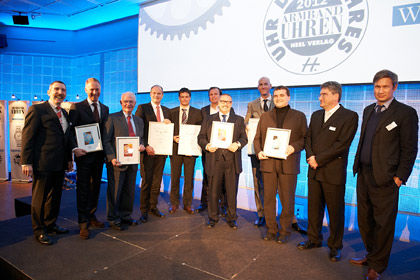
This was the first award I can ever recall seeing in the watch industry, though many have followed: the idea must have seemed good to other publishers because soon thereafter there were many other awards popping up (and disappearing again). I guess copying really is the sincerest form of flattery. At any rate, during my time at the magazine, I can't even count the times I was asked if the winner was “chosen” rather than “voted.” I was asked so often that I began to get relatively emotional about the answer. I literally counted the postcard votes myself and know that the results were authentic. I even went so far as to weed out postcards – which were delivered to readers inside the magazines – that were obviously filled out en masse by companies (you could see it by the postmarks and handwriting) to keep the vote fair and thus a real sign of consumer opinion. I note with pleasure that the Uhr des Jahres remains the most anticipated and frequented event in the German-speaking watch world. This is surely a sign that this sort of thing is not only worthwhile for the industry, but fun for its participants.
GPHG
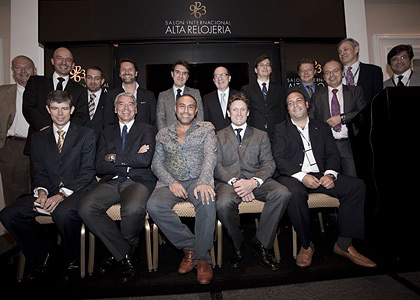
And, thus, it becomes obvious why the GPHG, which was created twelve years ago by Gabriel Tortella, has become the “Oscars” of our industry. Unlike the Uhr des Jahres, brands must pony up a large fee to enter their watches – in part because of the related traveling exhibitions, which must be heavily insured – and even more money to sponsor a table at the feast that follows the ceremony in the Grand Théâtre. And don't even get me started on the bragging rights and marketing campaigns that follow a win, particularly of the Aiguille d'Or (Golden Hand) category. With so much money riding on the results of the GPHG, it is no wonder that this award has unfortunately enjoyed a certain amount of adverse notoriety up to last year.
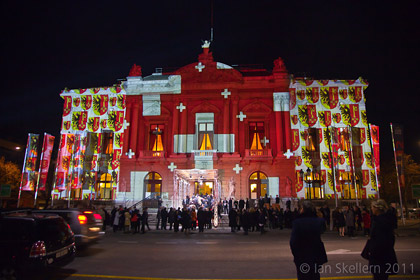
I have attended this spectacle for the last five years or so and must say that I have immensely enjoyed the show, the atmosphere, and hobnobbing with new and old friends every time. However, I never took it very seriously. The brands and watchmakers who have won have always taken it very seriously, though, as is their good right. The meanwhile extreme visibility of this award has definitely catapulted the GPHG to become the most important single event in our industry (barring the fairs, of course).
Reorganization
What many have not yet got wind of is that two years ago, the GPHG was massively reorganized. The ownership shifted to a foundation that is jointly held by five parties: the republic and canton of Geneva, the city of Geneva, Timelab, the Musée International de l'Horlogerie (MIH) in La Chaux-de-Fonds, and the Edipresse group. One goal of this reorganization was to make the jury and voting process fairer and more transparent. If you have followed the development of the GPHG, you will definitely have noticed more independents winning prizes in the last couple of years. This should have been the first clue: indies have no marketing/advertising money to speak of. Therefore, the only reason they could win is if they are deserving of it. In my mind, anyway.
The reorganizational effort has been taken to yet another level this year with a rearrangement of the jury. First off, no retailers are in the jury for the first time. Secondly, and here I speak from personal experience, a number of new jury members conspicuous in their extreme integrity have been added to the jury: this includes Jean-Philippe Arm (editor-in-chief of “WatchAround”) and Carlos Alonso (editor-in-chief of “Tiempo de Relojes” and founder of the SIAR), two true gentlemen in our industry. Though I am really not one to toot my own horn, in building my own career integrity and honesty have been foremost factors from day one.
Which leads me to the fact that Edipresse is one of the foundation's owners. If you are a regular reader of Worldtempus, you will know that Edipresse is the parent company. In past years, no employee of Edipresse was allowed on the jury for obvious reasons. Technically, I am not an employee of Edipresse because I am a freelancer, in business for myself (and happy to be). Be that as it may, I do function as a leading editor of Worldtempus. However, as anyone who has ever worked with me will know, I separate all of my functions like church and state. I consider the simple act of being asked to participate in this year's jury the living proof that others also see this. I have always, and will always, judge any watch on its own merits.
Voting
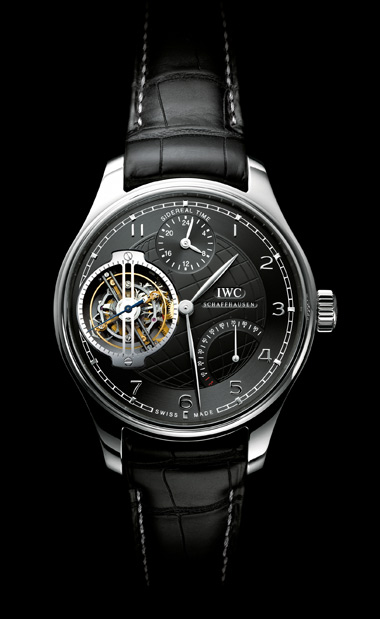
That all having been said, the first round of voting – whose ballots each jury member sent directly to the notary – was exceedingly difficult. The objective of the first round was to get ten leaders in each category from which to choose the final winners. The watches entered were just about all great contenders and in my opinion there is no clear-cut winner in any category.
If you would like to see what was entered and preselected by the jury,
look here. This was a particularly creative year so the winning choices are going to be really difficult. If you happen to be in the Geneva area at the beginning of November, stop in at the Cité du Temps to see these pieces in the metal, where they will be on exhibition until November 8.
If you want to take part yourself, there is a “public prize,” which you can partake in simply by visiting the preselection page, checking out the watches and voting on your favorite. Voting automatically puts you in the draw to win a timepiece yourself. I hope you enjoy this year's award season. I know I will.