WORLDTEMPUS - 7 December 2012
Elizabeth Doerr
This has been an extraordinary fall in a variety of ways. And I hope that you will excuse me if I explain to you why in very personal terms this time around.
I have been in the watch industry since 1991, but before that I did other things. One of the things I did all through my youth was play tennis. I had an incredibly strong role model as a girl, teenager and then young woman: my mom. A single mother, she made her hobby into her profession, which I have also done in a sense. Although I had always thought tennis would be my profession, life has a funny way of throwing curveballs, and I ended up in watches. And in case you didn't know, I love watches. Just like I love tennis.
I attended Kalamazoo College, an elite school of higher learning that is very famous in the tennis world. Its men's tennis team holds multiple records (74 consecutive MIAA championships to date, for example). When I joined the women's team in the fall of 1984, it was headed up by a professional coach in her 33rd year of coaching tennis and field hockey. Before Tish Loveless there were no women's sports at Kalamazoo College; she had founded and pretty much run the entire program. Needless to say, during my time at college, all the funding to speak of went into men's teams.
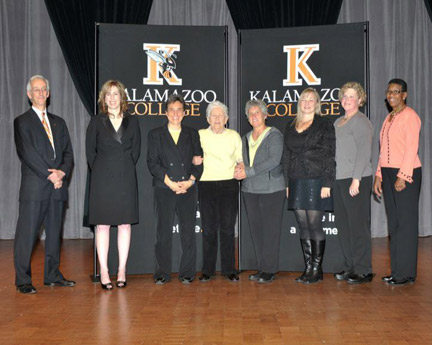
In 1986, my sophomore year, our team – which had become a cohesive unit of passionate players – placed third in the nation in Division III: the best result a women's team had ever achieved to that point, or since, at that school. But compared to the men – who won nationals that year (one of their seven total championships to date) – we still didn't merit the attention of the college's boosters. And while we had enough uniforms to go around (the women's volleyball team that year was one uniform short, which meant that every game someone sat out – a problem the men's volleyball team did not have), we sometimes had to fundraise to go to tournaments or buy equipment.
On October 19 of this year, that 1986 women's team was inducted into Kalamazoo College's Athletic Hall of Fame. While this naturally felt like a gigantic honor for me, I didn't exactly realize what it meant in broader terms until I arrived on campus for the induction ceremony. Over the course of the weekend, various members of the committee approached me, identifying themselves and some almost apologetic for this not having happened sooner. Others explained how they had to fight to get us in while some of the men's teams were still not inducted. One gentleman from the jury even told me, “If you had had funding [back in the 1980s], you would have been national champs. Of that I am sure. Your achievement was incredible.” This brought tears to my eyes. I had never thought of it in those terms.
And in watchmaking?
Coincidentally, something similar happened in watchmaking last month. Three knowledgeable, experienced female horological journalists were nominated for the jury of the Grand Prix d'Horlogerie de Genève: Tomoko Kayama, Paola Pujia and myself. While this may not sound remarkable, rest assured it is. Past juries have only ever had one woman on them, and no specialized “insider” women. And even more remarkable – these women were wanted! Their opinions were desired! This I was explicitly told not only by other long-standing jurors, but by a few of the industry consultants who advised the directors of the GPHG on the new jury constellation. One summed it up nicely to me, “We NEED your strong opinions.”
So, in the midst of all these groundbreaking things happening, one last thing took place: this jury chose the first woman to receive the Grand Prix prize of best horloger/concepteur (watchmaker/movement designer/concepteur). While our choice may seem like a no-brainer, it was anything but! As Carole Forestier-Kasapi's name trilled off Paola Pujia's tongue during the first round of voting discussions, I could do nothing other than applaud. Literally. All the while thinking, “About time!” Carole has been doing some of the most interesting work in our industry for more than a decade, but she is so quiet about it, so down-to-earth in her demeanor, that many just don't think about it. I'd like to say that she singlehandedly turned Cartier into a legitimate horological powerhouse, but the reality of it is that she – like any head watchmaker – has a skilled, able team behind her. It is not to be disputed, however, that Cartier only began its transformation after she joined the company.
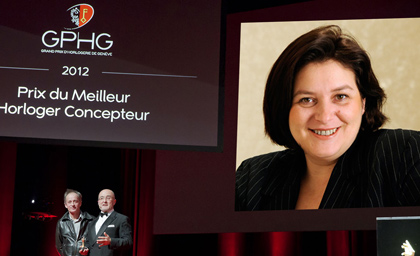
Carole is, however, so much more than a gifted thinker and watchmaker. She is a symbol: a symbol that women can also achieve these technical positions in watchmaking and excel at them. I shudder to think of what she may have had to go through to get where she is (I know that I had to grow a pair of iron elbows to achieve what I have achieved in the watch industry myself). I take comfort in her success and feel a whole lot of vicarious pride in the fact that she is female. So, when I applauded Paola for suggesting Carole for this jury-decided prize so emotionally, I was in a way applauding all women who have achieved distinction in this male-dominated domain.
But what happened next really sealed it for me: the men began piping up. “Great!” “Absolutely!” “She is the best!!” Perhaps, just perhaps, I thought, the glass ceiling is starting to crack.
After all the suggestions had been made and discussed, each jury member voted alone on a written, secret ballot. Indeed, as I returned home that evening in late October, I was not 100 percent sure that Carole had actually won the prize. On November 15 I was rewarded with the confirmation of her award along with the thousands of industry members sitting in the audience of Geneva's Grand Théâtre and certainly tens of thousands more watching online and via satellite at Tourneau in New York City.
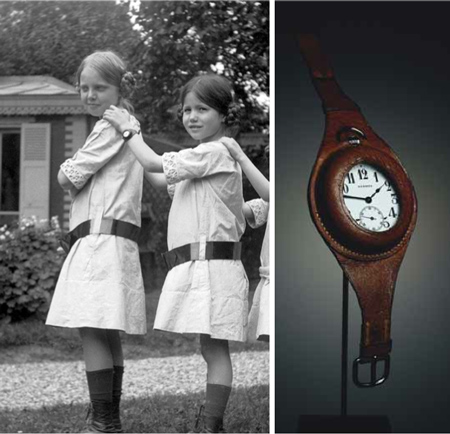
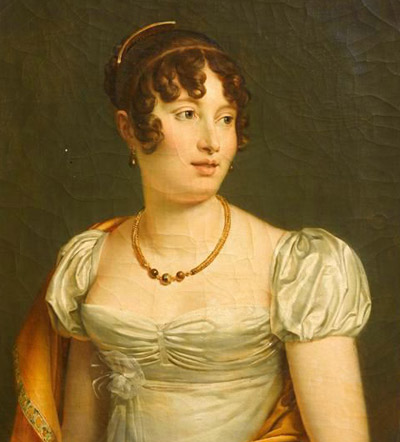
Congratulations, Carole. Congratulations, 1986 women's tennis team. Congratulations, womankind. You may just have finally set yourself down the path to equality 100 years after Jacqueline Hermès demanded a leather strap from her family's business to secure a pocket watch to her wrist and 200 years after the queen of Naples, Caroline Murat, took possession of her custom-designed Breguet wrist repeater. Ah, it's so good to finally be queen. And to be recognized for it.