IW Magazine - August 29, 2012
Y-Jean Mun-Delsalle
Atelier du Bracelet Parisien (ABP) is a certified artisanal workshop. At least according to the French government, which has officially deemed ABP a Living Heritage Company as its products are entirely handmade in its workshop-boutique in Paris according to centuries-old traditional craftsmanship techniques.
And among the many options open to customers, building in water resistance may be most suited to the diver or beachgoer. If a customer seeks to take a watch underwater, ABP offers waterproof technical, nylon and rubber straps as well as unusual shark, natural seal and rubberized calf straps, each of which has undergone strong tanning processes and may be exposed to any depth.
ABP says it studies each customer carefully so that it can offer watchstraps suited to individual needs. Its rubberized calf straps are as strong as any purely rubber strap, the company claims, and are available in five colors.
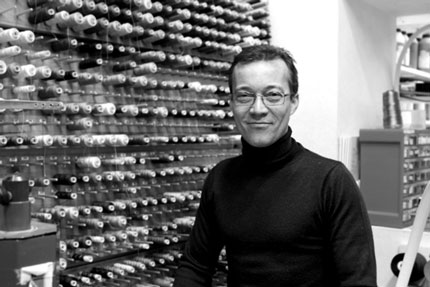
“Through a strap, customers let their imagination and creativity run free. And we guide them in the feasibility of the strap,” says Saida Nemouchi, head of Internet sales at ABP. “There are no two bracelets alike because the bracelet is a personal and unique expression of a customer's personality.”
The company custom-builds watchbands from start to finish, and countless elements may be personalized to ensure each strap is unique in the world: materials, textures, linings, designs, sizes, thicknesses, tannings, finishes, stitches, tip shapes, buckles, keepers, inserts, double or triple tours, straight cut or folded edge, notches, indents, imprints, the bespoke boring of holes and even the selection of the exact part of the skin that will be used.
Rich history
ABP is a story that stretches back four decades and spans two generations of the same family. Jean-Claude Perrin, today known in the watch industry for having participated in the development and creation of two leading watchstrap manufacturers that supply many prestigious Swiss watchmaking brands – Camille Fournet and Créations Jean-Claude Perrin – married Régine Fournet (niece of the founder of the Camille Fournet brand) in 1966.
Both left their native Champagne region for Paris to work at Camille Fournet, where Jean-Claude became the manager. The couple subsequently decided to launch their own company, Créations Jean-Claude Perrin, which they sold to an industrial group two decades later.
After having worked in the industrial production of luxury watchstraps, Jean-Claude then turned his attention to handcrafted watchbands for individual customers, opening a small workshop-boutique in Paris in 1997, to which enthusiasts flocked to compose their straps.
Learning from past experience and avoiding falling into the trap of mass production again, which had hijacked him from his original passion, he deliberately kept manufacturing numbers small and surrounded himself with his wife, son Yann, brother-in-law Dominique and a reduced team of craftsmen.
Today, the company remains small, with sixteen employees, and has moved into larger premises at 28 Place du Marché Saint Honoré in the 1st arrondissement, where you will catch sight of craftsmen at work in the open atelier. Its artisans are trained in leather craft and have at least five years of experience in the trade, including in strapmaking.
Though retired, Jean-Claude and Régine continue to work part-time at ABP, with Yann having taken over the reins after saddlery and leather craft studies and a master's degree in marketing and management.
Versatility, selection
Nemouchi describes the biggest challenges of strapmaking: “Versatility and adaptability as there are thousands of different watches in the world, directing the customer by taking his choices and the technical imperatives of the bracelet into account, making sure the strap lasts.”
Experts in crafting ready-to-wear and bespoke watchstraps, ABP also performs revisions, repairs, engraving and polishing on timepieces and sells new and secondhand watches, belts, bags and other small leather goods. But for straps, the store's selection is vast.
“We have fifty species, up to 200 colors, twenty different thicknesses, fifty shapes, 600 thread colors – there are millions of possibilities,” Nemouchi continues. “Customers see us as a museum proposing a very wide choice of leathers, where it is more than recommended to touch all the skins.”
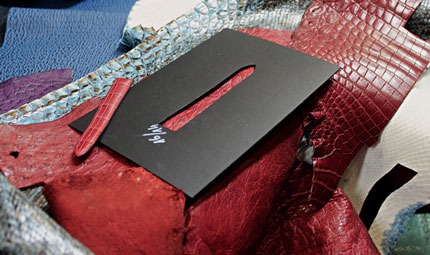
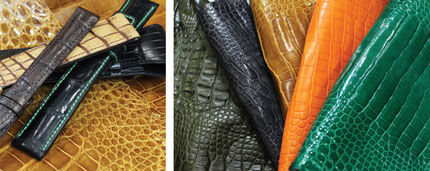
Customers choose from a menagerie of animal skins — including alligator, lizard, emu, ostrich, llama, buffalo, kangaroo, calf, anaconda, cobra, python, Nile perch and stingray.
The most outrageous order ABP has ever received was for a strap in stingray with pearls, which cost $1,100 to craft, whereas the watch itself was priced at just $125. ABP spends the longest amount of time on technical prototypes because it has to try different ways to make the one shape that will fit the timepiece, which sometimes requires two to three days of work.
Individual orders may be placed directly at the ABP boutique or online at: www.abp-paris.com. ABP ships worldwide and says it can fit straps to 99 percent of high-end watches on the market.
It takes from one to eight hours on average to make a bracelet, depending on the technicality, and costs between $225 and $350 and can go up to $1,100 for a technical strap. The normal turnaround time is seven working days, but pay extra and you can have your watchband ready more quickly.