WORLDTEMPUS - 25 March 2011
Miguel Seabra
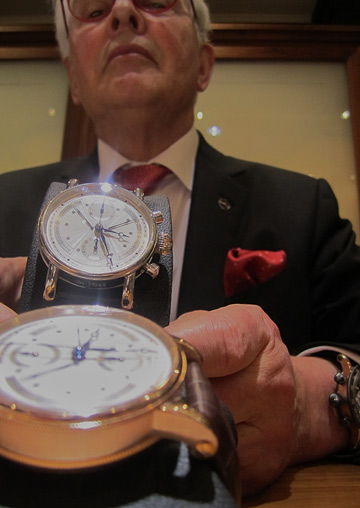
While Chronoswiss is expanding its collection with lines that might appeal to younger aficionados of mechanical watches, the Munich-based brand's flagship model among the new timepieces unveiled at this year's Baselworld by evokes a contradiction: on one hand, it clearly reminisces the aesthetic codes defended by owner Gerd-Rüdiger Lang at the start of the Mechanical Renaissance; on the other hand, it boasts a double retrograde mechanical complication that has not yet been utilized by the industry.
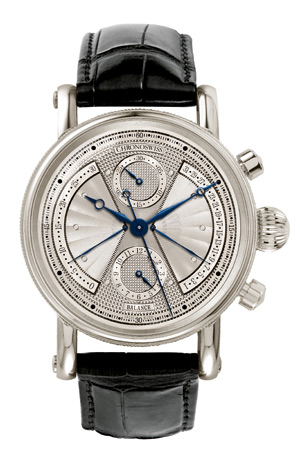
Chronoswiss, specialized in guilloché dials, created a benchmark in the 1990s with the Delphis and its retrograde minutes. Now, the new Balance model epitomizes a return to filigreed dials that seems to be one of the major trends at Baselworld and also exudes the traditional technicality so dear to Lang. “The retrograde function is an old watchmaking technique; the use of a double retrograde display for the seconds on one side and the date on the other provides perfect symmetry, hence the name Balance.”
Three different guilloché patterns
Three contrasting decorative patterns enrich the sumptuous Sterling silver dial: the precious guilloché work resembling waves on the retrograde subdials, piqué relevé guilloché on the periphery, and honeycomb guilloché on the chronograph counters. The blued Breguet Losange hands provide perfect contrast and accentuate the classic spirit.
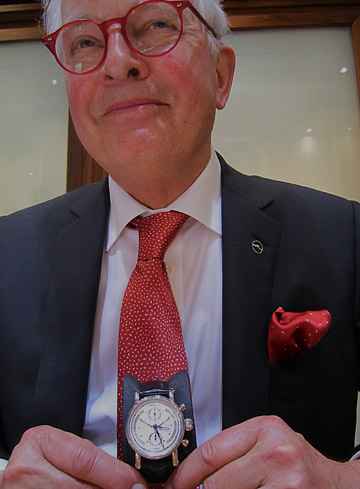
The Balance chronograph, available in stainless steel and rose gold, also marks the introduction of the new La Joux-Perret Caliber 8310 in the industry.