WORLDTEMPUS - 29 February 2012
Elizabeth Doerr
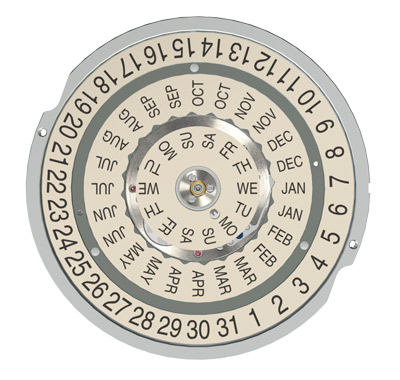
Leap years, which occur every four years, are also known as bissextile years or even intercalary years. In short, the meaning of all three of these terms is a year in which an extra day has been inserted in order to keep the calendar year – in our case the Gregorian calendar – in sync with the solar year.

This day is today, February 29. Its addition will mean that the year 2012 comprises 366 days as opposed to the usual 365. The extra day compensates for the fact that a mean time year (the time we read on the clocks, which is mathematically divided) is shorter than a solar year (the time literally dictated by the sun) by about six hours.
As a solar year is just under 365.25 days, there is of course an exception to the leap year rule. Years that are divisible by 100 are not leap years unless they are also divisible by 400. This is a difficult rule to understand, so let's look at the numbers. The years 1600 and 2000 were leap years according to this rule, but 2100 will not be. This is called a secular year, and just about every perpetual calendar system known will not be able to make the adjustment by themselves.
Other calendar types that have leap years on par with the Gregorian calendar include the Indian National Calendar and the Revised Bangla Calendar of Bangladesh, which makes it easy for these countries to convert dates back and forth in sync with the Gregorian calendar. The Baha'I calendar also consistently lines up with the Gregorian calendar, and the Thai solar calendar has been synchronized with the Gregorian since 1941.

According to David Ewing Duncan, author of “The Calendar,” only on October 1, 1949 did the entire world agree on the actual date for the first time. This was the day that China finally adopted following the Gregorian calendar.
The calendar has always been a tool to reconcile actual astronomical events and the human need for order. The Gregorian calendar we now follow is a great compromise, even though it remains off true solar time by almost 26 seconds per year. In fact, by 4909 AD the Gregorian calendar will be ahead of solar time by one full day. But I digress…
Love traditions
On the British Isles, it is tradition that women may officially propose marriage in leap years. Apparently, tradition in Denmark states that women may propose on the bissextile leap day and refusal by the man in question must be compensated with 12 pairs of gloves. In Finland, tradition dictates that if a man refuses a proposal on leap day, he needs to buy the woman fabric for a skirt. In Greece, marriage in a leap year is considered unlucky.
Apparently, the love associations of February 29 have left their mark in the United States as well: Sadie Hawkins day is what emerged from it. “Leap year as a time for gender reversals,” stated the Wall Street Journal in a 2008 article on the unusual notions and traditions of the day.
Most people probably feel nothing special about this particular day, and indeed if you're not particularly interested in timekeeping, astronomy or calendars you may not even notice this gift of an extra day today. It is not associated with good luck or bad luck – unless you happen to be born on this day and then it is up to you to determine what kind of luck it is.
From Pope Paul III to John Byrom (poet and inventor of the shorthand system), saxophonist Jimmy Dorsey, painter Balthus and rapper Ja Rule people born on February 29 are called leaplings or a leapers. The legal birthday of a leaper depends on local laws. In China, the birthday of a leaper is February 28, while in Hong Kong, it is March 1.