
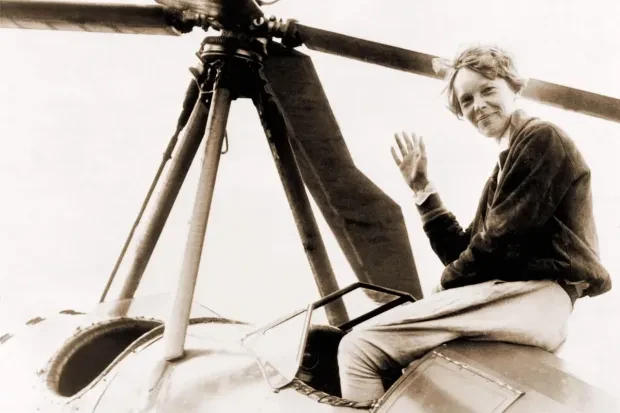
Aviation is a discipline in its own right. Experimental in the 1920s and 1930s, military in the 1940s, before becoming commercial in the 1950s and then sporting in the 1980s, its varied trajectory has required different flight instruments to accompany each stage of its development. Longines has been formally involved in this growth since the 1920s, through pioneering flights and by appearing on the wrists of aviation aces who helped advance the discipline – illustrious names such as Amelia Earhart, Elinor Smith and Richard Byrd, to name just a few.
Today, most complications designed for pilots have become standard features in contemporary models, intended for everyday use. These include a second time zone, a simple or split-seconds chronograph, and highly luminous, legible dials for night flights, not to mention adjustable straps, which once allowed watches to be worn over pilots’ flight suits.
Longines was founded in 1832 in Saint-Imier by Auguste Agassiz. The brand had therefore already developed considerable watchmaking expertise when Clément Ader made an initial powered hop in 1890, or when the Wright brothers made the first powered flight in history in 1903. It is also worth remembering that, at the time, neither sponsorship nor joint R&D with pilots existed. Pilots therefore chose Longines watches because of their objective, demonstrable qualities.
Three of these qualities were essential. First, ease of handling. Early pilots flew wearing gloves. Being able to grip the crown and pushers, as well as dial legibility, was paramount. Then came resistance: the earliest flights took place in the open air, where sub-zero temperatures were common. Wristwatches, when they existed, were not worn directly against the skin, meaning that the case could not be kept at body temperature. This created significant risks of freezing, particularly affecting the oils. Finally, precision: while a discrepancy of a few seconds was not detrimental in aviation’s early days, later developments demanded a certain degree of timekeeping accuracy, particularly when changing course or, where necessary, switching fuel tanks.
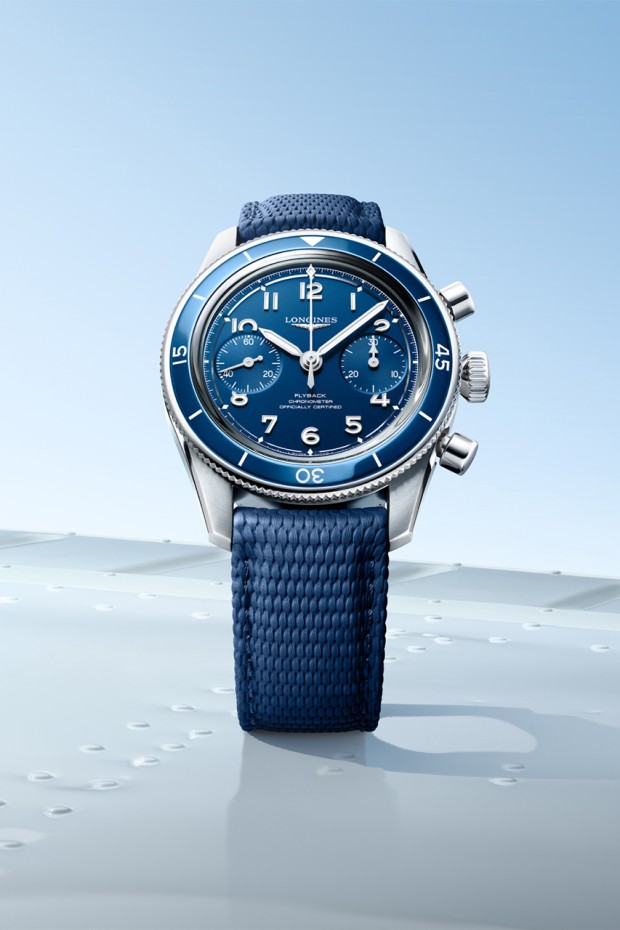
Longines Spirit Pilot: a contemporary adaptation
Longines’ Spirit Pilot line revisits most of these attributes, modernised for the occasion. Legibility is now ensured through fashionable colours such as midnight blue, as well as the widespread use of Super-LumiNova on the dial’s essential elements: the hour and minute hands and the indexes. Robustness, meanwhile, is provided by stainless steel cases and movements equipped with silicon balance springs, as well as a stainless steel bracelet with a folding clasp – which, as in the past, still offers a micro-adjustment system. No longer intended for flying in the open air while wearing a flight suit, but at least useful for accommodating changes in wrist size throughout the seasons. Precision, finally, is guaranteed by Chronometer certification, awarded by the COSC.
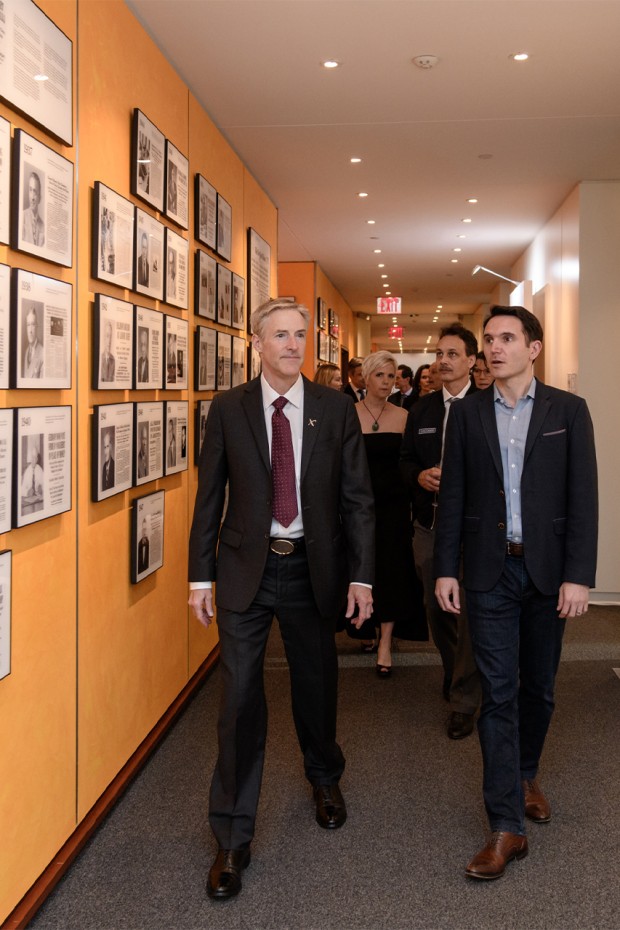
An award for history
Until now, there had been no watchmaking award recognising an achievement in aviation. That has now changed with the Longines Lindbergh Award. The famous aviator Charles Lindbergh made the first solo non-stop transatlantic flight on 21 May 1927. Erik Lindbergh, the grandson of the famous American pilot who made this pioneering journey, had the honour of becoming the first recipient of the Longines Lindbergh Award. Then aged 53, Erik Lindbergh followed in the footsteps of his illustrious grandfather. In May 2002, on the occasion of the 75th anniversary of the historic flight, he completed the same Atlantic crossing between Long Island, New York, and Le Bourget, near Paris, aboard a small single-engine aircraft.
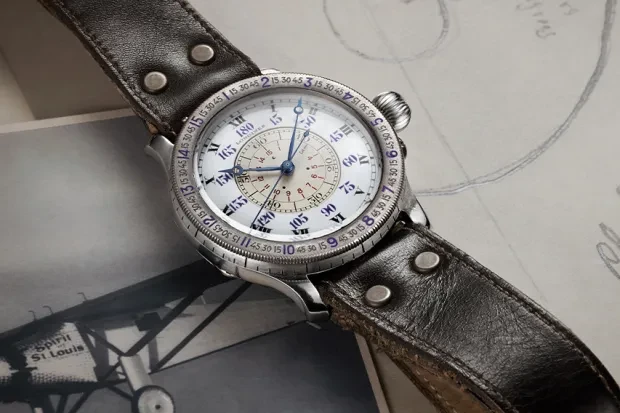
A watch for history
Following his 1927 crossing, Charles Lindbergh approached Longines to create a timepiece that would meet his needs as an aviator. Thus was born the Longines Hour Angle Watch, now a genuine watchmaking icon, better known as The Lindbergh Hour Angle Watch. The timepiece is still available today. With the additional help of a sextant, it makes it possible to calculate longitude and therefore determine one’s position, using true time and the angular measurements of the rotating bezel. A watch that celebrates the historic connection between Longines and aviation.
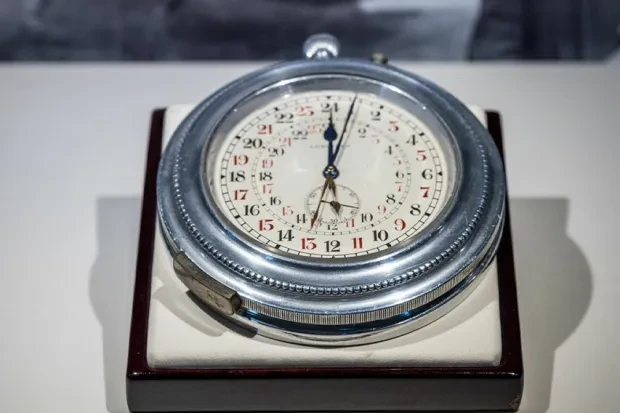
Zulu Time
Longines’ latest iconic collection of pilot watches is Zulu Time. Launched in 2022, it now comprises no fewer than 24 references. In aviation, Zulu Time is zero time, the reference time, and therefore Greenwich time. In the aviation alphabet, zero is pronounced “Zulu” in radio communications, hence the name of the collection. Its spirit is largely vintage, with beige luminous indications and, on several models, a stitched leather strap. Its movement is Chronometer-certified, offers several time zones and provides a generous power reserve of three full days. Its origins and name date back to Longines’ first dual-time wristwatch, produced in 1925, whose dial featured the Zulu flag. Its movement allows the hour hand to be adjusted independently of the GMT indicator. Additional time zones are read using a 24-hour hand and a bidirectional rotating bezel.
A history in motion
Longines’ long shared history with aviation promises a bright future for the brand. It continues to explore the limits of the field, notably by supporting the solar-powered Stratos aircraft, which recently reached a record altitude of 9,521 metres without any conventional mechanical propulsion. The project is driving the development of decarbonised aviation, which Longines is encouraging. Beyond this, there remains the entire field of military aviation, with its specific requirements, which continues to inspire many contemporary models. There is no doubt that the Maison’s extensive archives, which have never left its historic headquarters at the place known as Les Longines, will provide the fuel for this future exploration of aviation.


FAQ
What is the flyback chronograph invented by Longines in 1936?
The flyback chronograph, invented by Longines in 1936, lets the seconds hand reset to zero and restart timing with a single press, a valuable function for pilots needing to chain successive time measurements.
What is the Longines Hour Angle Watch?
Created at Charles Lindbergh’s request after his 1927 crossing, this iconic watch helps calculate longitude using a sextant, combining true time with the angular measurements of its rotating bezel.
Qu’est-ce que la Longines Hour Angle Watch (montre à angle horaire) ?
Créée à la demande de Charles Lindbergh après sa traversée de 1927, cette montre iconique permet de calculer la longitude à l’aide d’un sextant, en combinant l’heure vraie et les mesures angulaires de sa lunette tournante.
What is the Longines Zulu Time collection?
Launched in 2022, Zulu Time comprises 24 references with a vintage spirit, Chronometer-certified, offering multiple time zones and a three-day power reserve, paying tribute to Longines’ first GMT watch from 1925.