With the Grand Prix d’Horlogerie de Genève (GPHG) rapidly approaching, we thought it might be amusing to make our own predictions, so we did a little survey around the office and also asked our community on Instagram to join in the fun. Only a few days now to see if we were right. Let’s take a look at the contestants and what the polls say.
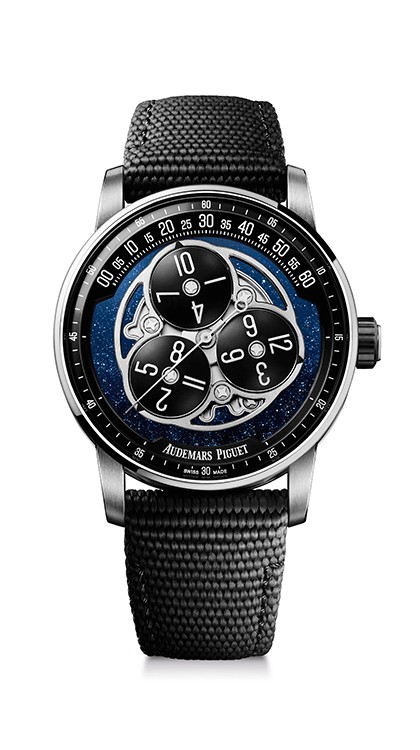
Audemars Piguet Code 11.59 by Audemars Piguet Starwheel
This is a surprising timepiece as its system of satellites indicating the time look almost space-like, but the invention actually dates back to the 17th century. After falling from favour in the 20th century, this horological complication was rediscovered and reintroduced by Audemars Piguet in 1991 and used to equip different models until the early 2000s. This year marked its grand return in the Code 11.59 by Audemars Piguet Starwheel. It comes in white gold and black ceramic and is powered by a Manufacture self-winding movement that indicates the hours, minutes, and seconds.
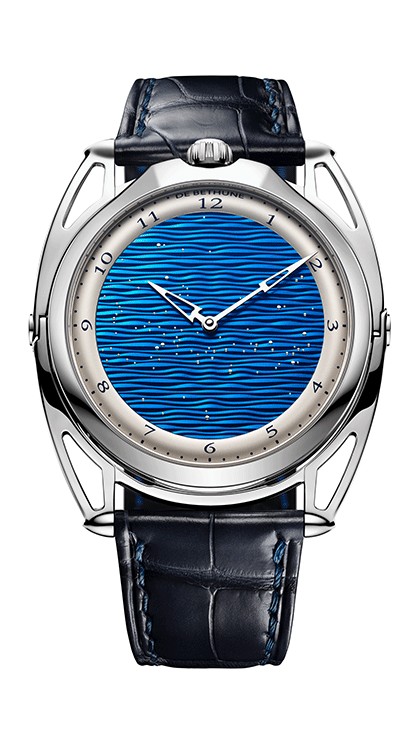
De Bethune DB28XS Starry Seas
The De Bethune DB28XS Starry Seas stands out from the crowd with the first-ever random guilloché dial that comes in De Bethune’s signature shade of blue and looks like the surface of the sea under the moonlight. De Bethune’s founder and master watchmaker Denis Flageollet was inspired by the Japanese concept of Wabi-Sabi in the creation of this blued titanium dial and its unique pattern. This piece also introduces a smaller size for De Bethune at 39 mm. We got our hands on this timepiece in August when we took it onto the Streets of Geneva to introduce it to the general public.
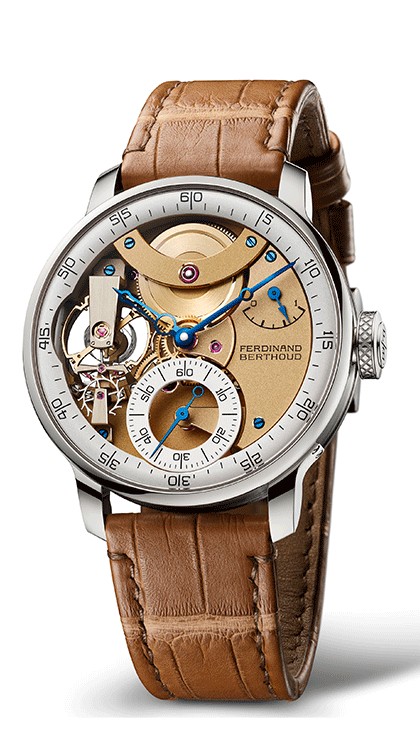
Ferdinand Berthoud Chronomètre FB 3SPC
Ferdinand Berthoud’s Chronomètre FB 3SPC is the only cylindrical balance-spring chronometer certified by the COSC. Many months of research and development were required to decipher the number of coils and the geometry of the terminal curves at the attachment points to meet the criteria of the COSC. This timepiece also stands out with its three-dimensional design that puts the escapement organs – the balance wheel, pallet wheel, and escape wheel – on full display. It comes in a case made of a pale shade (2N) of ethical gold and an egg-shell-coloured dial in sandblasted silver-toned brass.
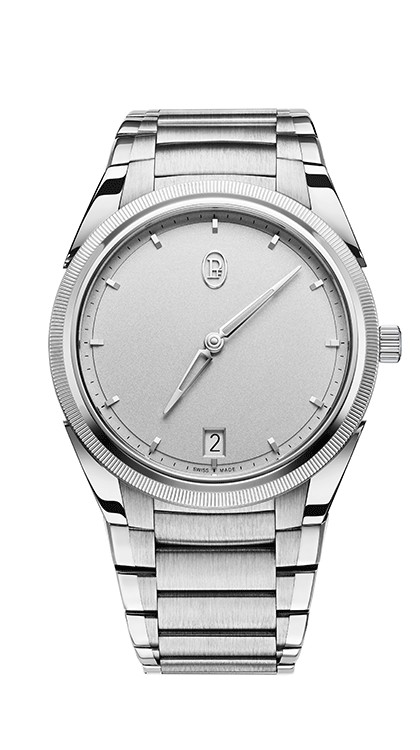
Parmigiani Fleurier Tonda PF Micro-Rotor
It isn’t always easy to distinguish white gold from platinum, but when it is the material of choice for a whole timepiece, it is impossible to miss as this precious metal is far whiter and brighter than white gold, which is recognizable by its warmer hue and higher shine. The Parmigiani Fleurier Tonda PF Micro-Rotor offers the perfect design to show off this material with its minimalist looks and different finishings which bring out the beauty of the metal. The timepiece is powered by an ultra-thin 3mm self-winding movement that features a platinum micro-rotor too.
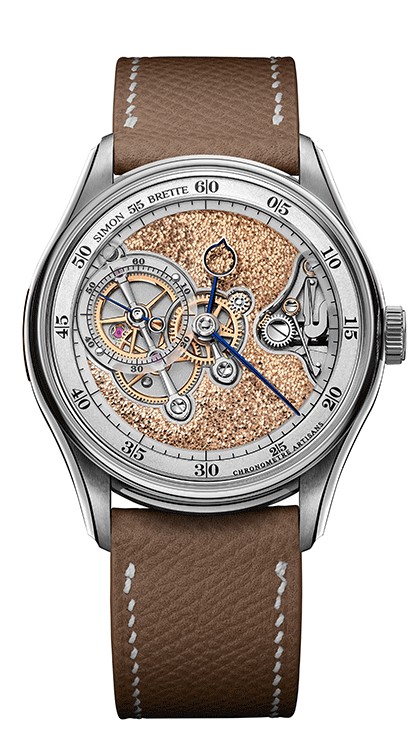
Simon Brette Chronomètre Artisans
Simon Brette’s Chronomère Artisans has caught the Academy’s eye to make it into the final selection thanks to its technical prowess, with custom-made components, and high level of finishing with meticulous handcrafted decorations. Every detail has been subtly drawn to create contrasts and a sense of visual depth, as in the finely bevelled, hand-polished edges of the three-quarter bridge, and the mirror-polished concave screws set in solid gold chatons. Available in a strictly limited edition of 12 pieces, the Chronomètre Artisans is powered a manual winding movement with a 72-hour power reserve.
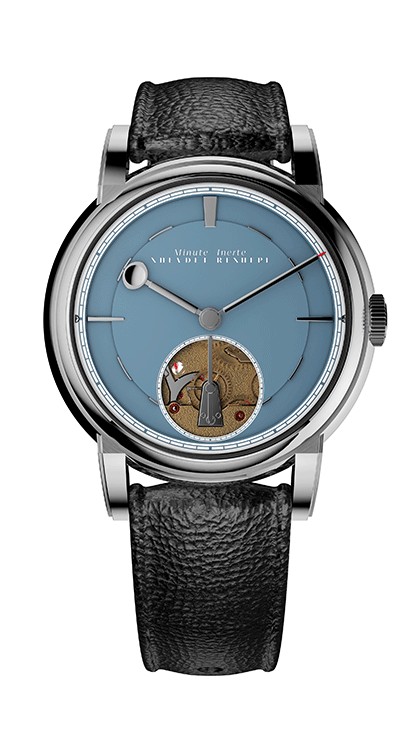
Xhevdet Rexhepi Minute Inerte
The “Minute Inerte” is the work of Xhevdet Rexhepi, who wanted to create his first timepiece in a classic, innovative, and timeless way. The result is a complication that allows you to read the time “to the minute” with a second hand that turns in 58 seconds before pausing for two seconds as it passes 12. This is a concept used by Switzerland’s train clocks too, so the trains can leave exactly on time (which they do, for the most part). On the aesthetic side, the Minute Inerte comes in a 38mm platinum case, with a blue dial and is limited to 50 pieces.
So, now for the results: Both our office and our readers voted for Simon Brette as the Best Men’s Timepiece Award, so let’s see who takes away the prize on the 9th and whether our predictions were correct!