IW Magazine - 23 April 2012
Michael Thompson
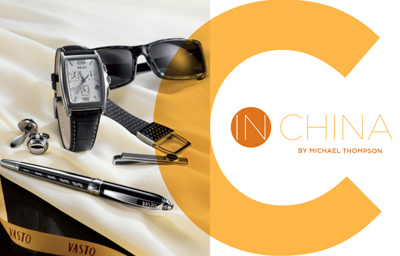
Marc Bernhardt is a veteran of the Swiss watch industry. He spent almost ten years with IWC, five of them building the brand in the USA. We met him recently in Switzerland and were amazed to hear that he is now working for the Chinese luxury group VASTO. He offers insights into the world of luxury sales in China.
Michael Thompson: Marc, tell us about VASTO.
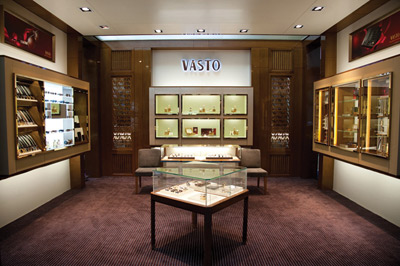
Marc Bernhardt: VASTO is a China-based luxury goods retailer with around three hundred points of sale throughout China. It is one of the pre-eminent luxury brands in China. Back in 1992 they were really at the forefront of satisfying the growing appetite of Chinese consumers for luxury lifestyle. It started purely as a men's clothing retailer—I guess you could say that they are the “Brooks Brothers” of China. I am the CEO for this luxury accessories division, which includes Swiss-made watches, writing equipment made in France and leather goods from Italy, for example.
Have you already moved to China?
No, I still live in Switzerland, but I spend around 100 days a year in China, actually most of the time in Guangzhou, which is the 13-million-person capital of Guangdong, where the company has its headquarters. When I am not in China, I manage the European suppliers and put all my efforts to building an international distribution. We now have VASTO shops in Switzerland and the Middle East and we will be expanding to France and to the United States. So unlike everyone else who is “going to” China, I am “coming from” China. By the way, we also have a stand in Basel in hall 2.0, stand A70.
Tell us about the Chinese luxury market.
China is a huge country with a population of 1.4 billion, but is made up of made very different markets of which differences may be as large as exist between Scandinavia and Italy. However, the “standardization” as evidenced by similar looking malls with uniform global brand marketing campaigns is leveling the playing fields. Based on the development and penetration (of international) brands, the market is largely divided into first, second, third and even fourth tier areas. First tier markets include Shanghai, Beijing and Guangzhou, which have modern infrastructure and a Westernized consumer. Other tier cities will include cities with a population of around 1 million each. Western brands usually enter China through tier one and two and then work their way down.
It is amazing to already see particularly the presence of some of the Swatch brands (Tissot, Rado, Longines) in fourth tier areas. So the notion that there is still virgin territory with ignorant consumers can slowly be dismissed.
So are you saying that China is reaching saturation for luxury products?
No, on the contrary! There is still plenty of potential and it is forecasted that two-thirds of future wealth creation will particularly take place in tier three and four areas. What I mean to say is that consumers are becoming much more knowledgeable and you have to have a credible brand and story to tell. To a large extent this is the problem that many Chinese “luxury” brands are facing—and there are many of them, from garments to luxury furniture. Many have been free-riding with adopted European sounding names or blatant copies of existing international brands—some of the examples with derivatives of Gucci, Dior or Boss are almost funny and should keep trademark lawyers very busy.
But what is the quality like of these Chinese luxury brands?
Well, some of it is really quite good reaching similar levels as international brands. Actually, you would be surprised to see the high prices, but we can touch on this subject when we talk about the consumers. Again, many international brands already produce many of their items in China, so a certain know-how and savoir faire is present in the Chinese manufacturing base. What Chinese brands lack is instilling a story, a meaning and raison d'être in their products. In the past it was sufficient to pretend to be European, preferably with a blond and blue-eyed model advertising the product. Today, this marketing strategy is passé. Consumers are asking questions and are generally more critical than in the past. Recently, there was a widely publicized scandal involving a luxury furniture maker that was selling high priced “Italian Made Furniture” that turned out to be low-end Chinese-made—the company needed police protection to fend off angry consumers.
Is VASTO also facing the same problems?
VASTO was one of the first luxury retailers, so they have built a strong credibility over twenty years. It is true that we too need to explain ourselves better to our clients. This is a process that I have initiated for instance with traveling post-Basel shows—we have also re-written our entire marketing concept, because we have some interesting facts and stories to tell. Lastly, we clearly say that our roots are Chinese but that the company was always inspired by Italian/European lifestyle.
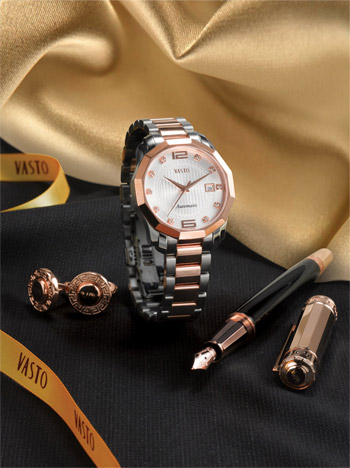
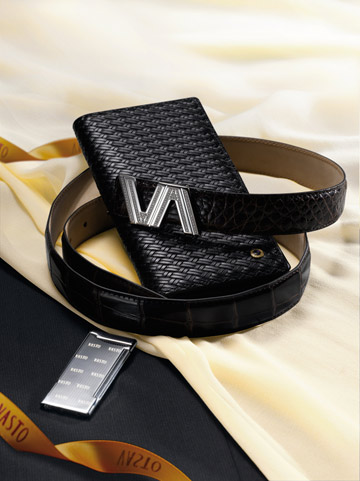
Most importantly, the majority of our products were made right from the beginning in Europe, often sharing the same suppliers as some of the established household names. For instance, all watches are made in Switzerland. Our writing equipment and smaller items such as cufflinks are made in France and Germany. Part of the leather goods are made in Italy. Actually, I spend fifty percent of my time handling the European supply side of the company. So in summary, we are moving from a Chinese to an international brand with an international array of fine products.
Tell us about the Chinese Consumer. What distinguishes them from American or European consumers?
For many years, China has been the origin of mass-produced goods often at the lower quality end. So perhaps, the impression may be that Chinese consumers having grown up in this environment will not be as demanding as their Western counterparts. This is totally false! I have rarely seen more demanding and finicky consumers. Visitors to Hong Kong may have already observed expensive watches in the shop window wrapped in protective cling film. A Chinese buyer will literally take out a magnifying glass to ascertain that there are no marks of use. Due to the propensity of fakes (from products to bank notes) Chinese are particularly careful. Anecdotally, this is also the reason why in restaurants a chicken (or any other meat dish) will often be served with the head to prove the genuine product.
On one hand, Chinese consumers will try to achieve a maximum discount, which is the reason why prices are often marked double the suggested price. On the other hand, things cannot be marked too cheap, as this would again raise suspicion that the quality was inferior or that the product may be fake. So setting the right price is a big challenge.
In general, Chinese are much more “suspicious” about the quality and serviceability of a product. For this reason, it is important to have a visible after-sales-service, an area where for instance Tissot leads with a technician work bench at each Tissot point of sale.
Are there major differences that a manager needs to know when operating in China?
There are some cultural differences that you need to keep in mind. The first is the well-known notion of not bringing someone to lose face (unless you really want to lose him or her). So criticism must be fine-tuned in a one-to-one talk. Negative feedback will only come back to you in disguise so that you yourself don't lose face. I see Chinese workers as very willing, super motivated and hard working who rarely bring any personal problems to work. So in general, this is a welcome change for me not having to solve also personal staff issues that you are often confronted with in Switzerland or the United States.
I think as a manager you have to realize your limitations due to the language and concentrate on managing by example—Chinese are very observant and your non-verbal behavior is very much exposed at all times. I may add that you absolutely need a good lieutenant (my Chinese lady) who can translate and communicate your ideas to non-English speaking Chinese. It's a challenge, but I am finding it personally very enriching to be working in this economic powerhouse. I feel very invigorated by the experience and sometimes wonder upon returning to Switzerland, not if but how the Western world will have to change to keep up with Asia and particularly China.
What are your plans for VASTO?
Personally, I want to grow and make many experiences in the very dynamic corner of this world. I want to pick up a few words in Chinese and become a profound connoisseur of the Chinese luxury market. As far as Vasto is concerned, I want to bring this great brand to eye-level with other luxury brands. I am seeking distribution partners throughout this world to increase its international exposure. We have set some challenging targets but I am certain that we can reach them because of the great people working literally relentlessly to make this come true.