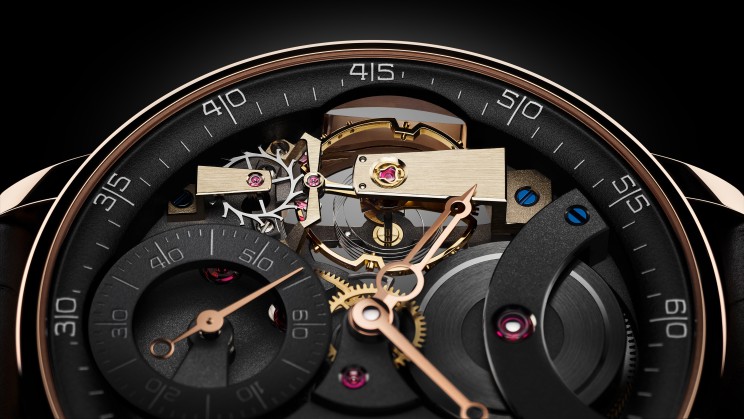
Almost invisible to the naked eye, the balance spring is nevertheless the silent conductor of horology. This discreet piece is essential for the proper functioning of a mechanical watch, particularly its regulation organ. The balance spring (or simply spring) is attached to the axis passing through the center of the balance wheel. When the balance wheel is set in motion, the spring is compressed or stretched, creating a restoring force that brings the balance wheel back to its initial position. When a watch is wound, this phenomenon occurs several times per second and creates a periodic movement, dividing time into beats transmitted to the rest of the mechanism by the escapement.
The flat spring: a universal standard
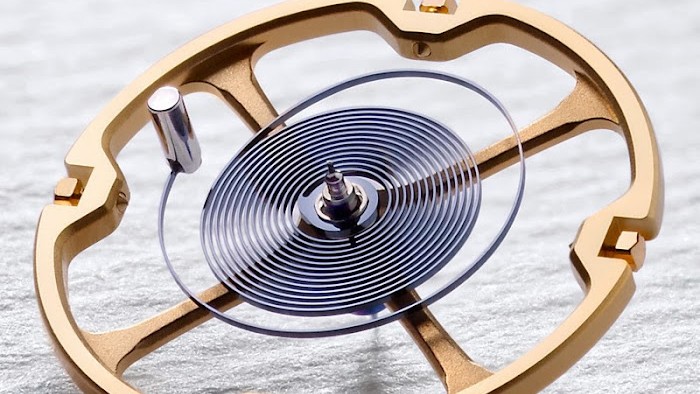
In the vast majority of mechanical watches, the spring is flat: it coils in a single plane, like a spiral drawn on a sheet. This type of spring is a proven standard: it is simple to produce, well-known to watchmakers, easy to adjust, and more than sufficient to ensure good accuracy. The entire watchmaking chain—from training to manufacturing—is optimized around it.
But this design has its limits. Indeed, one factor that makes a spring particularly suited to accurately measuring time is its ability to develop regularly and identically with each oscillation, without changing behavior over time.
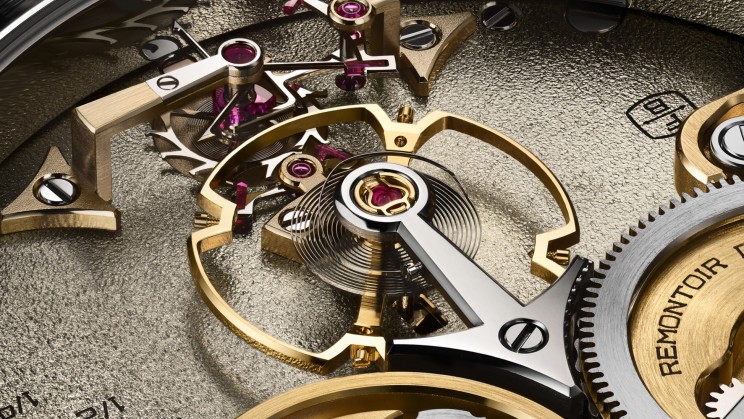
Unfortunately for watchmakers, the flat spring has its quirks: it never compresses and relaxes exactly the same way… This results in slight shifts in its center of gravity, creating imbalances: parasitic and irregular friction occurs on the balance wheel pivots, disrupting its motion. The effect is even more pronounced when the amplitude decreases—for example, at the end of the power reserve—or when the watch is worn vertically. Result: the regularity degrades, and accuracy becomes more difficult to maintain.
The cylindrical spring
To circumvent these limits, Ferdinand and Louis Berthoud (his nephew) developed the cylindrical spring in the 18th century. It does not coil in a plane but forms a vertical helix: its coils overlap with a constant diameter. This geometry allows for perfectly concentric development, without shifting the center of gravity. The balance remains stable, with superior isochronism compared to the flat spring. Historically, the cylindrical spring shone in a very specific context: marine chronometers, carefully stabilized in suspended boxes, always maintained horizontally. Under these conditions, it reached its full potential.
Making what should stay still move
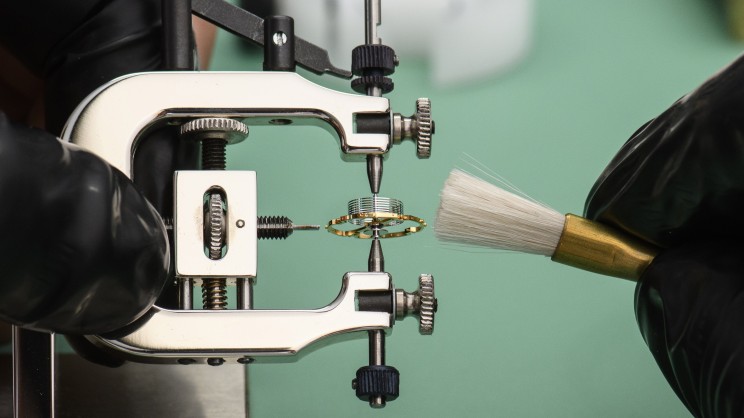
A wristwatch is subjected to different constraints: it constantly moves, changes position, endures shocks, accelerations, micro-variations in temperature… In this new environment, the qualities of the cylindrical spring may become drawbacks. Why? Because its mass is greater than that of a flat spring. In a vertical position, this mass acts differently depending on the orientation, which can create additional sources of error. From the first studies, the conclusion seemed obvious: this type of spring is not suited for wearing. This is even what COSC experts reminded Chronométrie Ferdinand Berthoud: obtaining a chronometer certification with a cylindrical spring? "Impossible!" A response as a challenge: the project was launched.
However, there is one exception: some tourbillon wristwatches are sometimes equipped with a cylindrical spring. In this case, the continuous rotation of the tourbillon cage mitigates the effects of gravity on the spring. It then operates in a more stable environment, making its use possible, even on the wrist. And while these rotations may make some dizzy, the spring feels a bit more at ease…
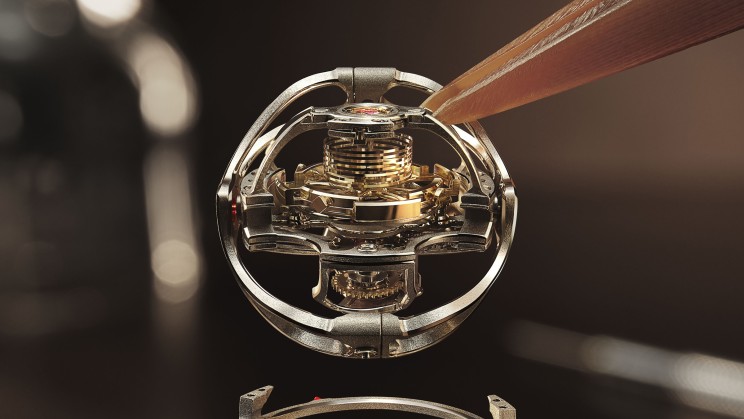
FB 3SPC: three years to shift boundaries
Chronométrie Ferdinand Berthoud chose to ignore the COSC's warnings and treat this limit as a frontier to be crossed. Thus, the FB 3SPC project began without an established plan, without any technical references, with one certainty: the shape of the spring would be the key. Everything else had to be invented.
The first prototypes worked in the laboratory: the spring alone, detached from the balance wheel, developed perfectly. But once integrated into a movement, things got complicated. Adding the collet—the piece attaching the spring to the balance wheel axis—posed a problem because its mass unbalanced the assembly…
The only solution: lighten the collet. But this involved modifying its dimensions, thus the attachment points, thus the terminal curves… and so on. Each adjustment required a new calculation, a new design, a new test. For three years, engineers and watchmakers worked to model, correct, and refine.
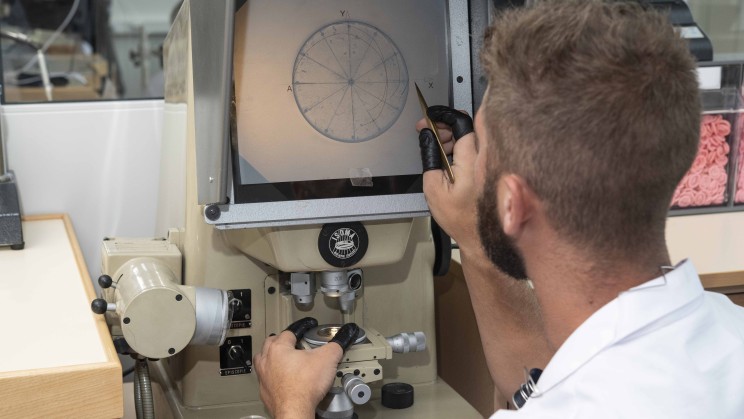
The first wristwatch with a cylindrical spring certified as a chronometer
In 2022, the FB 3SPC Chronometer was born. It is a world first: the only wristwatch equipped with a cylindrical spring to have obtained COSC certification. A technical feat, but also a human one. Every movement is adjusted individually, by hand, by a master watchmaker. There is no recipe: one needs to adjust, listen to the movement, and correct with a loupe.
And the results are there. The tested calibers show an average variation of 2.08 seconds per day, well below the COSC tolerance (-4 to +6 s/d). Better yet: 80% of them vary between -1 and +3 seconds per day. That's 2.5 times better than the official standard.
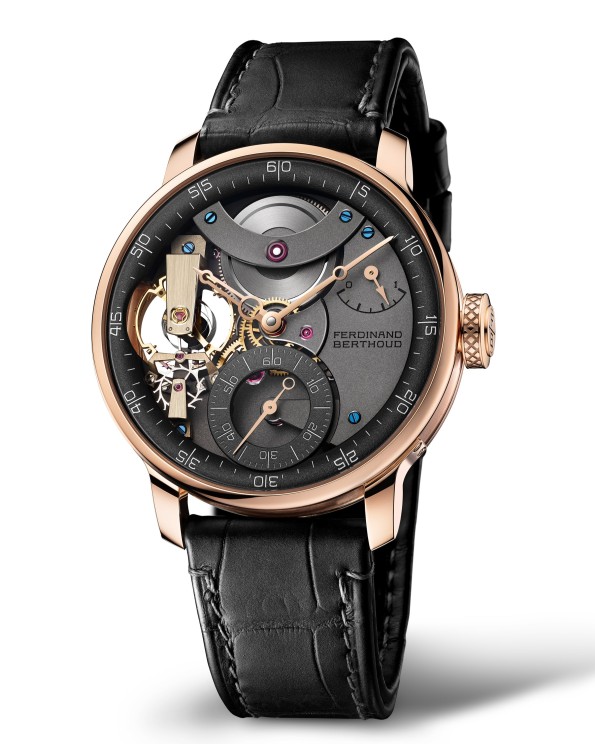
A pioneering spirit, always in motion
With the FB 3SPC, Chronométrie Ferdinand Berthoud did not simply create a watch. It crossed a line that contemporary horology considered impractical. By bringing the cylindrical spring back into a wearable timepiece, certified by COSC, the company proved that even principles established for centuries could be reconsidered, provided the necessary time, rigor, and freedom are dedicated to it.
This project is a return to the very essence of precision watchmaking: one where exploration and experimentation take place… A new land, drawn from a blank page, faithful to Ferdinand Berthoud's scientific legacy.