
As gold prices continue their relentless climb, luxury watchmakers are facing a familiar dilemma: how to preserve the appeal of precious metal without pushing retail prices beyond the reach of an increasingly cautious clientele. But for Bvlgari, the answer is clear – and was conceived in a design philosophy it embraced decades ago.
Long before the recent resurgence of two-tone watches, the Roman Maison was experimenting with the interplay of gold and steel. While many Swiss brands historically employed bi-metal construction as a way of creating intermediate price points between steel and full-gold models, Bvlgari approached the combination as a design statement in its own right. The result is a body of work that is increasingly relevant at a time when precious metals have become dramatically more expensive – and encompasses the Maison’s roots in jewellery as well as its watchmaking prowess.
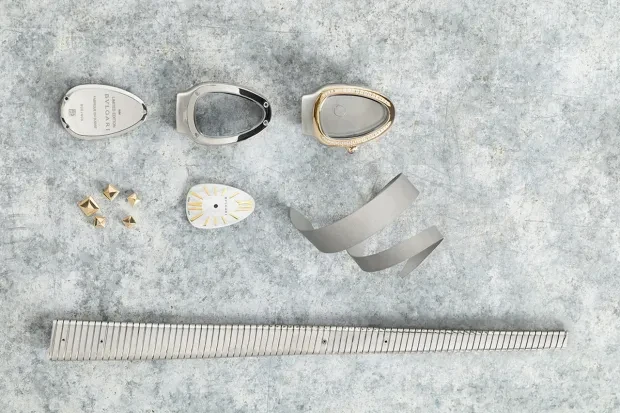
The roots of this philosophy can be traced to the 1970s. As Bvlgari expanded its focus from jewellery into watchmaking, it brought with it an aesthetic language shaped by Roman architecture, bold geometry and a willingness to challenge convention. And now, at a moment when the wider luxury industry is once again rediscovering the appeal of mixed metals, Bvlgari finds itself in an unusual position: not as a follower of the trend, but as one of its earliest and most consistent proponents.
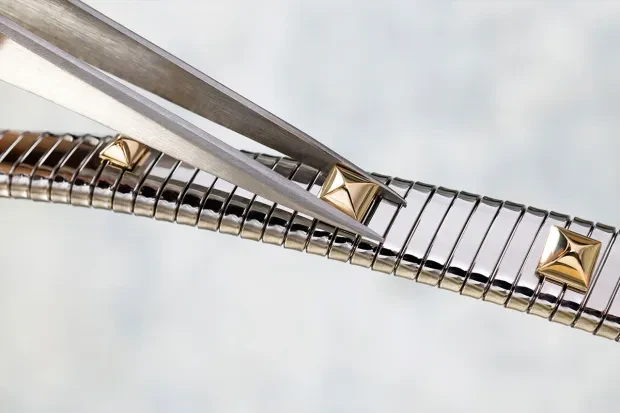
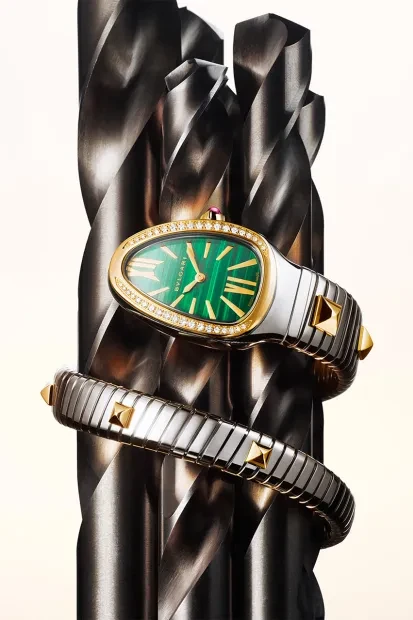
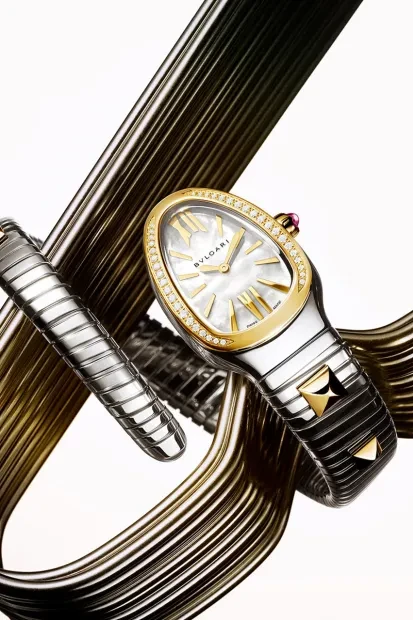
The launch of the four-piece Serpenti Tubogas Studs capsule collection at this year's Watches and Wonders was the clearest sign that this high-low combination is as important as ever to Bvlgari. Coinciding with the reveal of Tubogas Studs jewellery – including a truly stunning flexible clou-studded steel and gold choker – as well as bi-metal versions of the classic B.zero1 rings, it's a lesson in the value of design and a luxe expression of Roman ingenuity.
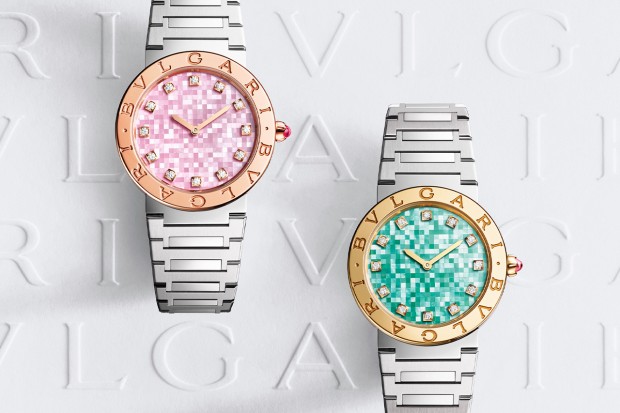
The launch of the Bvlgari Bvlgari watch in 1977 encapsulated this approach. Its engraved bezel, inspired by ancient Roman coinage, stood apart from prevailing Swiss watchmaking codes, and over the years the collection would appear in numerous combinations of steel and gold. Just this summer, two new mixed metal editions – one in yellow gold and steel with green mother-of-pearl marquetry dial, the other in pink gold, steel and pink mother of pearl – have been launched.
The same spirit carried through to the now-discontinued Diagono line during the 1980s and 1990s. Sportier in character but no less distinctive, many Diagono references paired stainless steel with yellow or rose gold, creating watches that balanced luxury and practicality without sacrificing visual impact. In hindsight, these pieces look remarkably prescient, anticipating today's enthusiasm for material experimentation by several decades.
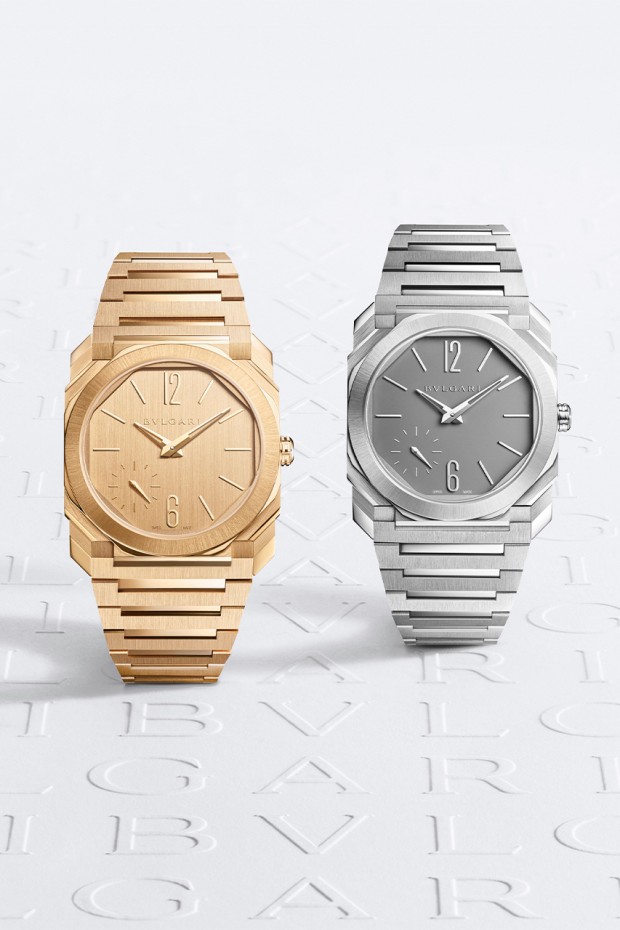
Today, the brand's most important watch collections tell two different stories. The Octo Finissimo, arguably the collection that transformed Bvlgari's standing within contemporary haute horlogerie, is best known in titanium, steel, ceramic and precious-metal executions – all mono-material references that lend themselves to the line's ultra-thin engineering and architecture.
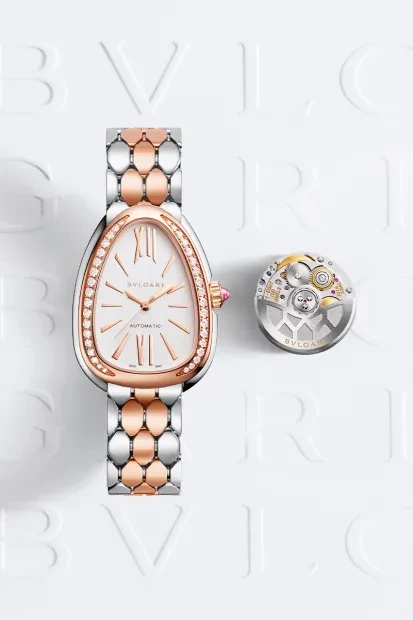
However, it's the Serpenti collection that offers a more direct link to the Maison's mixed-metal heritage. Models within the Serpenti Seduttori range continue to combine stainless steel and rose gold, demonstrating that the interplay between precious and non-precious materials remains central to Bvlgari's identity.

A material conundrum
The economics behind these watches are becoming increasingly compelling. Gold has experienced a remarkable rise over the past several years, reaching successive record highs amid geopolitical uncertainty, central bank buying and investor demand for safe-haven assets. As the cost of raw materials rises, bi-metal watches occupy an increasingly attractive middle ground. They deliver much of the visual warmth and prestige associated with precious metal while requiring substantially less gold than a full-gold case and bracelet.
For consumers, they offer a more accessible route into precious metal ownership. For brands, they provide a way to preserve margins without imposing the dramatic price increases often seen in all-gold references.
There is also a stylistic argument in favour of mixed metals. In an era where watches are expected to transition effortlessly between tailoring, sportswear and evening dress, steel and gold offer an adaptability that purely precious metal watches can sometimes lack. The contrast between warm and cool tones introduces versatility, while also allowing brands to preserve a sense of luxury without sacrificing wearability.
For Bvlgari in particular, this balancing act comes especially naturally. As a Maison that has always existed at the intersection of jewellery and watchmaking, its use of steel and gold was never merely pragmatic. It was aesthetic, architectural and unmistakably Roman. The materials themselves became part of the design language, every bit as important as the engraved bezel of the Bvlgari Bvlgari or the sensual curves of the Serpenti.
Are we titanium?
That position is particularly interesting given the wider industry's growing fascination with titanium. Once considered a niche material prized primarily for its lightness and technical appeal, titanium has become one of modern watchmaking's most desirable metals. Bvlgari itself has become a master of the medium, taking on the challenge of fashioning its World Record-breaking Octo Finissimos in this notoriously finicky metal. Over recent years, some brands have made the leap in experimenting with pairing it with precious gold, creating a small cohort of bi-material watches that combine the warmth of gold with the comfort and sportiness of titanium. So far, Bvlgari seems to be resisting. So who is leading the charge?
Among the pioneers is Audemars Piguet, whose 2024 Royal Oak Offshore Chronograph 43mm in pink gold with a titanium bezel recently explored this marriage of materials, while Hublot has also demonstrated the aesthetic potential of titanium and King Gold within various Big Bang references – most notably the Unico. Omega’s 2018 limited edition Seamaster Diver 300M Titanium, Tantalum and Sedna Gold is another example of this unusual combination, as is Richard Mille’s RM 11-03 Rose Gold Titanium. Bvlgari, however, has until now stuck to its guns. While the Maison has occasionally incorporated rose gold accents into titanium executions of the Octo Finissimo – through crowns, hands, indices or movement components – it hasn’t embraced titanium and gold as a fully-fledged bi-metal proposition in the way it has long championed steel and gold.
For now, that restraint still seems to make sense. Titanium belongs to the world of contemporary sports watchmaking: technical, lightweight and performance-driven. Steel and gold, by contrast, carry an inherently more jewellery-led sensibility, one that aligns naturally with Bvlgari's Roman heritage and its longstanding expertise as a jeweller first and watchmaker second. As some of its contemporaries tentatively push towards titanium and gold as the next frontier of mixed materials, Bvlgari remains committed to the classic notion of bi-metal – but with its reputation as a Maison that really enjoys pulling off all manner of surprises, it might prove to be a combo that’s on a not-too-distant horizon.
However, for now, sticking to the ‘traditional’ gold and steel bi-metal mix may prove particularly advantageous for Bvlgari. Unlike brands that have recently rediscovered two-tone styling, Bvlgari doesn't need to reinvent the concept or market it as a nostalgic revival. Gold and steel have been part of its visual vocabulary for decades, and what began as a bold design choice in the 1970s now appears remarkably prescient. Bvlgari's steel and gold creations speak for themselves, rooted not in trends or economics, but in design history, jewellery expertise and a distinctly Roman understanding of glamour. This longstanding embrace of mixed metals may have inadvertently created a blueprint for the future of luxury watchmaking – and even when drawing from the past, Bvlgari remains, as usual, well ahead of the game.
FAQ
Q: How do you pronounce Bvlgari?
A: Bvlgari is pronounced "bull-GAH-ree." The Roman jewellery house spells its name with a V instead of a U (sometimes written Bulgari) to echo the ancient Latin alphabet, reflecting the Maison's roots in Roman architecture and design.
Q: What is a two-tone watch?
A: A two-tone watch combines two materials, typically steel and gold, in one case and bracelet. Bvlgari has used the combination since the 1970s as a deliberate design statement rather than a cheaper alternative to solid gold.
Q: What is the Bvlgari Serpenti collection?
A: The Serpenti is Bvlgari's snake-inspired jewellery and watch line, first introduced in the 1940s. Recent pieces such as the Serpenti Tubogas Studs and Serpenti Seduttori combine stainless steel with rose or yellow gold, continuing the Maison's mixed-metal heritage.
Q: What is the Bvlgari Bvlgari watch?
A: The Bvlgari Bvlgari is a watch collection launched in 1977, defined by an engraved bezel inspired by ancient Roman coins. It has since appeared in many steel and gold combinations, including new editions unveiled this summer.