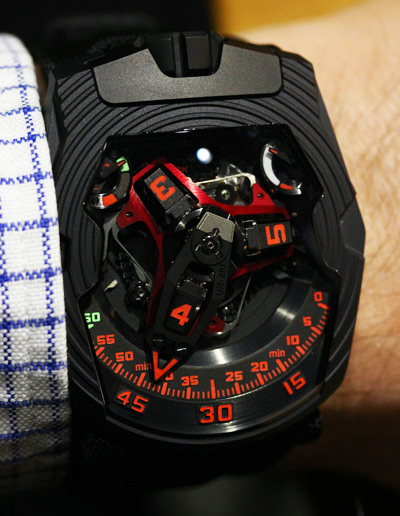
The golden age of the founding fathers
Arnold, Berthoud, Breguet and the like have inspired the « wristwatch that feels like a 1800s pocket watch » style. It bears many interpretations, from the literal to the contemporary. What they have in common is a certain flair for retro components' shapes, dial details like guilloché and a deep attachment to the fundamentals of mechanics.

The 1910-20's military watch
It's not often that a contemporary reinterpretation has the same size as their ancestor. But the early wristwatches were in fact pocket watches with lugs soldered on, sometimes in a haste, to attach a strap. Big crowns, big dials, big digits, cathedral hands, readability is paramount.
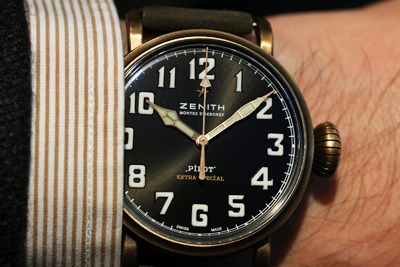
The 1930's geometric watch
Diminutive sizes, formal design, details based on a savvy for symmetry, Art Deco style applied to watchmaking has left us many a shape watch. And the lean 1930's lines combined with subtle ornamentation too.
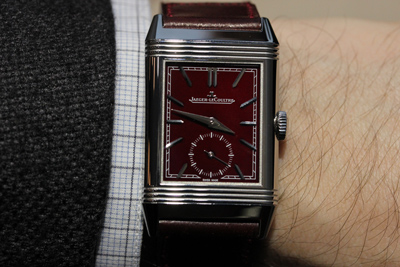
The 1940's officer watch
It's the dawn of the era of functionalism in watchmaking. Military colors (drab, black and khaki), wide openings on occasion, a requirement of accuracy, no frills, the WW2 officer watch was a trailblazer for what will later be named Tool Watch.
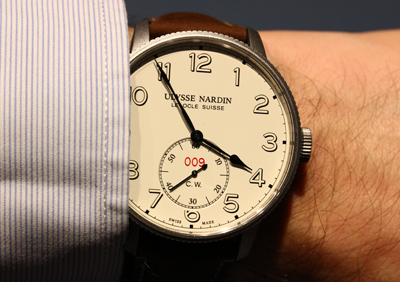
The 1950's elegant watch
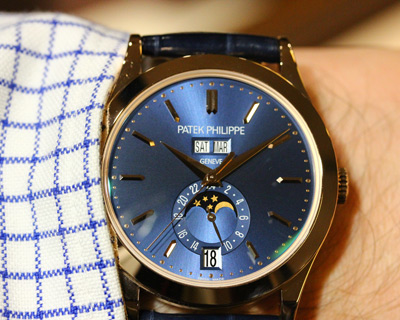
With its lean but elaborate details carefully scattered on light dials, the 1950's classy look has become familiar because it's where the neo-vintage revival all began...before Mad Men gave it a worldwide captive audience. Small diameters, discrete complications, round and above all slim cases, it is the epitome of timeless timepieces.
The 1960's pilot's watch
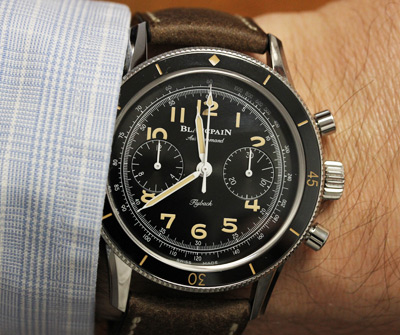
Professional procurement, the rise of the jet fighter and a better understanding of the technical requirements of navigation have made this a rather uniform category : flyback chronograph, rotating bezel, mainly black over brown leather and of course, faux-radium hands.
The 1960's diver watch
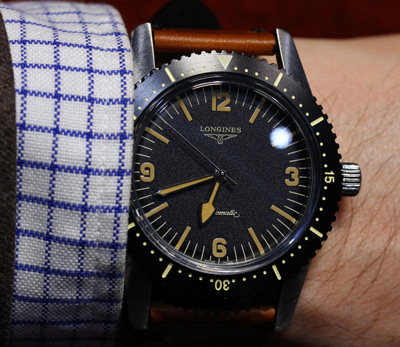
When diving watches entered the modern age, they too quickly converged on the one type. Black dial, one-way-rotation bezel with deep knurling, thick crowns and a quest for contrast and readability, which entailed rather large cases. And once again, faux-radium hands.
The exuberant 1970's sports watch
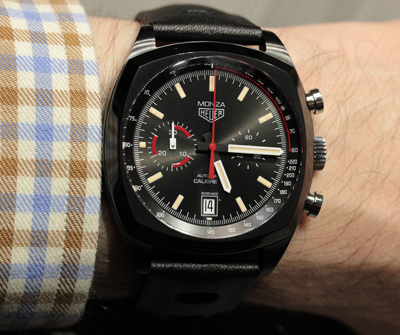
In the wake of the Swinging London and Hippie movements, watchmaking let it fly, man. Cases grew larger, bolder, took shapes that had gone out of style for decades (square, cushion, tonneau). Colors got really lively : touches of teal, red and orange fit with the times of the bell-bottom pants and peak leisure civilization.
Nostalgia for the future, the 2039 watch
Yes, this is one of today's neo-vintage styles. The futuristic timepiece was in fact a pillar of the great 2000's shakeup. It is as relevant as ever because the future has one thing the past doesn't : it can always be pushed to a later date and therefore, reinvented.