On 14 March this year, the International Museum of Horology (MIH) in La Chaux-de-Fonds opened a new section of its permanent exhibition called Espace Style, dedicated to watch and clock styles from the 16th century to the present day. Exhibited in an original way, the different timepieces reflect fashions and trends over the centuries, ranging from the first clocks of the Renaissance to watches with a contemporary design.
Conceived several years ago, this new space perfectly illustrates the place occupied by clocks and watches in different epochs. Contrary to the larger part of the Museum, where the emphasis is more on technology, the new section focuses above all on the aesthetic nature of exhibits.
The main display cabinets representing different periods are accompanied by five other displays featuring mannequins dressed by stylist Adeline Rappaz, a native of La Chaux-de-Fonds, to give an idea of what people were wearing at the time. The displays contain watches and clocks but also paintings that trace the history of watchmaking, such as the Gentleman with Watch (anonymous), the Watchmaker's Workshop by Jean- Baptiste Quidez, and the Watchmaker and his Family by Fritz Zuber-Bühler.
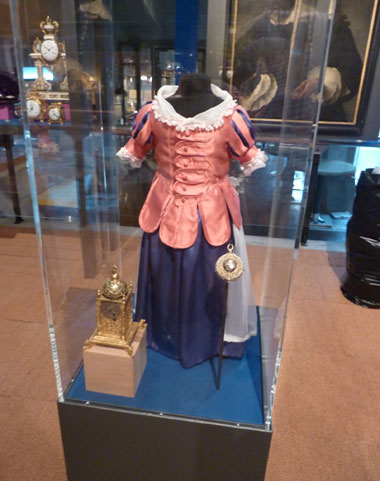
The first part features exhibits from the 16th and 17th centuries, an era when timepieces, originally intended for church towers and belfries, «entered» the home as a result of technical advances reducing their volume. Initially the preserve of high-ranking clergy and town worthies, these pieces resembled their owners. Genuine objets d'art, they are characterised by a great diversity of shapes and materials. Affixed to the wall in the first instance so that pendulums could drive their movements, later, with the advent of the mainspring, they became table clocks. Marking their affiliation with the belfry, these early models are often reminiscent of towers; then, with changes to their form and further reductions in size, the first watches made their appearance.
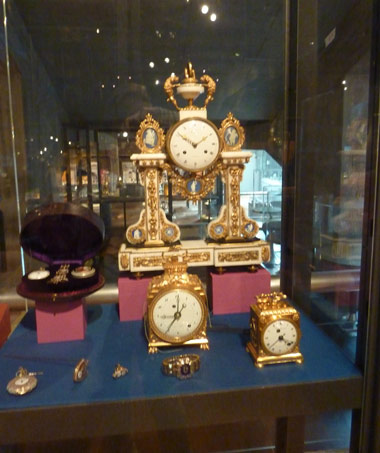
The exhibition continues with 18th century collections. Hung on walls or placed on tables or mantelpieces, clocks became an essential home decoration reflecting the tastes and styles of the day. Watches, known initially as «onions» because of their shape, were relatively large, often with more than one case, serving both as protection and embellishment.
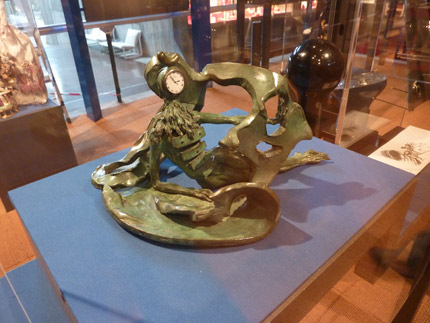
Timepieces of the second half of the 18th and 19th centuries were marked by the quest for accuracy. Many improvements were made to movements by great watchmakers. The decoration of clocks followed the tastes and influences of the time, and watches, now more slender, were adorned with rich and varied decorations, including gold, enamel and precious stones. Represented in different forms, some even became bracelets.
Finally, a section of the exhibition is dedicated to watches created by artists. While the latter have been instrumental down the centuries in the inspiration to create watches, it was in the 20th century that horology became particularly accessible to them. Hence designers, architects and other artists were able to express their perception of time by creating original models, produced by the million or in very limited editions.
A veritable journey through time, fashions and styles, the new space of the International Museum of Horology retraces to wonderful effect the history of timepieces from the 16th century to the present day. While the exhibition is permanent, it describes itself nonetheless as a work in progress. Thus, over time, certain pieces may be added or withdrawn.