Revue FH - 17 June 2010
For its 2010 temporary exhibition, le Château des Monts has chosen to present the world of chronometry, following in the wake of the first international chronometry contest of the 21st century organised last year to mark the 50th anniversary of Le Locle Watchmaking Museum. The city is a particularly apt venue thanks to its watchmaking roots and the fact that it was one of the main production centres for the marine chronometers that carried its renown literally across the seas.
Entitled «The age of the chronometermakers », the exhibition presents all sixteen timepieces entered in the 2009 International Chronometry Contest in three thematic contexts: the long voyage of the marine chronometer; the artisans of chronometry; the observatories and timing contests that helped perfect the accuracy of chronometers. These themes provide a framework for retracing different stages in the great adventure of mechanical watchmaking and its quest for precision, and reveal the modus operandi of timing contests organised by astronomical and chronometric observatories.
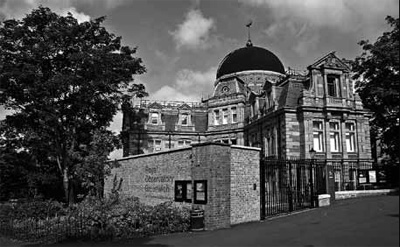
The exhibition highlights the importance of research carried out by John Harrison in marine chronometry and the need to accurately determine longitude so that seafarers could find their bearings back in the 18th century. It reveals the synergies in play from the second half of the 19th century between watchmakers who graduated from schools of watchmaking and manufacturers whose products earned Switzerland a reputation for excellence. Finally it relates the history of astronomical and chronometric observatories and their role in certifying the accuracy of timepieces, through to the presentation of chronometers entered in the 2009 International Chronometry Contest.
«The age of the chronometer-makers» creates an open dialogue, a direct link between past and present that is also a tribute to the research and work of those who became known as the «grandees of watchmaking», all of whom were driven by a passion for perfection and precision. The exhibition is also an ideal opportunity to kindle interest among visitors – whether their fascination lies with the sea or with watchmaking – in the world of chronometry through a series of accessible explanations. It invites them to appreciate the immense value of a tradition that is still very much alive, as testified by the success of the contest organised in 2009, which incidentally will be repeated in 2011.
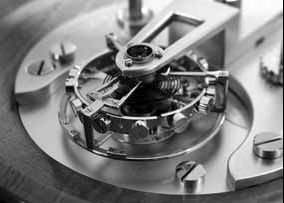
Visitors can admire around seventy pieces such as marine and ship's chronometers, pocket watches and wristwatches, including around twenty tourbillons, plus a number of high-precision regulators. The assembled exhibits come from the collections of Le Locle Watchmaking Museum, the International Watch Museum of La Chaux-de-Fonds, the manufacturer Girard-Perregaux and private collectors, as well as items loaned by participants in the 2009 Chronometry Contest. There are also three videos accompanying the exhibition: Neuchâtel Chronometric Observatory (TSR, 1985), The fabulous destiny of inventions – And then there was longitude (Axel Engstfeld Productions, 2002), Make or break time – shock testing at the International Chronometry Contest (HE-Arc, 2009).
The exhibition runs until 26 September and is open from 10am to 5pm, Tuesday to Sunday, as well as Swiss Federal Fast Monday.