The Moser watchmaking dynasty.
1730 Johannes Moser, grandfather of Heinrich Moser, is born in Schaffhausen. After an apprenticeship as a watchmaker, he assumes the hereditary and honorary position of town watchmaker. He later becomes a Cantonal Councillor.
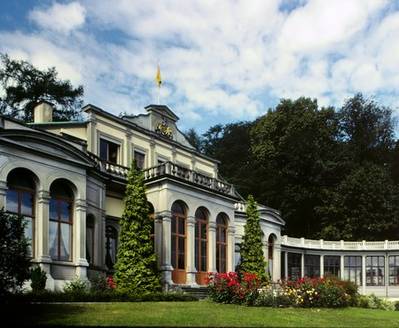
1760 Erhard Moser, father of Heinrich Moser, is born in Schaffhausen. He inherits the position of town watchmaker from his father and is himself a member of the Cantonal Council.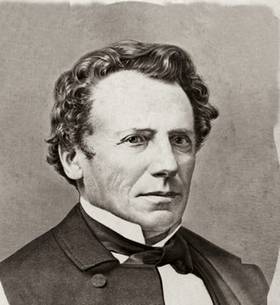 1805 Johann Heinrich Moser is born on 12 December. He learns the traditional watchmaker's craft from his father between 1820 and 1824.1824 Heinrich Moser's travels take him to Le Locle (Switzerland) and its master watchmakers' workshops. He rapidly gains respect as a skilled watchmaker, and he is able to start a successful small business to supply spare parts. It only takes Moser about eighteen months to develop a reputation as an outstandingly talented specialist, and he receives offers of work from Italy and Paris.1826 Moser works for the first time on his own account by building clocks into cases and pieces of furniture.1827 The prospect of good business draws Moser to St. Petersburg in Russia. After a hazardous journey by horse and carriage and by ship, his money eventually dwindles away. He starts work as a watchmaker in the local workshops.1828 The trading company, H. Moser & Co., is founded in St. Petersburg. This marks the hour of inception of what would eventually grow into such a successful brand. Moser's business flourishes, which can certainly be attributed to the fact that the watches sold by him are supplied only in high quality. Not a single watch is allowed to pass over the shop counter unless it has been inspected personally by him or one of his representatives.1829 In order to maintain this demand on superior quality, he establishes a watch factory in Le Locle to produce watches exclusively for his businesses in Europe and Russia.1848 Moser, by now a wealthy merchant and watch manufacturer, decides to return to Schaffhausen with his family. From this point on, he sees his true life's work as the transformation of Schaffhausen, a very quiet town in those days, into a lively and attractive industrial location. At the same time, he also builds the magnificent Charlottenfels manor house for his family.
1851 Moser completes the construction of a canal on the Rhine, the water from which drives a turbine with an output of about 80 h.p.
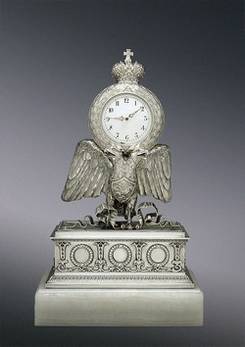 1853 In a joint venture with other Schaffhausen personalities, Moser establishes the “Schweizerische Waggonfabrik bei Schaffhausen” (Swiss Wagonworks at Schaffhausen) and, in the same year, the “Schweizerische Industriegesellschaft (SIG) Neuhausen” (Swiss Industrial Company Neuhausen). Moser is a co-founder of the Schaffhausen-Winterthur railway line, also in 1853. He also opens a workshop for the manufacture of watch cases in Schaffhausen.1860 The company archive of Jaeger-LeCoultre from this year lists Heinrich Moser as a customer. Over time, he procures up to 64 different calibres, including 24 complications, from them. The uncompromising quality of his watches gains him access as a supplier to the Imperial Russian Court, various royal houses and the armed forces. Within just a few years, he is selling watches to Japan, China and Persia, but also in the Western world e.g. in Paris and New York.1863/64 Heinrich Moser embarks on the construction of the largest Swiss dam over the Rhine, to supply neighbouring industrial companies with inexpensive energy via a power transmission system. This hydroelectric power station marks the dawn of the industrial age in Schaffhausen.1868 Moser supports F. A. Jones in the foundation of his International Watch Company (IWC) by providing premises and energy to drive the machines.1874 Heinrich Moser dies on 23 October. His last will names his second wife, Fanny, as the heiress of all his business interests.
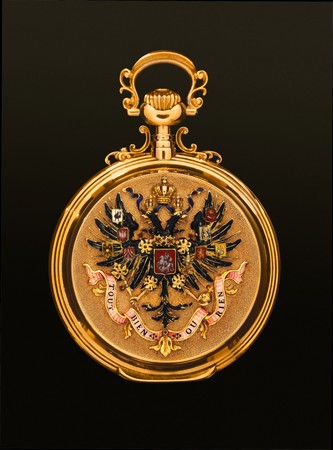
1877 Fanny sells the entire Russian operation to the local Managing Director, Mr Winterhalter. The watch factory in Le Locle goes to Paul Girard. The contracts of sale stipulate that all successor companies must continue to operate in perpetuity under the registered brand names of H. Moser & Cie. or Heinrich Moser & Co.1917 The Russian October revolution completely eliminates the private watch market in the country that is dominated by the Swiss watchmakers. The last of the Swiss Directors of the Moser company travel back to Switzerland in early 1918 totally expropriated. The business in Le Locle is spared from these political upheavals and continues to operate unaffected. An attempt is made to compensate for the loss of the Russian markets through increased exports to other countries.1920 The State-owned “Central Watch Repair Workshop” in Moscow is formed from the remains of the Moser watch businesses.1953 Wristwatch production in Le Locle is expanded, and the proportion of pocket watches produced steadily decreases. Some of the watches also bear the name “Henry Moser”, although this is in breach of the 1877 agreements.

1973 H. Moser & Co. is mentioned as a manufacturer of precision lever escapement watches and special watches, predominantly in 18-carat gold and in cases set with precious stones. The quartz watch crisis that is widespread throughout the Swiss watch industry also affects the business in Le Locle.1979 The watch factory in Le Locle becomes part of the “Dixi-Mechanique” Group and trades as “Hy Moser & Cie.”.
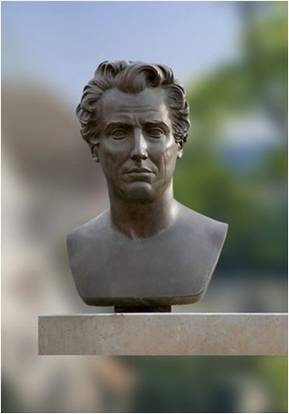 2002 The original brand of the founder, “H. Moser & Cie.”, is registered once more internationally by Dr. Jürgen Lange. Moser Schaffhausen AG is launched jointly with representatives of the Moser family. Today the great-grandson of Heinrich Moser – Roger Nicholas Balsiger – is Honorary Chairman of the Board of Directors.2005 To mark the bicentenary of Heinrich Moser's birth, the successor company, Moser Schaffhausen AG, is once again launching a range of watches on the international watch arena under the H. Moser & Cie. brand that are faithful to the legacy of the founding father.2006 H. Moser & Cie introduces its 4 watch ranges, Moser-Perpetual 1, Monard Date, Monard and Mayu, to a broad public for the first time at “BaselWorld 2006”.2006 The collaboration with the internationally renowned Wirz Werbung AG Zürich is also announced at “BaselWorld 2006”, and the new communications platform is presented. 2006 MONTRE DE L'ANNEE 2006 – 2nd prize for the MOSER-PERPETUAL 1. In the opinion of the professional jury of the special-interest watch magazine, MONTRES PASSION: “The classic case of the Perpetual 1/Flash Calendar from Moser conceals a highly innovative mechanical movement”.2006 GRAND PRIX D'HORLOGERIE DE GENÈVE – Prix de la Montre Compliquée. In November 2006, H. Moser & Cie wins one of the most highly coveted prizes of the Swiss horological industry. The MOSER-PERPETUAL 1 takes first place in the complicated watches category.
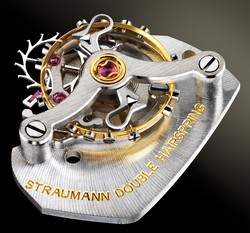 2007 “BaselWorld 2007” is the venue where H. Moser & Cie introduces the STRAUMANN HAIRSPRING, developed jointly over several years with its associate company Precision Engineering AG, Schaffhausen, to an international specialist audience.2007 The new HENRY Double Hairspring watch line, a tonneau watch with the revolutionary double hairspring escapement from Moser, is presented at “BaselWorld 2007”.2007 Palladium, an extremely rare precious metal with a brilliantly radiant white lustre, also embraces the realm of watches from H. Moser & Cie. The MAYU Palladium model is presented to the public.2008 The H. Moser & Cie brand celebrates its 180th anniversary. 2008 The holding company, MOSER GROUP AG, is founded. All the associate companies are now united under a single roof. Moser Schaffhausen AG, Precision Engineering AG and MSG AG Manufacturing Support Group together assure the independence, major public success and enormous growth of the H. Moser & Cie brand.2008 The MAYU Black Pearl and MAYU White Pearl with mother-of-pearl dials and elegant stingray leather straps are launched on the market.2008 The MAYU Palladium receives the Straumann double hairspring escapement with its escape wheel and pallet fork in hardened white gold. An external clue is provided by a newly developed colouring for the dial.2009 Moser Group AG continues to invest in the verticalization of production for its group members.
Around 70 jobs have now been created and an in-house production facility has been set up.
2009 In view of the great success of the highly elegant fumé dial, the Henry and Monard models are now
made available in this design with a brilliant white palladium case with Straumann Double Hairspring
escapement.
2009 A reproduction of the original book dating back to 1875 on the life of Heinrich Moser is produced in
an exclusive private edition. The book, which was written shortly after his death and which is rarely
to be found in the original, is now presented in a boxed set together with the translation into other
languages, in modern typography.
2010 The multi-million investments by the Moser Group in expertise, longevity and growth are largely
completed. The Moser Group emerges strongly from the international financial crisis. H. Moser &
Cie acts as principal sponsor of a major equestrian event for the first time. The 4-star CSI Basel 2010
tournament achieves a spectacular debut with outstanding international competitors and an exclusive
programme of associated events.
 2010 The Moser Perpetual Moon is unveiled. Another superlative watch with a moon phase display which
can be set accurately to the minute and can run over 1,000 years without adjustment.
2011 The CSI in Basel, the world's best-endowed indoor show jumping competition, is awarded 5-star
status, not least because of the sponsorship of H. Moser & Cie. Moser celebrates this with the launch
of the Monard Marrone.
2011 The Perpetual 1 Golden Edition is premiered. With solid gold fumé dial, gold hands and a movement
with solid gold plate and bridges, together with the interchangeable Straumann Double Hairspring
escapement, it releases a torrent of emotions, the high point being the world's first functional
diamond end stone in a shock-absorber.
2011 The Moser Perpetual 1 Fumé Palladium is the first watch with a perpetual calendar combining the
advantages of the double hairspring escapement with the complexity of an elegant, quintessentially
Moser watch.
 2012 The first Moser watch with automatic movement is presented at «Baselworld 2012». With its innovative second time zone, the Meridian range again underlines Moser's expression of elegance and throws light on the meaning of its maxim «passionately different».
Featured brand