
The Tortue case design originated at Cartier in 1912 as the maison’s third wristwatch shape after the Santos-Dumont and Tonneau. Its distinctive form is, as the name implies, inspired by the curved silhouette of a tortoise shell. With circular and rectangular watches being a focus for many collectors, the soft shape of the Tortue is a studied choice that blends curves and straight lines for a refined, organic aesthetic. After more than a hundred years, it is still a recognisable shape that stands out in a crowd, and Claude Meylan offers a contemporary take with its own open-worked twist.
A timeless shape reimagined
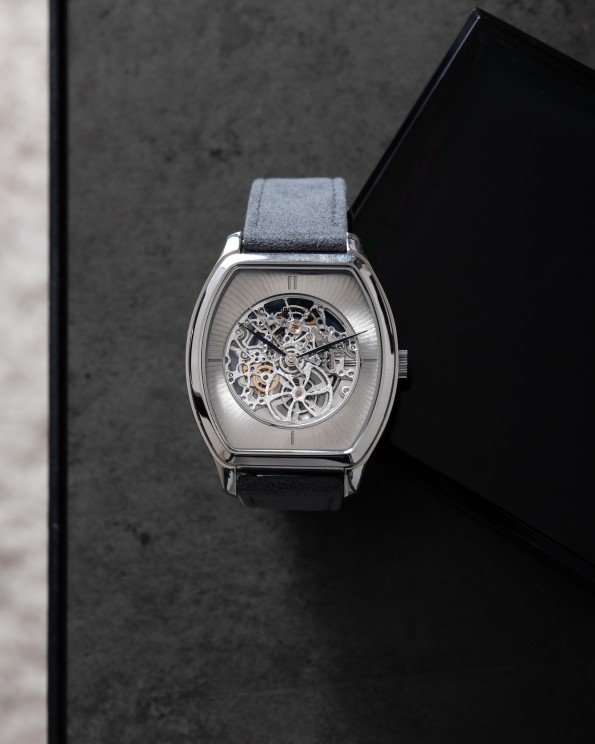
Claude Meylan’s Tortue collection is proof that the Vallée de Joux still has surprises left for us. The maison takes the familiar tortoise-shell case and strips it down, baring its skeleton with a flourish that feels both audacious and inevitable. Claude Meylan achieves this while managing the delicate balance between formal elegance and modernity, without any overt hints of homage, except for the spirit of the classic shape. The Tortue de Joux floated its calibre between sapphire plates like a horological apparition. At the same time, the brand’s Tortue Swirl re-composes the case with baroque curves and a re-positioned balance that draws the eye. Even the feminine Tortue Lady Sunrise pushes artistry further, marrying guilloché and skeletonisation. This isn’t homage—it’s Claude Meylan making the tortue case its own. Earlier this year, we saw a different take from the brand, with the Ligne Tortue 6091 offering a shape-play between curves and circles in a suave, monochrome form.
The Ligne Tortue 6091
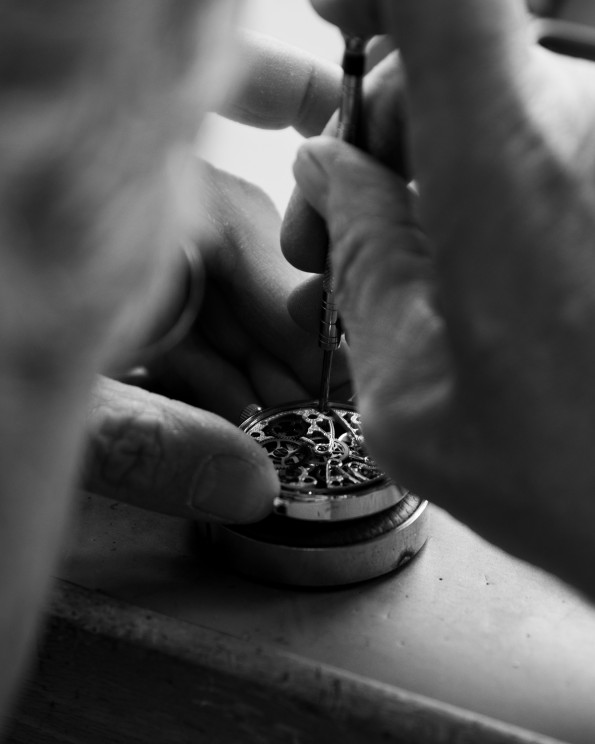
There is an inherent strength in the soft, yet rigorous standards set by Claude Meylan for its expanding Tortue collection. But the latest 6091 stands out with its own personality. The sweeping case sides have a 40mm width at the centre, while the dial itself seems to distil the brand’s squelette art, or skeletonisation, within its compact centre. We are used to seeing the expansive use of the 40mm case by Claude Meylan, often offering a more flamboyant take on the timeless Tortue, but this is restrained. The distinct sunray brush pattern of the dial’s outer rim, a chapter ring of sorts, has minimalist engraved markers at the four cardinal points, as the pattern draws the eye to the openworked centre. The 11 ½ ligne calibre is based on the ETA 2892, with a fully skeletonised and engraved interpretation that endows it with a strong personality.
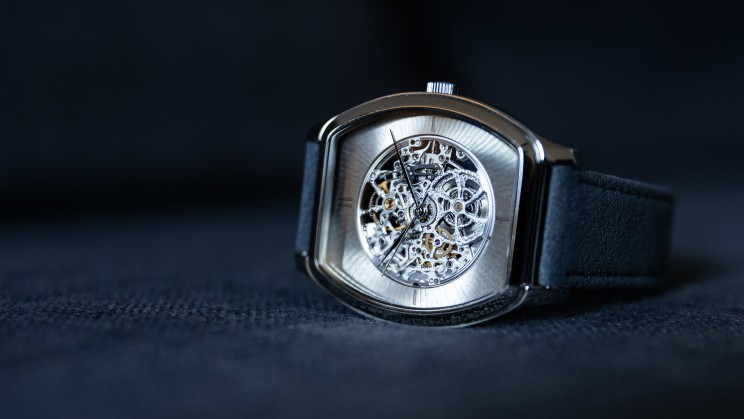
The Cartier Tortue has long been shorthand for classicism, and its rounded tonneau profile is instantly recognisable. Claude Meylan’s Ligne Tortue 6091 acknowledges heritage and reinterprets it for collectors who crave more than surface beauty. By opening the case to reveal a framed circular and re-engineered skeleton calibre, the brand doesn’t dilute the Tortue legacy. Instead, it reframes it for an era of transparency and technical storytelling. Where Cartier wrote the prologue, Meylan provides a new chapter — one where the tortue case becomes both a historic reference and a horological showcase. For seasoned enthusiasts, it’s proof that heritage and innovation can co-exist.