
At A. Lange & Söhne, the large date is an institution. Since its reappearance on the Lange 1 in 1994, it has become the most immediately recognizable signature of the Saxon manufacture. And contrary to what many imagine, the patent for this iconic mechanism was not filed until 1999 - proof that even icons need time to establish themselves.
In just 15 years, another creation has managed to rise to the same symbolic rank: the Zeitwerk.
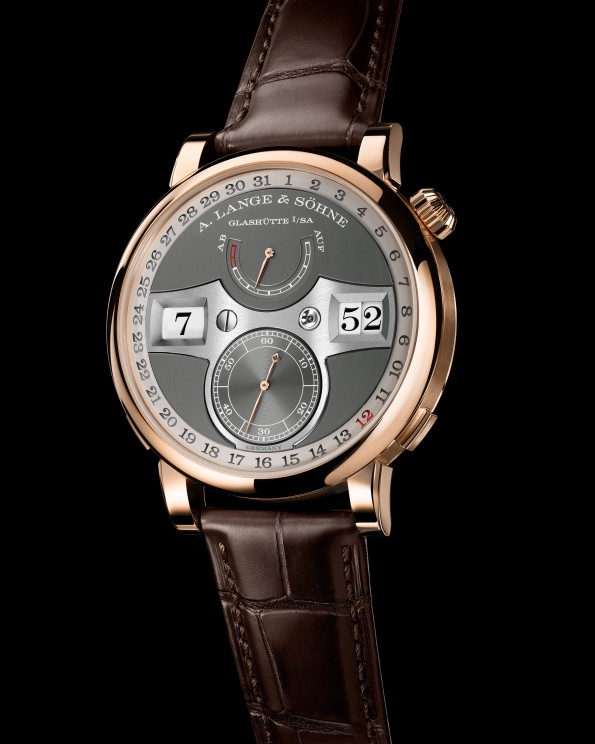
First presented in 2009, the Zeitwerk is one of the boldest pieces ever to come out of Lange's workshops. Its digital display, with jumping hours and minutes, immediately marked a break in the traditional watch landscape. An assumed aesthetic break, backed by one of the most complex mechanical constructions of the house.
And it lasts. In 2019, Lange even added a date complication, still without betraying its minimalist identity. Today, the manufacture is laying out the table again. No new caliber, no new complications, but a new aesthetic variation.
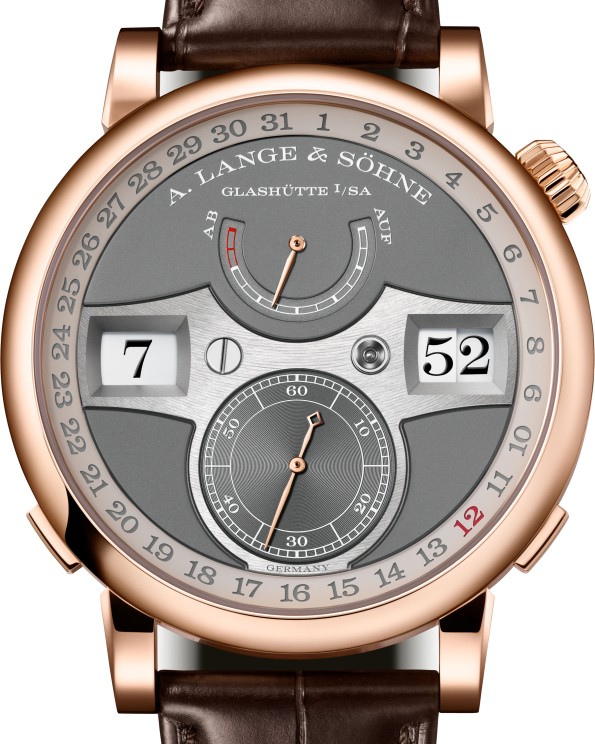
The date in its place, without stealing the spotlight
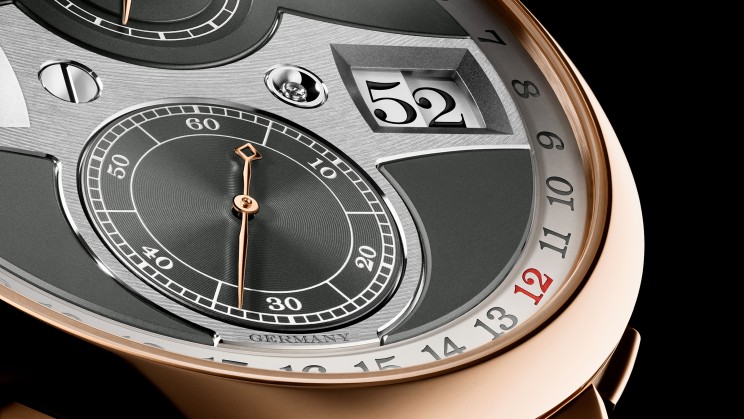
In this new rose gold variation, the Zeitwerk Date remains faithful to the architecture introduced six years ago. No additional window for the date - it wouldn't fit, anyway. Lange opted for a peripheral display. A small red dot moves day by day around the dial, indicating the date with great elegance. This red echoes the power reserve indicator located at noon.
Thanks to the rose gold case and hands, the piece gains in warmth, without losing its composure. The reflections contribute to an overall more welcoming feel, without denying the brand's formal language.
A caliber that still impresses
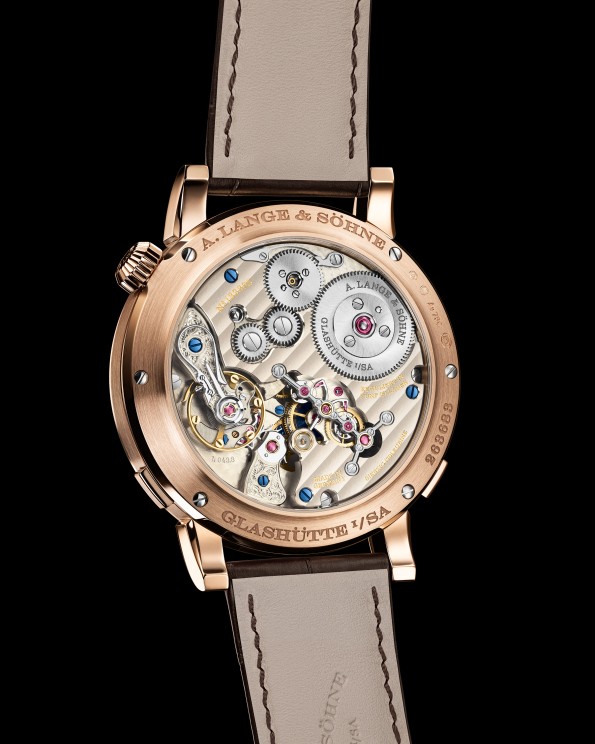
Under the dial, no change: the caliber L043.8 is carried over as is. And it hasn't aged a bit. This manual winding movement, remains one of Lange’s most ambitious constructions. With its 516 components, the caliber powers the unique digital display of the Zeitwerk Date. It manages the simultaneous jump of hours, minutes, and date — a technical challenge in itself. To achieve this, Lange uses a constant force mechanism that stabilizes the energy sent every minute. This system ensures clean, regular, and perfectly synchronized jumps.
The architecture of the caliber L043.8 imposes particularly high energy demands. Each display jump mobilizes an amount of energy that the barrel alone cannot deliver. A constant force mechanism is therefore indispensable: it acts as an intermediate regulator, accumulating the energy transmitted by the barrel, then returning it in the form of perfectly calibrated impulses. Without this device, a triple jumping display like that of the Zeitwerk Date could probably not exist.
Furthermore, this system offers an incredibly satisfying visual rendering. The discs jump with a sharpness that would make any watchmaking enthusiast smile every night at midnight!
Power reserve...
To power such a caliber, a lot of energy must be stored. The barrel of the Zeitwerk has therefore been lengthened, thickened, and perfectly integrated into an already very dense movement. The result is there: 72 hours of power reserve, twice the original version from 2009.
And therein lies the small miracle of ergonomics: despite a phenomenal energy consumption, the watch offers its owner a perfectly normal power reserve. In other words: it behaves like a classic manual watch, even though it does infinitely more complex things. The mechanical tension is palpable, but it is never translated into constraint for its owner, which is very appreciable.
The Zeitbrücke, or how to make a bridge speak
At the center of the dial sits the imposing Zeitbrücke. Usually hidden in the guts of the movement, this technical piece is here superbly staged, playing a central role in the aesthetics of the Zeitwerk. It frames the jumping display of the hours and minutes with typically Saxon rigor.
And if your German stops at “Autobahn,” let's just say “time bridge” - it's less guttural, but just as effective.
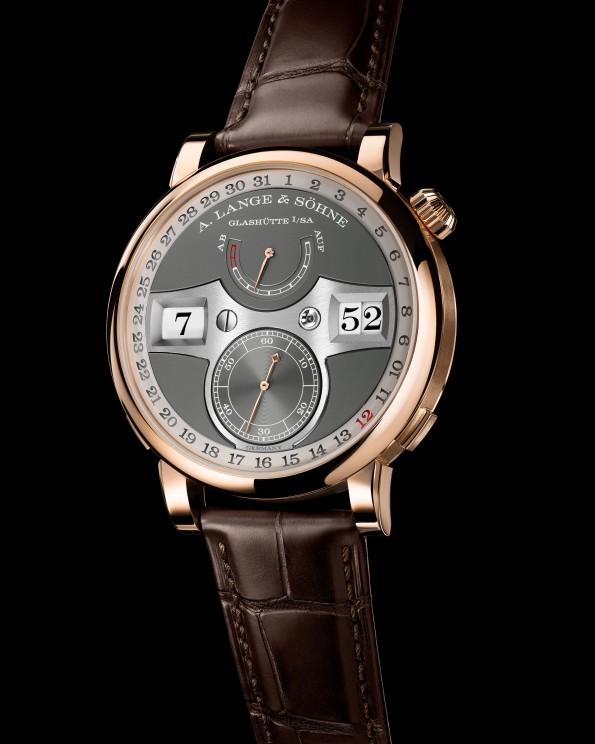
This new Zeitwerk does not revolutionize anything, and that's just fine. It doesn't need a new caliber to capture attention. It does so through the mastery of its colors, through the balance between minimalism and expressiveness, and through an ever finer staging of an already cult movement.