
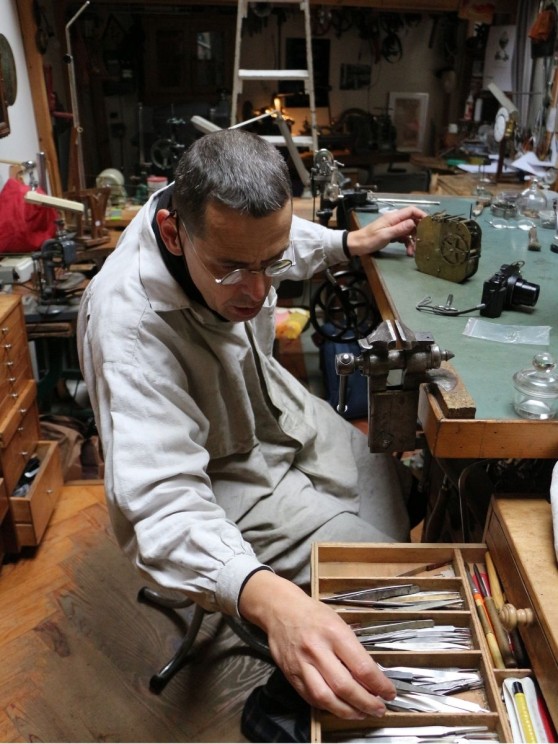
You’re a Paris-based watchmaker and restorer, responsible for the maintenance of the clocks and timepieces at the Château de Versailles, and one of the leading specialists on Breguet. How do you place Abraham-Louis Breguet in the context of his time, at the end of the 18th century?
Jean-Baptiste Viot: We don’t know much about his apprenticeship. He was the son of an innkeeper who died prematurely. His mother remarried, and it was because of that remarriage that he entered the world of watchmaking—otherwise, by the standards of the time, he should have become an innkeeper like his father.
Breguet rose rapidly in the field of horology. It’s important to understand that, at the level he was working, it was considered high technology. In his day, Breguet was to watchmaking what AI is to modern technology. In his field, he stood on the same level as today’s top engineers working on artificial intelligence, because chronometry was cutting-edge tech at the time.
Moreover, Breguet was extremely well-connected in the scientific and commercial circles of his era. He operated at a strategic level. He also had a sharp business sense. He understood how people used pocket watches in his time. He emphasized legibility while never losing sight of either aesthetics or functionality.
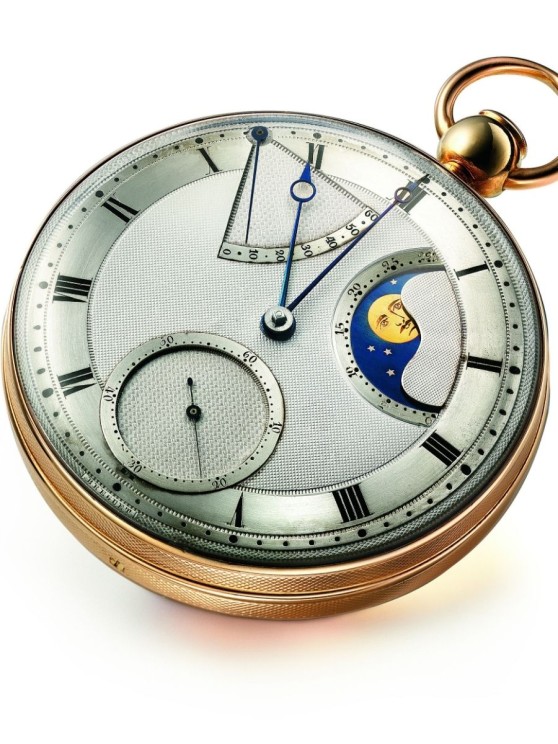
What does the Breguet name represent in contemporary watchmaking?
There’s undeniably a “Breguet style,” because he grasped the importance of the Lépine caliber revolution, but infused it with modernity and exceptional quality. Breguet never produced purely utilitarian watches, unlike Leroy, for instance. The notion of luxury was already present in Breguet’s work as early as the 18th century. He wasn’t solely focused on the functional side of watchmaking, like Berthoud with his marine chronometers. Breguet understood the value of aesthetics. At the time, you could recognize a Breguet watch from across the room—even without a signature. That’s still true today.
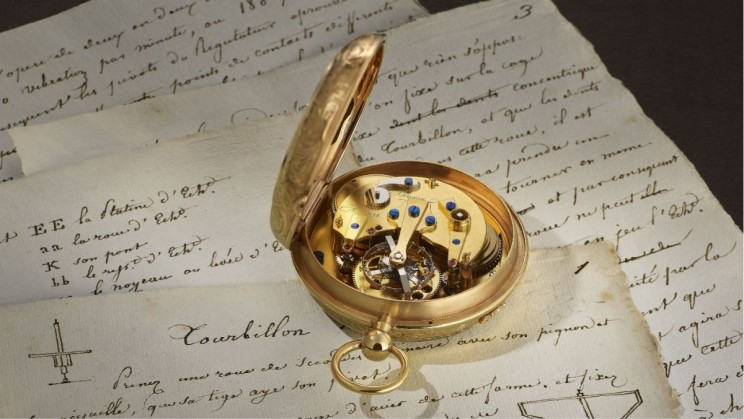
What did the invention of the tourbillon change?
Breguet invented—or popularized—many technical innovations. The tourbillon was one among others. It was universally hailed at the time as a major breakthrough. It was a brilliant invention, but highly complex and thus prohibitively expensive, which limited its adoption. It's similar to resonance watches or the sympathique clock: extraordinary ideas, but of limited practical use, and with astronomical costs. Nonetheless, they all contributed to Breguet’s reputation as an inventor.
Which aspects of Breguet’s life do you find most interesting?
People often forget that Breguet helped popularize the lever escapement—and that was revolutionary too. Before Breguet, escapements were still largely derived from clockmaking, and thus ill-suited for pocket watches.
How important are the Breguet archives, in your view?
They are unique. Breguet understood the importance of maintaining complete archives. They cover not only the technical aspects of his watches, but also the commercial side—who bought them, and when. Then there’s the third aspect: after-sales service. It shows who worked on what, and when, even after the piece was sold. The traceability is total.
How do you see the future of Breguet in the coming years?
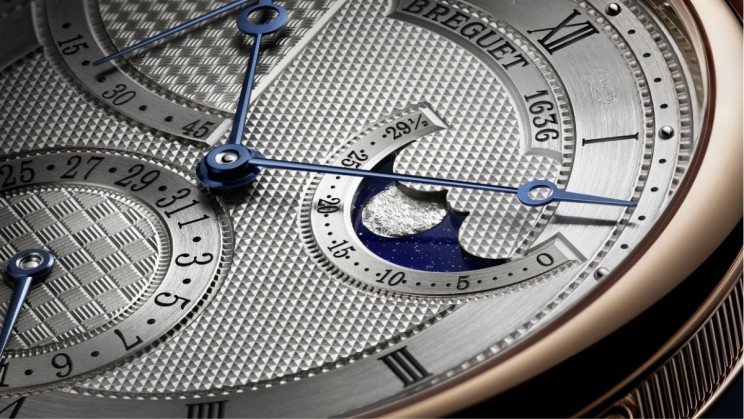
Aesthetically, one has to acknowledge how faithfully Breguet’s current production adheres to the original codes laid down by Abraham-Louis—especially in the case design, dials, and hands. But as a watchmaker, I believe it would be interesting to apply the same philosophy to the movement.
Today, a Breguet movement is unmistakably Swiss in its aesthetic. That’s not a bad thing. The Breguet brand has worked with Frédéric Piguet, Lemania, Jaeger. Even Breguet himself understood, in his time, the value of Swiss know-how. That’s still true today.
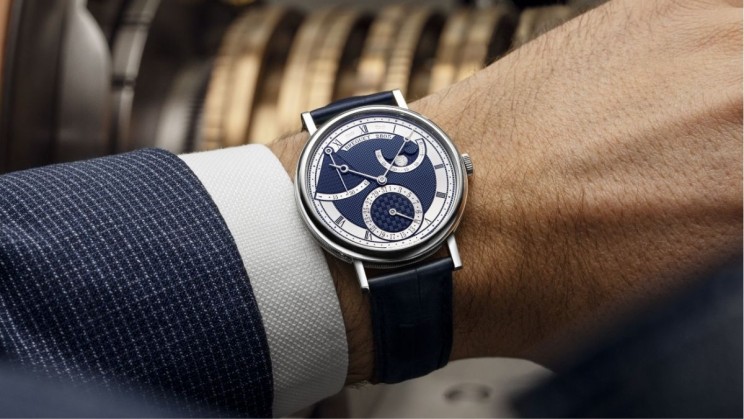
But the man spent the bulk of his career in Paris, and there’s a very distinct Parisian aesthetic that could be explored further. We could emphasize movement simplicity, incorporate curves that aren’t always rigidly straight, and focus more on purity, symmetry, and coherence in the pursuit of balance. George Daniels understood this perfectly. He was, in fact, one of Breguet’s greatest heirs.