What is your most beautiful memory as a guide?
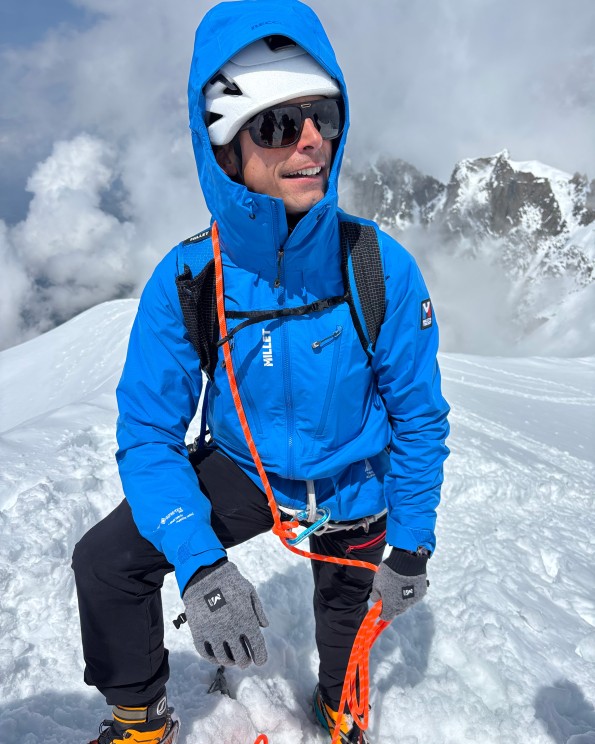
Without hesitation, I’d say climbing the Grandes Jorasses with Arnaud, a client who became a friend over the years. It was his absolute dream. He trained hard, invested a lot of time and energy into it. That route is very committing, even for an experienced guide. We climbed the face in a single day—usually, it takes two to four. We left the hut at midnight and reached the summit around 8 p.m. The moment was intense: bivouac on the summit, the sun setting over the mountains... But what struck me the most was the human aspect. The mutual trust was total. As a guide, you completely set aside your own performance. You put yourself at the service of someone else. That day, I helped Arnaud realize a dream, and it’s that sharing, that trust, that makes the experience unforgettable.
And your most memorable expedition?
There are many, but one that stands out is opening a new route in Nepal on the north face of Chamlang at 7,319 meters in 2021. I was roped up with Benjamin Védrine. The ascent took four days in the freezing shadow, under extremely committing conditions that created incredible memories. Reaching the summit and the light felt almost unreal—it was a brutal contrast. It only lasted five minutes because we had to stay sharp; we knew it wasn’t over—the descent was still very complex. That’s often how expeditions go: you experience a brief moment of grace, but you must keep a cool head. That summit was a milestone in my journey. A building block in a bigger construction.
How do you view high mountains?
In the high mountains, there’s only ice and rock—we're just guests there, barely tolerated. We go, we do what we came for, and we come back down. Where you really feel at home is in the valleys and mid-mountains, with wildlife and flora. That’s where the word "mountain dweller" takes on its full meaning: you can live in the mountains, spend time there.
What’s your personal playground, where you recharge?
I’m very attached to the Aravis range, above Annecy. It’s full of life, with forests and real wildlife. I feel at home there, just like in the whole area around Lake Annecy, which I know by heart. I paraglide there, I climb—it’s my training ground.
And in Switzerland?
In Switzerland, I love Grindelwald. The atmosphere at the base of the Eiger’s north face is intense, even though it’s a bit austere in winter. And then there are the cliffs of the Wendenstock, with limestone of rare purity and magnificent climbing routes. Around Interlaken too—Switzerland offers a one-of-a-kind playground.
How has alpinism evolved in recent years?
There have been several major changes. First, physically: today we’re better prepared, more trained thanks to climbing gyms and the professionalization of the sport. Technically, the level has exploded. On the other hand, our generation has chosen to be less reckless than the previous one. The old-timers took insane risks and got into trouble far more often than we do now. We build on their experience but aim to progress differently. We’re no longer afraid to say we train—that’s new. The first to show us that path was the Swiss climber Ueli Steck, who inspired us greatly. And most of all, we have to deal with climate change. The seasons have shifted. We used to go high up into August. Now, from July 20 onwards, guides start coming back down. Too hot, too unstable, too dangerous. Same for the huts—they didn’t open before June because of too much snow. Now it’s a month earlier. Nature sets the rules, and we have to adapt constantly.
Have client expectations changed too?
Yes, clearly. Sport culture has boomed, and high-profile alpinists like Kilian Jornet have inspired many to explore these spaces. Trail running opened the door: very fit clients began wanting to do technical ascents. Now, indoor climbing is creating a second wave: many gym climbers want to move outdoors and discover high mountains. Some have a good level, but little alpine experience. The guide’s role is to accompany them, to teach them this new reality. There's a real demand, and the job is evolving.
What would you recommend to someone who wants to discover the mountains with a guide?
For a two- or three-day trip, I’d suggest getting off the beaten path. Mont Blanc is attractive, but it doesn’t sum up the mountains. There are so many beautiful, less-traveled routes. For a week, if the person is already a bit experienced, we can imagine projects in Switzerland or Italy, summer or winter—like the Aosta Valley, full of valleys and unguarded huts. The terrain options are incredible. The key is to adapt to the person: their goals, their level, their curiosity.
And Chamonix in all this?
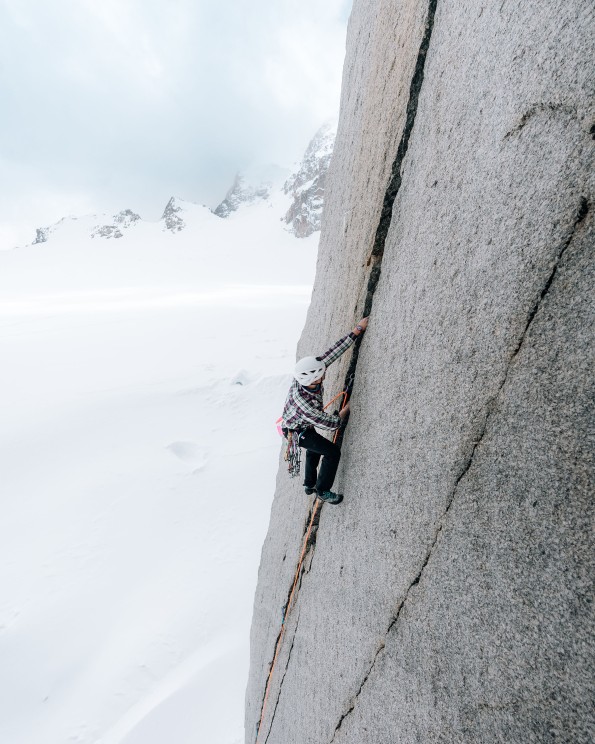
It’s an extraordinary gateway to high mountains. You take the cable car and, in minutes, you’re in the heart of the peaks. You don’t need to hike for two days like in the Écrins massif. It’s unique. And the orange granite is fabulous. The routes are perfect for climbers—the movements are pure. It’s a place full of history and possibilities. For me, it’s an incredible space for expression.
How do you manage danger on a daily basis?
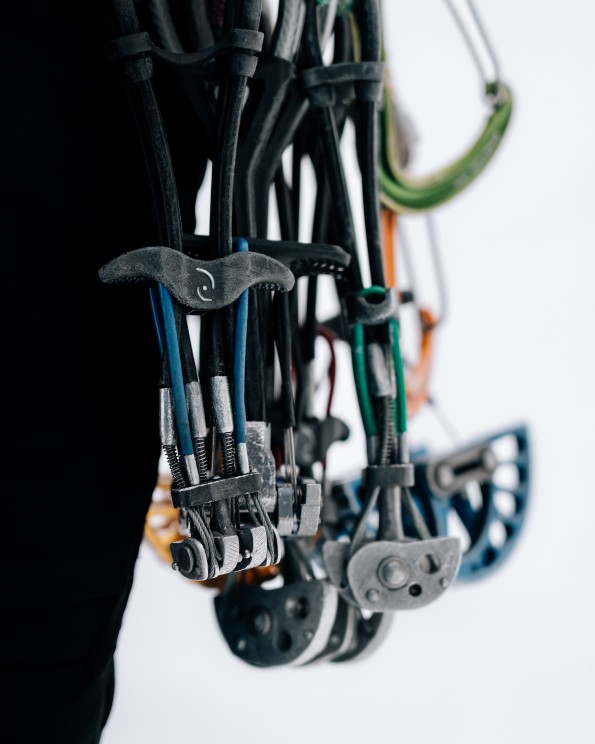
It’s a bit like exposure: you get used to it, and that’s when it gets dangerous. You have to stay alert at all times, never get complacent. A glacier that seems calm may hide a huge crevasse. A gust of wind, a moment of distraction, and things can go wrong. Luckily, nature keeps you in check and quickly reminds you of your place. Experience helps detect those subtle signs.
What are the essential qualities of a good alpinist?
There are two physical pillars: endurance and climbing. You need to be able to climb after days of hiking, cold, rough nights carrying heavy packs. But the toughest part is mental. You’re often in pain, scared, and have to keep going. You must be able to bounce back from failure, stay motivated despite setbacks. Alpinism isn’t about one-off feats. It’s a journey. It takes years, and those who last are usually the ones who build slowly, patiently, with humility. It’s a long-term sport, not a flash in the pan.
Do you have a particular approach to your work as a guide?
What I love is variety. Ice climbing and ski touring in winter, alpinism and expeditions in summer, short ridges or climbing breaks in between. I couldn’t do the same route fifty times a season. This job is also a creative space. With the right clients—motivated and trusting—you can dream up beautiful things. A guide is a unique species, part imagination, part adventure. It’s this "craftsman of mountain travel" side that I love.
What does your partnership with Richard Mille bring you?
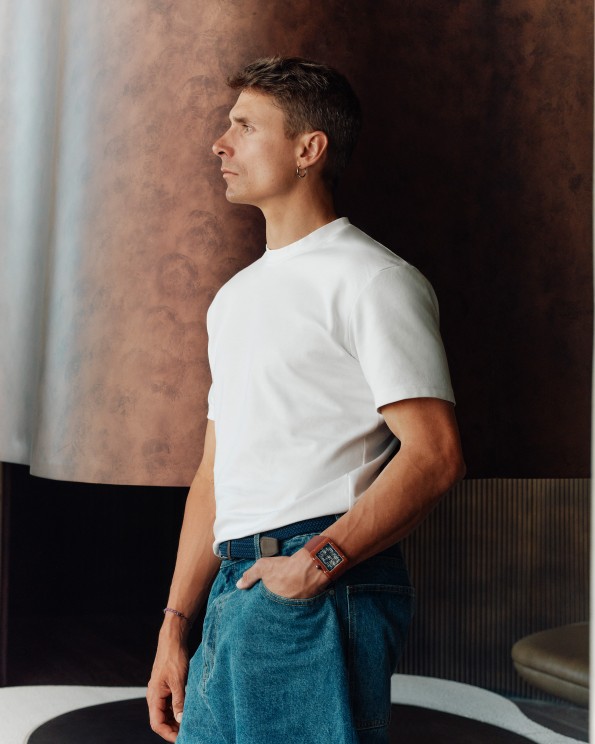
This partnership is very special to me. Of course, it allows me to make a living from my passion. But what I value most is the human side, which I’ve never encountered so strongly in other experiences. The team is genuine, committed, kind. Every meeting is meaningful. There’s real listening, mutual respect, a willingness to create things together. Everyone in their circle—like during the event in Chamonix—seems to share the same warmth. That’s rare in this world. They have that something extra. Beyond that, we share the same values: excellence, innovation, passion. It’s a unique adventure in itself.