
Like a precious Ariadne's thread, the new Breguet gold illuminates the pieces presented on the occasion of the brand's 250th anniversary. Created by a subtle blend of gold, silver, copper and palladium, its soft, luminous blond hues recall the gold used by 18th century watchmakers - Abraham-Louis Breguet and his contemporaries. Developed in just a few months, its hue, properties and applications speak volumes, with coherence: a powerful connection with heritage, accomplished watch aesthetics, mastery of traditional skills, projection into the future through innovation. Gregory Kissling, the man behind this new alloy –and the entire brand strategy for this year, tied to its 250th anniversary – took the helm of Breguet in October 2024. He brings with him 20 years of experience in product development at Omega – a brand that owes him its signature alloys, like Moonshine gold – and 13 years as head of the precious metals division at the Swatch Group.
First of all, why create a Breguet alloy?
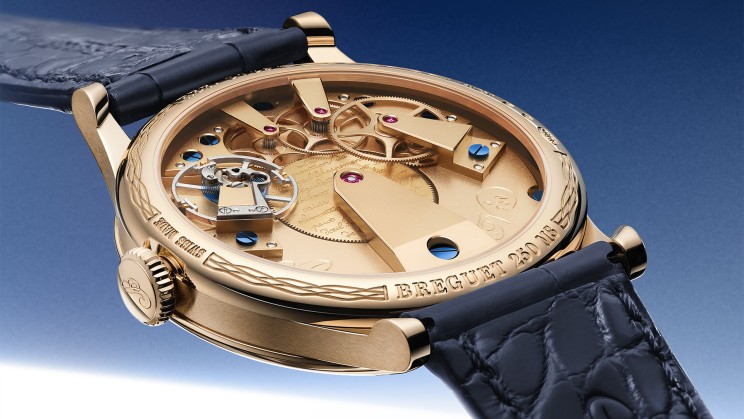
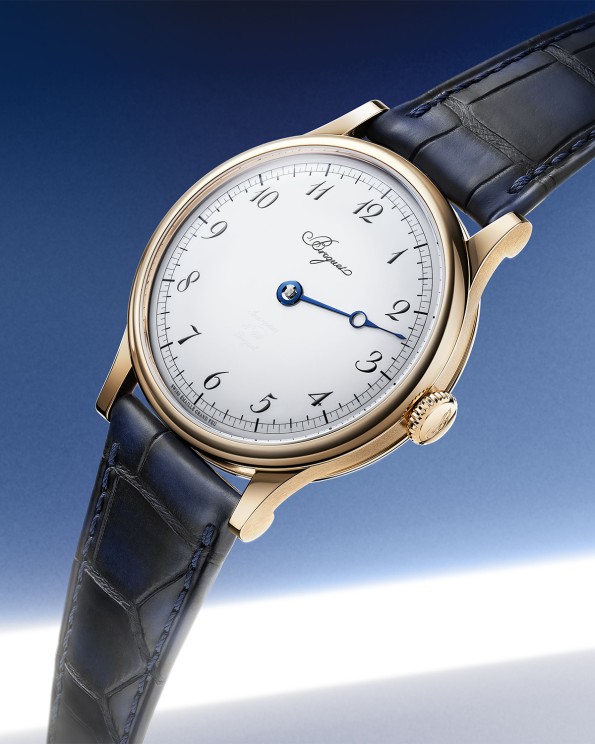
To celebrate an anniversary, which also contains the number 50 - synonymous with a golden wedding anniversary - there's nothing like a festive alloy. Yellow gold has been making a strong comeback in recent years. We wanted to reinterpret it in our own way and reintroduce it to Breguet. Breguet gold illustrates our desire to be different, exclusive and innovative, and is inspired by the gold used by Breguet in the 18th century. This anniversary collection is linked to different inventions, with common denominators: on the one hand, the new Quai de l'Horloge guilloché, but above all, in a very visual way, Breguet gold.
What experience have you drawn from the alloys you've made for Omega?
I was lucky enough to work at Omega on cross-functional Swatch Group projects in metallurgy. I managed the precious materials group, which brought together technical, metallurgical, industrialization and manufacturing skills. The Group's foundry, Nivarox Métallurgie, casts its own alloys, notably Elinvar and Nivachron for balance springs. In 2012, we produced our first alloy for Omega, Sedna gold. This was followed by Canopus Gold, Bronze Gold and Moonshine Gold, all created by this competence cluster. I'm a microtechnology engineer, but I know enough about materials and metallurgy to take on the role of project leader for such developments. That's why I launched the Breguet gold project.
You took over as head of Breguet in October 2024, and presented the first anniversary model, the Classique Souscription 2025, in Breguet gold in April. How did you develop an alloy in such a short time?
I officially started on October 1st 2024. But I had already worked upstream on the product strategy - which was then translated into a commercial and communication strategy. With my 13 years' experience, and that of the teams, it was easy to get it right. Developing an alloy is like developing a recipe, playing with experience, know-how and constraints. The components of the periodic table are always the same: the difference is a few thousandths in their dosage.
Experience saves time. Choosing the right color could take years, but when you know exactly where you're going and have mastered industrialization, it becomes much easier.
What constraints did you have to deal with?
There are three pillars to creating a good alloy. Beauty, aesthetics and color are the first. In the end, some alloys aren't beautiful at all!
The second constraint is legislative: 18-carat gold must contain 75% gold. For the rest, we can play with other elements.
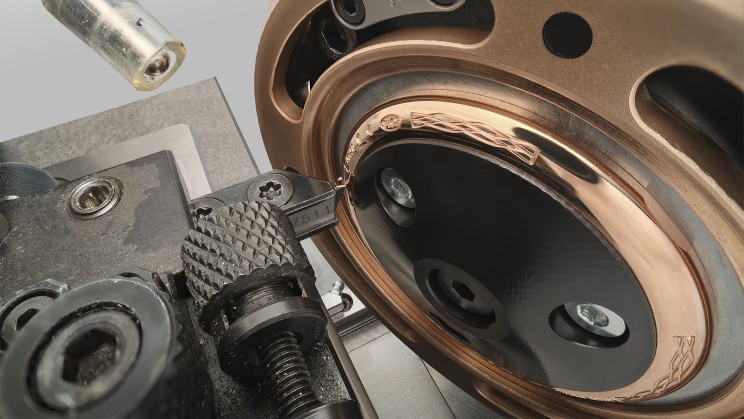
Finally, there's the industrial constraint in the broadest sense, an additional element in relation to developments for Omega. Indeed, to be suitable for Breguet, the alloy must be stampable, polishable, machinable, but also must be suitable for several craftmanships - such as guilloché, anglage, engraving and enameling. What's more, Breguet gold will be used not only on the case, but also on the bracelet, the dial, the movement and sometimes the hands - with different constraints each time.

Was Breguet already innovating with materials in his day?
Abraham-Louis Breguet was an innovator not only in terms of aesthetics, but also in terms of the technical aspects of watchmaking and, last but not least, in terms of packaging and materials. He was the first watchmaker to use platinum, when its fusion had only just been discovered. We honor his quest for ever-better materials.
What are the qualities of Breguet gold?
First of all, exclusivity: we have relied on the alloys used at the time. Today, alloys are extremely standardized - 2N, 3N, 4N, 5N, 6N... These were developed several decades ago and used by all brands. There's nothing exclusive about them anymore.
Then there's durability: these standard alloys can discolor and tarnish, a phenomenon that is even more marked in our increasingly harsh environment. This quaternary alloy contains not only gold, but also copper, silver and palladium. This last component is a strategic element, not only for obtaining the desired shade, but also for providing interesting physico-chemical properties, such as hardness and resistance to discoloration. We also carry out heat treatment to harden the metal.

With Breguet gold, we offer an alloy with a unique composition, totally out of the ordinary, with a beautiful blond hue, soft and luminous, and with better properties.
Is this harder alloy also more demanding to work with?
The addition of palladium adds an extra level of difficulty, but it's by no means insurmountable. In fact, our craftsmen have perfect mastery of platinum, which is much more complex. Breguet gold is worked like white gold, which is a little more demanding than classic 3N gold.
How were you inspired by 18th century alloys?
We took colorimetric measurements and analyzed the composition of the gold of the period. These were ternary alloys of copper, gold and silver, sometimes up to 20 carats. The color was between 3N and 5N - a different cartography from what we see today, since standardization did not yet exist.
Compared to the gold of yesteryear, we have defined a hue that is neither red nor yellow, but exactly in the middle, slightly blond, pinkish and very refined. Breguet gold is out of step with the normalized values of standard alloys, and that's what makes it interesting.
How is Breguet gold received?
It's particularly popular - because of its hue, its brilliance even when it's matte, deposited on the movement. In fact, we've not only developed the alloy, but also all its applications: galvanic bath for PVD treatment, platinum, gears, certain hands, decals... It's all this that makes Breguet gold so exciting: we've really gone all the way with it. The Classique Souscription 2025, for example, features a magnificent gilded movement in the shade of Breguet gold. The result is just extraordinary, the fruit of a beautiful development of which we are very proud.