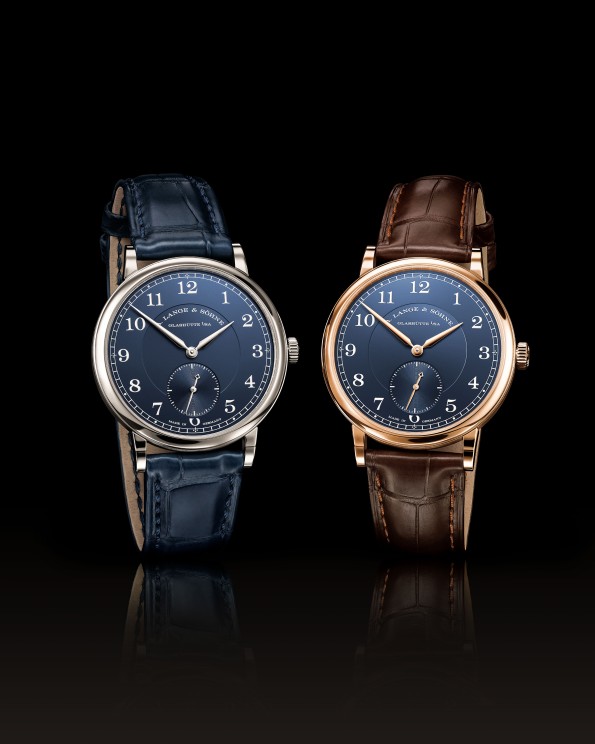
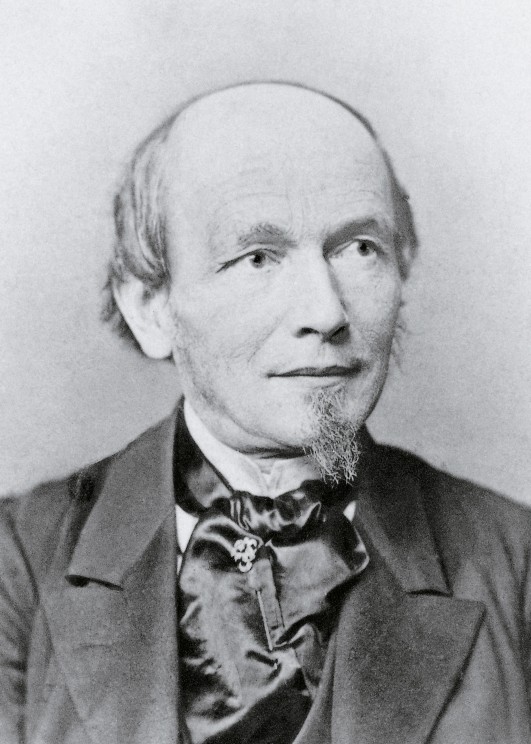
We know the collection. We know less about the man. Yet, one cannot exist without the other. For exactly 210 years ago, Ferdinand Adolphe Lange, founder of the manufacture that bears his name and those of his children ("& Söhne" in German) was born.
The entrepreneur is a man of modernity. He was born in the 19th century. In this respect, he inherited the work of the founding fathers of watchmaking, some of whom were still alive during his time, such as Breguet or Lépine. However, Lange was far removed from their immediate aura, which extended from Paris to Le Locle. Lange himself was a native of Dresden. At 22, he left his native land to join Paris and meet a student of Breguet, Joseph Thaddeus Winnerl, who had made important contributions to the split-seconds chronograph. The linguistic proximity between Lange and Winnerl, both German-speaking, likely played a role.
Return to Saxony
A few years later, Lange reconnected with his homeland by marrying the daughter of his first master watchmaker. Ferdinand Adolphe Lange married Antonia Gutkaes in 1842. From then on, Lange's anchorage in the German Confederation, which at that time unified the German states under Austrian tutelage, took a definitive turn. Initially engaged in developing the business of his master and father-in-law Gutkaes, Lange gradually aimed to create his own business.
Lange then made a decisive choice: instead of competing in the existing markets at the heart of the major watchmaking metropolises of the time (Paris, London, Le Locle), he decided to remain within the German Confederation to create and develop his local watchmaking. He chose a specific region for this: the Erzgebirge. The place has been renowned since the Middle Ages for its metallic resources. These would be useful to Lange for the construction of his clocks, pendulums, and watches.
One city, one name: Glashütte
The advent of German railroads in 1835 brought this territory closer to decision-making centers, and highlighted the metallic resources near which Lange judiciously decided to settle. At the same time, as in any country where railroads developed, the need for precise watches accompanied it. Thus armed with a solid entrepreneurial project, Ferdinand Adolphe Lange, just turning 30 in 1845, secured financial support from the authorities to develop a new watchmaking activity in a poor town in this basin. Its name: Glashütte.
Entrepreneurial Spirit
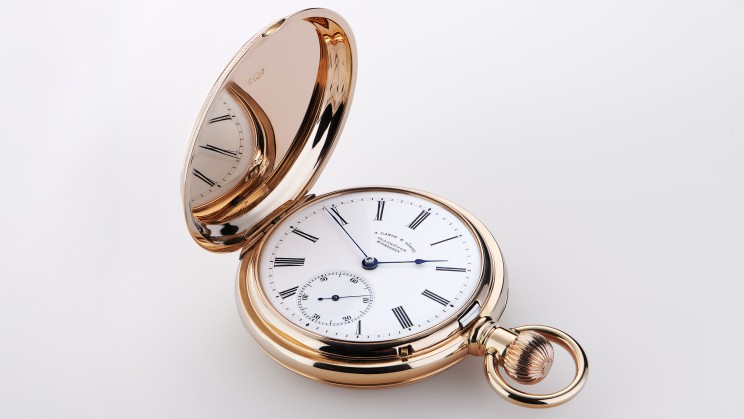
Lange is a keen and pragmatic entrepreneur. His original workforce in Glashütte was poorly educated and little trained. The watchmaker thus designed simpler and more robust watches than the refined productions of the great European watchmaking centers. Thus was born the three-quarter plate. All the pivots of the watch's regulating organs are fixed in a single plate covering three-quarters of the movement, hence its name.
Lange also introduced measurements in millimeters, gaining a head start on the watchmaking tradition, which still reasoned in lines. Finally, his watchmakers were assigned to a single task, a division of labor that foreshadowed the industrial era in vogue since the very late 19th century (Breguet had already theorized these principles for his subscription watches).
Ferdinand Adolphe Lange died at 60, in 1875. His sons Richard and Emil Lange took over, twice interrupted by two world wars, before the brand as we know it today was relaunched, still in Glashütte, by the late Walter Lange in 1990, thus freeing it from the state crucible of the GDR in which history had placed it. Today, the company no longer has any Lange in its management.