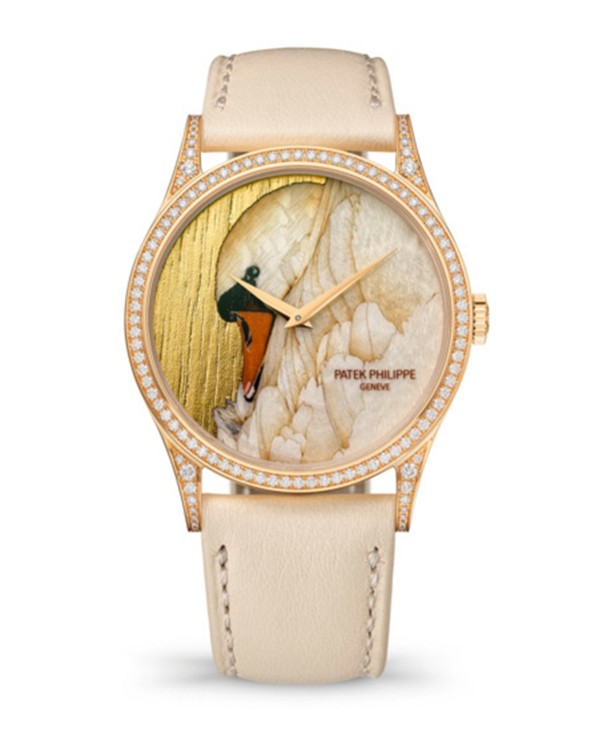
In the exclusive world of artistic crafts, marquetry is often described as the art of applying a “skin” to a surface. But there is much more to it. Marquetry is a true métier d’art, requiring ancestral know-how. It reached its pinnacle in the 17th and 18th centuries under the Louis XIV and Louis XV styles but fell out of favor during the 19th century.
A Decorative Craft
Marquetry involves creating decorative patterns generally from thin veneers of wood, but also from a wide range of other materials: mother-of-pearl, ivory, hard stones, leather, straw, tortoiseshell, bone, feathers, flower petals… Each piece is meticulously cut according to a precise design and then glued onto a base, most commonly furniture or other decorative objects, but also the dials of watches. The resulting motifs can be geometric, figurative, or abstract.
Thanks to Watchmaking
Today, it is fair to say that marquetry has been brought back into the spotlight thanks to the watchmaking industry. Among the exceptional timepieces showcasing métiers d’art, many proudly feature marquetry dials—crafted from surprising combinations of materials. Highlights include hard stones, mother-of-pearl, sapphire crystal, straw, tulipwood, parchment, peacock feathers, horsehair, lacquer…
Exceptional Creations
These extraordinary dials are the result of a successful encounter between fine watchmaking and artisanal craftsmanship. Marquetry elevates the dial, transforming a timepiece into a true work of art—sometimes enhanced by a grand complication, such as an ultra-thin flying tourbillon at Piaget, jumping hours at Chopard, or a playful automaton at Hermès. The latter, a watchmaker and saddler, even offers a horse rendered in horsehair marquetry that cheekily sticks out its tongue on demand via a pusher on the case flank.
A Gallery of Art
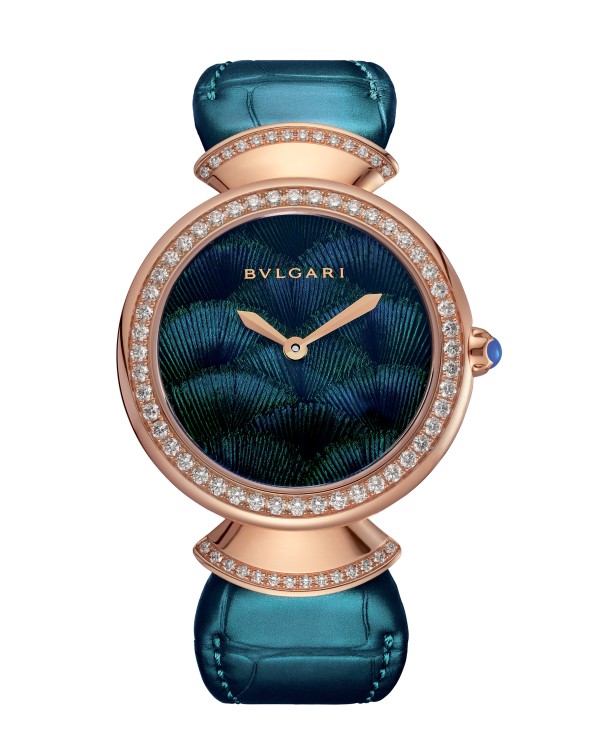
The principle of marquetry—cutting materials according to a precise design and adhering them to a surface—provides infinite creative possibilities. Dials feature all kinds of designs, from the most abstract, like Bulgari or Chopard’s peacock feather and straw marquetry, to highly geometric compositions at Piaget, where alternating rectangles of malachite and chrysoprase create striking patterns, and on to the most figurative.
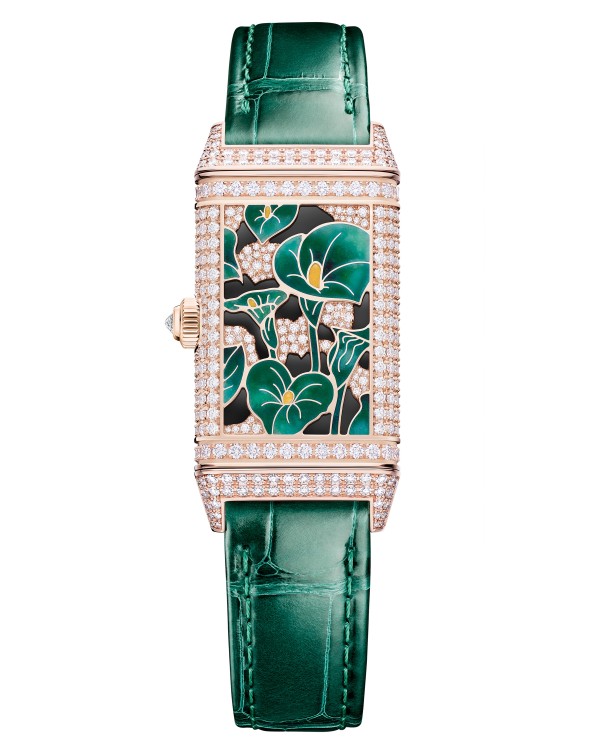
Among the most captivating creations are Cartier’s hypnotic panther head in gold, mother-of-pearl, sapphire crystal, straw and tulipwood marquetry; Hermès’ cheeky horse set against a background of horsehair marquetry; Jaeger-LeCoultre’s majestic bouquet of arum lilies in lacquer marquetry combined with grand feu enamel; Louis Vuitton’s menacing serpent hidden in a lush jungle of wood, parchment and straw marquetry; Patek Philippe’s serene sleeping white swan in wood marquetry; and Van Cleef & Arpels’ vivid red cardinal in feathers with a background of larimar, Wyoming jade, blood jasper, jadeite and variscite marquetry.
All of these are tributes to Mother Nature, rendered in miniature by watchmaking through the art of marquetry—a craft that has brilliantly transitioned from period furniture to contemporary watch dials, worthy of the world’s most prestigious art galleries.