For those who skipped Greek in high school (myself included), the word “chronograph” comes from chronos and graphein, meaning “time” and “to write,” respectively. Originally, the chronograph worked by dropping a spot of ink onto the dial to mark an interval later evolving to rely solely on the hands. Its applications are numerous, particularly in sports, but also for military and aviation purposes.
Chrono-logical!
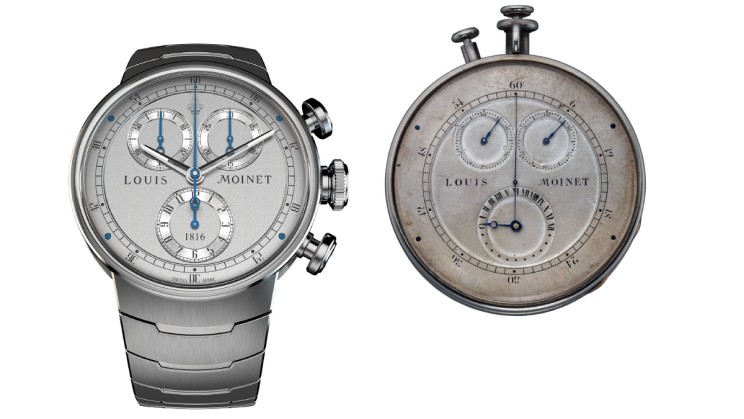
We won’t attempt a full genealogy of the chronograph here, but let’s return to its origins. In 1815–1816, Louis Moinet developed a “compteur de tierces” (thirds counter), capable of measuring 1/60th of a second, with help from a Breguet workshop watchmaker. Initially a hand-wound pocket watch, it lacked the precision of today’s chronographs but the concept was born !
The first wristwatch chronograph appeared in 1913 (Omega with the CHRO 18’’’ calibre and Longines with its Monopusher model). It wasn’t until 1969 that automatic chronographs emerged, thanks to players like Zenith, Breitling/Heuer/Büren, and Seiko.
Engine… action!
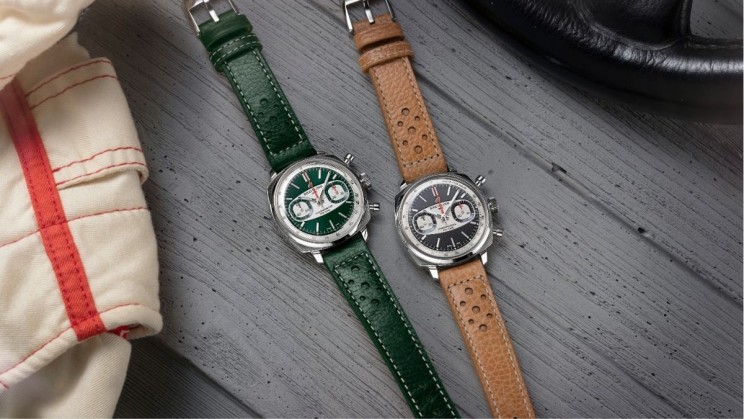
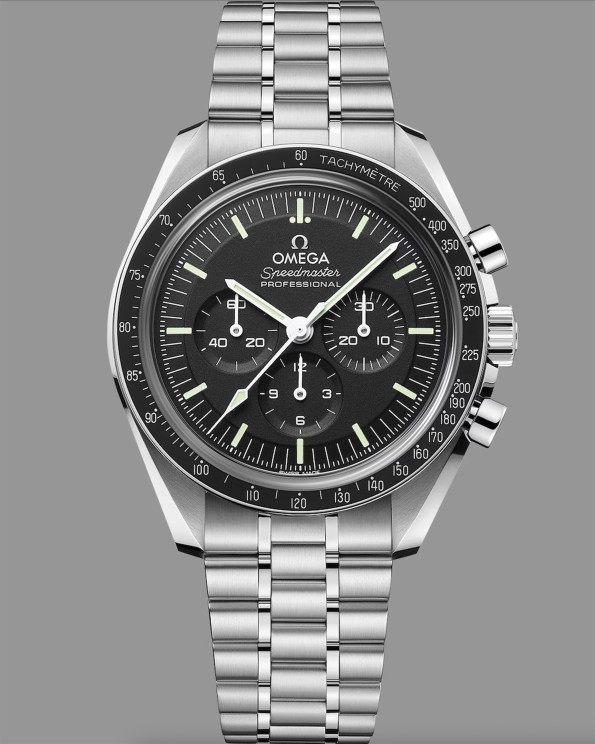
In the collective imagination, the chronograph is inextricably linked to motorsports, because where there’s a chronograph, there’s often a tachymeter. Since speed equals distance over time, you simply calculate how long a person or object takes to cover a known distance, and read their speed on the tachymeter scale around your bezel.
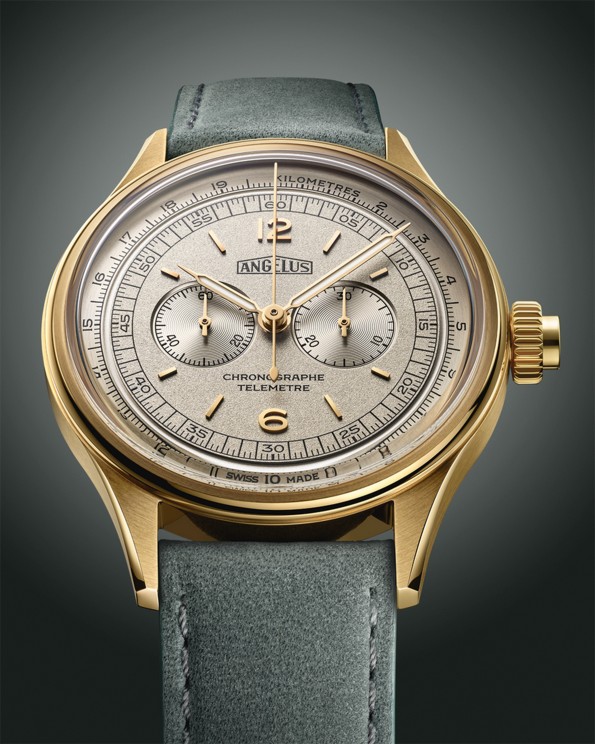
Some chronographs also feature telemeter or pulsometer scales, allowing you to determine distances (via sound delay) or heart rates.
In Use
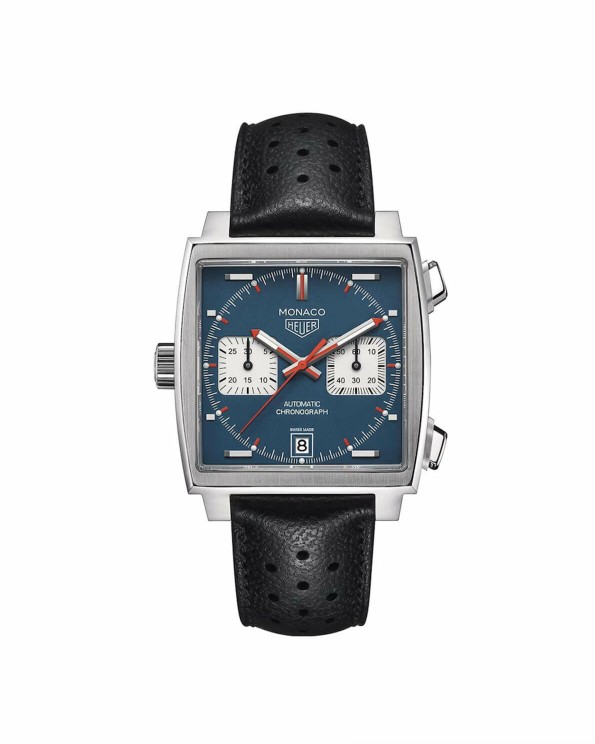
A chronograph is operated using the two pushers flanking the crown. Press the one at 2 o’clock to start or stop the chronograph, the central seconds hand records the elapsed time. Press the pusher at 4 o’clock to reset the chronograph to zero.
The small sub-dials (two or sometimes three) display hours, minutes, and seconds. These indicate whether your watch is running even when the chronograph seconds hand is inactive, and allow you to measure intervals longer than a single minute.
Variations on a Theme
You might think of the automatic chronograph as a fairly common complication, not requiring exceptional expertise. Think again! It’s a horological mechanism demanding very specific engineering. To prove the point, let’s introduce two very special chronograph variations: the flyback and the split-seconds (rattrapante).
Release the Pressure!
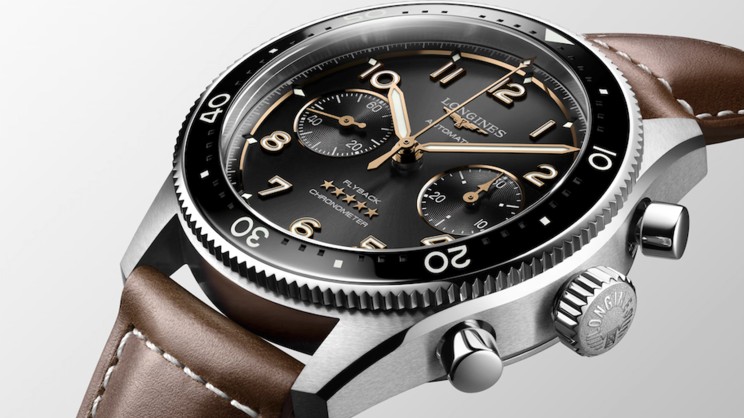
The first variation is the flyback, designed by Longines in 1936. Its purpose? To allow faster, more precise timing especially handy when wearing gloves. A crucial feature for pilots.
Press the 2 o’clock pusher to start the chronograph seconds hand. Now press the 4 o’clock pusher: the hand instantly returns to zero and begins measuring again perfect for successive timing.
Catch Me If You Can!
The second variation is the split-seconds chronograph (rattrapante), which adds an extra hand atop the chronograph seconds hand. Its function? To record the duration of two separate events or the time gaps between multiple consecutive events.
Picture this: two runners set off, and a press of the 2 o’clock pusher starts both hands simultaneously. When runner A crosses the line, press the same pusher again the split-seconds hand stops, while the other continues. After noting runner A’s time, press again, and the split-seconds hand “catches up” with the main seconds hand. Another runner finishes? Repeat the process to track each arrival time.
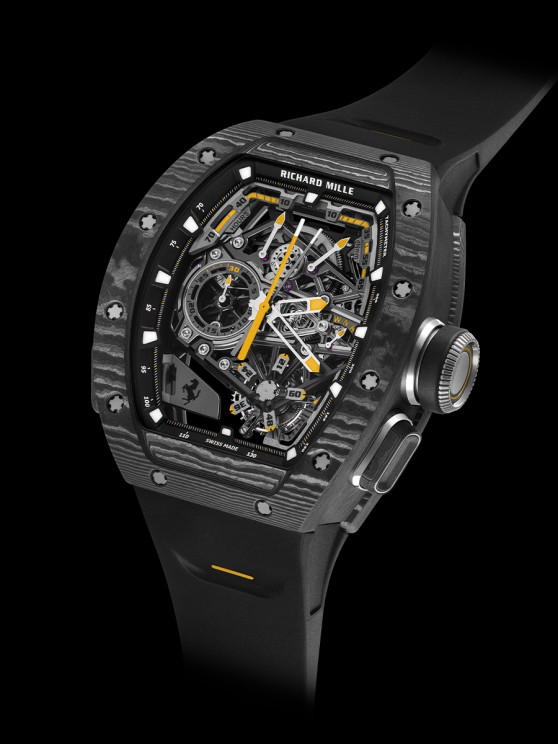
As you can imagine, these two variations result from deep technical modifications to the movement. A detailed explanation of the flyback and split-seconds mechanisms will be the subject of a future article on our website.
In Conclusion
Although it’s perhaps the most common watch complication, the chronograph remains a subtle and fascinating feature. We hope this article has been, if not useful, at least a pleasant read. One thing’s for sure : you’ll never look at your chronograph the same way again.