The question of the production volume of each watch brand is a recurring theme among its commentators. And almost all of them respond that this data is confidential. Why? First, there's a myth: by knowing the number of watches produced each year and the company's revenue, some savvy analysts could deduce the average price of each watch, or even its production cost. This is naturally akin to a form of divination since the intervening parameters are numerous (median margin, by country, sell-in and sell-out dissociations, customs fees, monthly fluctuations in exchange rates, raw material prices, etc.).
However, the raw data can provide insight into a simpler factor: whether the company is generally in good health. A brand producing 100,000 watches one year and 75,000 the next, without general changes in its ranges or price band, can reasonably be considered as going through a rough patch. This may prompt some collectors to distance themselves, fearing that their purchase might lose all resale value.
It is with this in mind that some maisons limit their supply. By keeping demand above supply, they ensure that 100% of their production is sold each year. They may even create an artificial demand by playing on scheduled shortages and the establishment of waiting lists.
72,000 watches aimed for in 2025
This is a common strategy in the premium segment. It is endorsed by Audemars Piguet, as announced by its former CEO, François-Henry Bennahmias. With a consummate sense of theater, the man has repeatedly noted deliberately restricting his production to around 50,000 watches per year. Its rival Patek Philippe more precisely communicates its figures. The Geneva-based manufacture adopts another strategy, that of controlled growth. In 2017, its estimated annual production was 58,000 watches. In 2022, five years later, only 4,000 more watches were produced, totaling 62,000 watches. In recent years, volumes have increased more rapidly: by 2025, Patek Philippe aims for 72,000 pieces produced.
This batch will be overwhelmingly mechanical: 58,000 automatic pieces, 7,000 manual wind. The remaining quartz pieces therefore represent about 10% of the annual production of the manufacture, with 7,000 watches planned for 2025 (all feminine, mostly on the Twenty-4).
16 Million Components
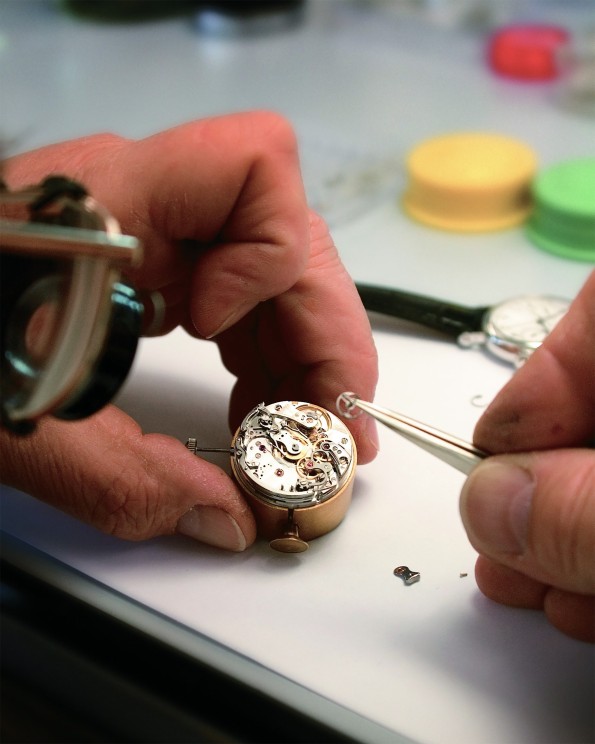
Achieving such a volume requires a range of components whose importance one might not suspect: in 2025, Patek Philippe will order or produce internally no less than 16,500,000 components. This figure is consistent with the 72,000 watches envisaged, as it implies an average of 230 components per watch, in line with a basic caliber equipped with one or two small complications (day, date, month, for example), which make up the bulk of Patek Philippe's catalog.
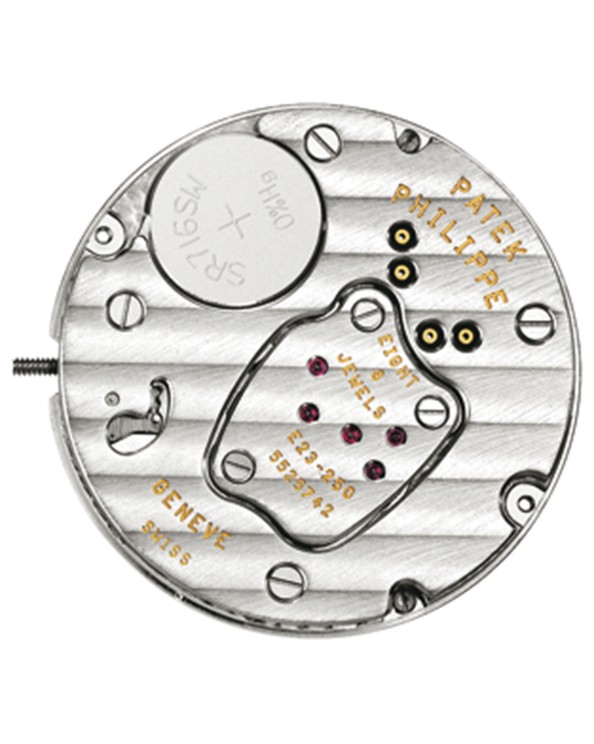
This volume of components must be distributed among the different calibers that the manufacture keeps active. In 2025, Patek Philippe will utilize 18 basic calibers: 15 for wristwatches, 2 for pocket watches, and one for desk clocks.
These 18 base calibers, varied according to additional complications, represent 50 movement references. It is a significant number, but Patek Philippe calibers generally have a certain longevity, often lasting between 10 and 20 years of operation, ultimately generating these 50 active references that also allow for customization: numerous Patek Philippe models thus possess their own movement, contrary to industrial serialization.
“Patek Philippe, Geneva”
Since its creation, Patek Philippe has cultivated a strong territorial anchorage in Geneva. The argument is not a marketing posture. It is real, substantial, and expressed in numbers: out of a total of 2,670 employees in Switzerland, 2,080 work in Geneva. That's three times more than in the rest of the world: 760 employees internationally. Nearly two-thirds of all Patek Philippe personnel are indeed in Geneva.
The production apparatus is sized accordingly. Nearly 10% of Swiss employees are watchmakers (254 qualified watchmakers). The raw data is difficult to grasp because no brand, or almost none, communicates this level of detail. By specifying that this mass includes only "qualified watchmakers," one understands that the number of manual operators associated with production is much larger, as it includes positions related to finishing, control, assembly, bracelet fitting, etc.
Furthermore, Patek Philippe reports having a fleet of 400 active machines. This industrial base is one of the most valuable assets: most CNCs (computer numerical control machines) far exceed a unit price of one million francs. In the end, only the company's revenue is not disclosed. However, it is estimated to be around 2 billion Swiss francs, in fifth position behind, in order, Rolex, Cartier, Omega, and Audemars Piguet.