
What materials does a decorator work with?
Most of the components of our movements are made of nickel silver. This is the watchmaking tradition. Its properties offer us the greatest variety of finishes. We also work with titanium, as for the tourbillon cage, gold for the balance weights, and steel.
What is the most delicate decoration operation?
Block polishing can be surprising. It requires a touch, experience, and time to achieve what is commonly called "black polish." Conversely, sandblasting is more "risky" than complicated. It modifies the surface by projecting sand onto a component. You need to feel and master the force of the projection, properly control the conformity of the type of "sand" according to the desired finish, and ensure reproducibility of execution. When sandblasting fails, it is irrecoverable. You have to start over until it is perfect.
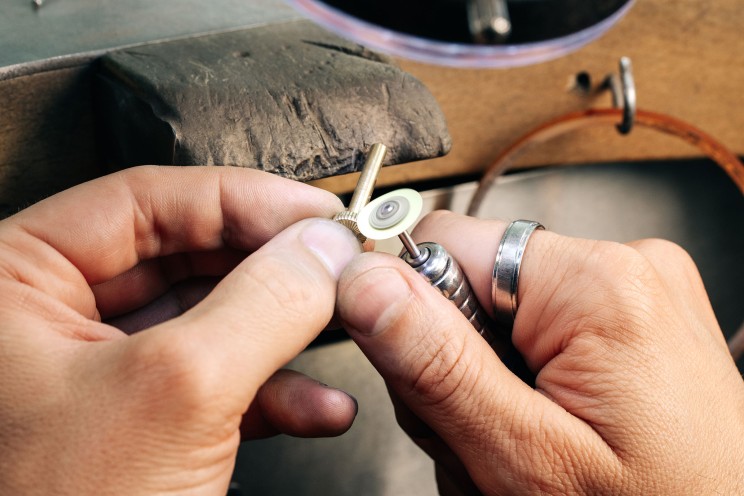
Similarly, when you are new to traditional hand beveling, everything can seem delicate and difficult: holding the tool, applying the right force, the position and height at the workbench, specific to each artisan, the fatigue related to great concentration, and the perspective needed to judge your own work. The dialogue between us is constant.
How do you judge perfection?
By experience. We "run" the light over the component to judge its finish and work with at least X4 magnification using a loupe on the eye, or even with a binocular at x 6.7. This is far beyond what is generally practiced in the industry, and even far beyond what the eye can perceive. Over time, the craftsmanship criteria we have set have made the team united around an objective that reveals as much the know-how as the interpersonal skills of each individual. Ferdinand Berthoud is also a human adventure!
Does the finishing follow a specification?
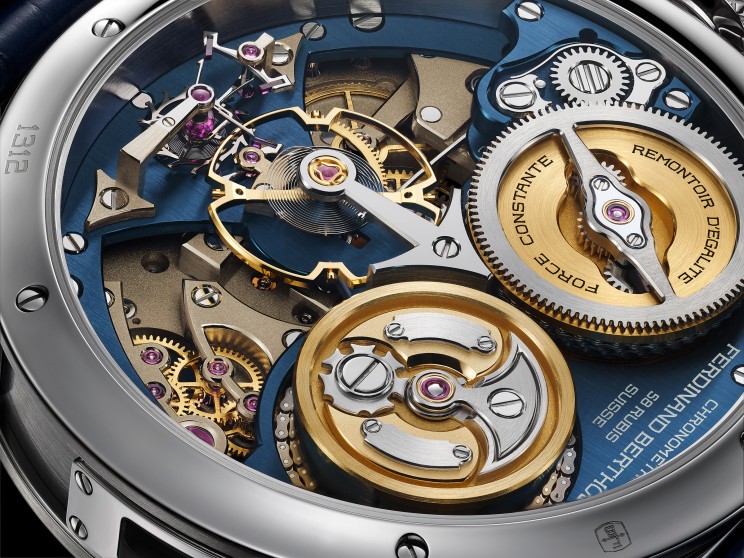
Yes, we adhere to geometric values depending on the type of component. For example, beveling is always done at 43 to 45°, with a width of 0.2 to 0.1 mm. Furthermore, decoration should never interfere with the function of the component. At Ferdinand Berthoud, the scientific spirit of our pieces prevails. Function comes first, decoration follows. For example, increased beveling width would give a more flattering shine but would have no technical justification. We do not do it.
Do you develop your own finishes?
No. Quite the opposite: we eliminate certain finishes that are not justified in a Ferdinand Berthoud watch, such as perlage. Berthoud did not do it himself. We have no reason to do it. On the other hand, we are very creative in our way of working. Our techniques constantly evolve, as does the use of our tools, the materials used to become better, more precise. In the future, this may open up new ideas for finishes.
And faster ones?
If we find that we are spending an unreasonable amount of time on the decoration of a component, we will question our method but not the result. It is not the time spent that determines our work, but the method used. We are in continuous training.
Personal question: which component's finish is your favorite?
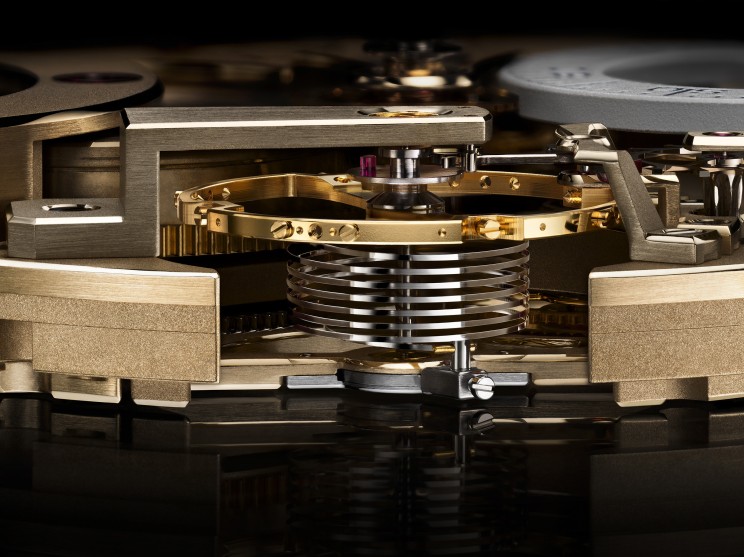
The FB3 with its cylindrical spiral movement, certified chronometer by the COSC, and its very sober decoration at first glance, gave us a hard time. Taming this sandblasted decoration for such a subtle and harmonious finish is one of the team's greatest achievements. Everyone had to adapt, from decoration to watchmaking, including logistics. We wanted a silky result done in an artisanal way and gave ourselves the means to achieve it. Our team grew a lot through this decoration that reflects in every way the Ferdinand Berthoud project: transmission and perseverance!