
In the heart of the Jura valleys, Louis-Joseph Baume founded a watchmaking shop in 1830 in Le Bois, in the canton of Bern. His sons, Louis-Victor and Célestin, created pocket watches, following their father’s motto, "Only make watches of the highest quality." They introduced Lépine calibers in most of their watches, being among the first to integrate and democratize them in the Swiss Jura. This caliber (still widely used today), allows to produce watches two to three times thinner. In 1892, their pocket chronometer with a detent escapement received the highest precision score (91.9/100) from the Kew observatory, which remained unbeaten for 10 years. The company was very present in the British Empire, in London, Bombay, or Melbourne.
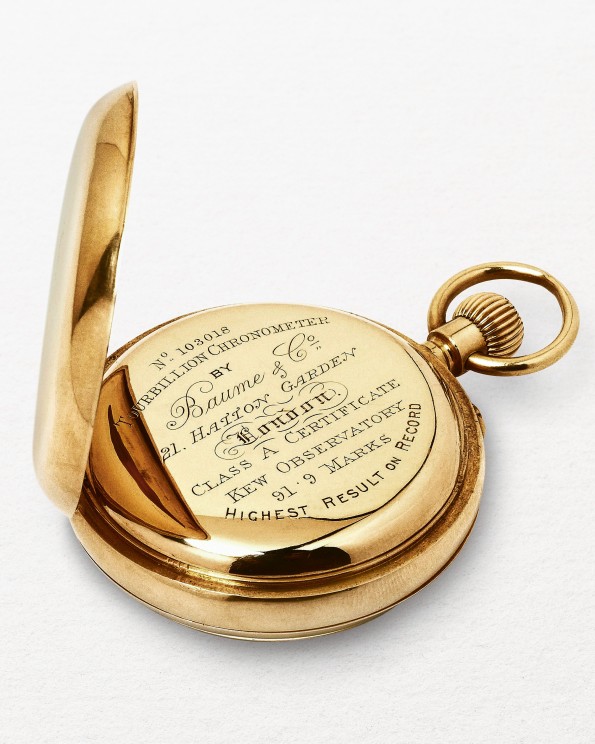
Moreover, as a significant anecdote, the tradition of "gift watch," the brand is still renowned now for this tradition, was already rooted in the family's history. In 1869, Louis-Victor Baume gave a watch to his youngest daughter, Melina, a beautiful way to "cultivate a rich emotional exchange between the watchmaker and the wearer," emphasizes the Heritage service of the house.
The happy association of an aesthete and a watchmaker (1920-1940s)
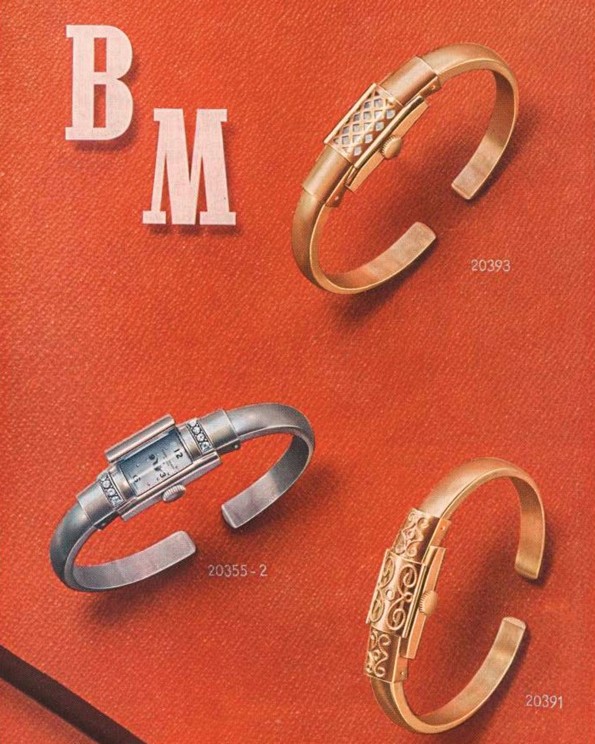
Paul Mercier met William Baume in 1912. They understood and complemented each other wonderfully, founding Baume & Mercier in 1920. The revolution was launched, combining the artistic sensitivity of one with the inventive watchmaking of the other. High fancy jewelry watches for women, wishing to carry style in daily life, and extra-flat watches for men set the tone for the house's style. Paul Mercier’s aesthete approach imposed the house in the field of feminine watchmaking, presenting itself from then as specialized in "Fancy for ladies. Flat and extra-flat watches for men". The offer included numerous gem-set pieces, of various shapes - also for men, with, for instance, a chronograph in a square watch, even if men's watches remained more traditional.
A Marquise and chronos (1940-60s)
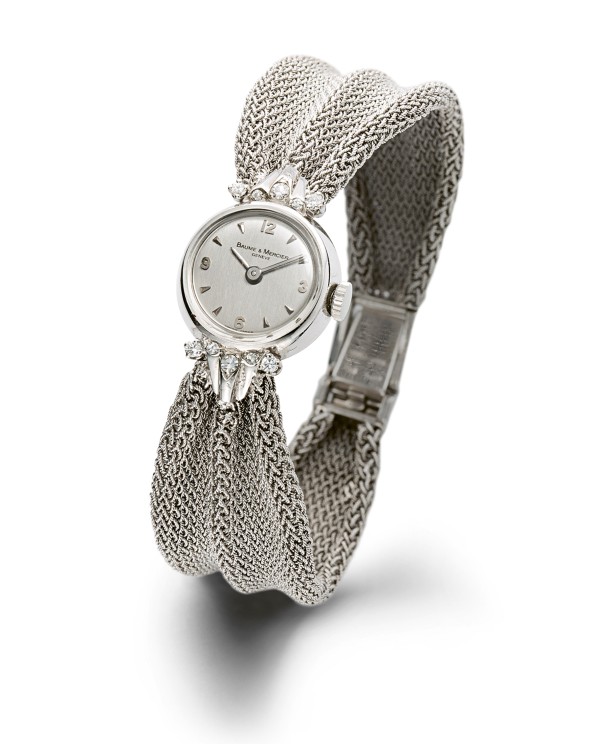
From 1937 and until 1968, Ernesto Ponti - jeweller and consul of Italy in Geneva - and Constantin de Gorsky took the lead of the house. de Gorsky, President and art lover, played a significant role in its development. The Marquise, unveiled in 1946, embodies the perfect balance desired by Paul Mercier and William Baume between style and watchmaking expertise. This jewelry watch banked on a bracelet articulated at the ends, an innovative design, in a gem-set or skeletonized dial version, equipped with a Lépine or savonette caliber. A commercial success, it was the brand's best-selling women's watch until the 1960s. The house continued to produce watches in various shapes, now with an Art Deco trend.
For men, elegant chronographs gained strength and were in high demand: after acquiring C. H Meylan Watch SA Meylan in 1952, the manufacture grew from 8 to 40 employees. It increased its production of short time interval instruments - like the complete calendar chronograph "Cornes de vaches" (cover photo)
The seventies: tuning fork movement and iconic designd
In 1964, Piaget bought Baume & Mercier, associating an important distribution network and industrial power. From then on, the Greek Phi imposed itself as the logo reflecting proportion, purity, balance and a rigorous aesthetic. The Symbol collections, from 1967 to the 1990s, embody this design. Baume & Mercier positioned itself in the exploration of different, very creative shapes, on women’s watches. Thus, the Galaxie and Stardust models, with an onyx dial and diamond setting.
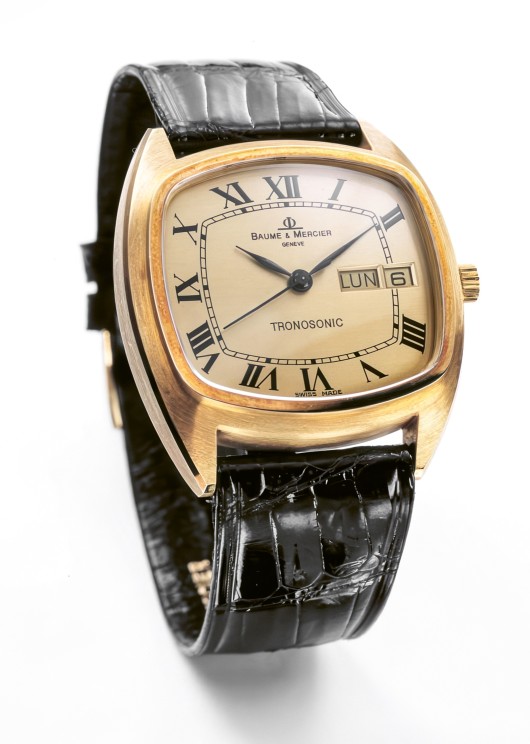
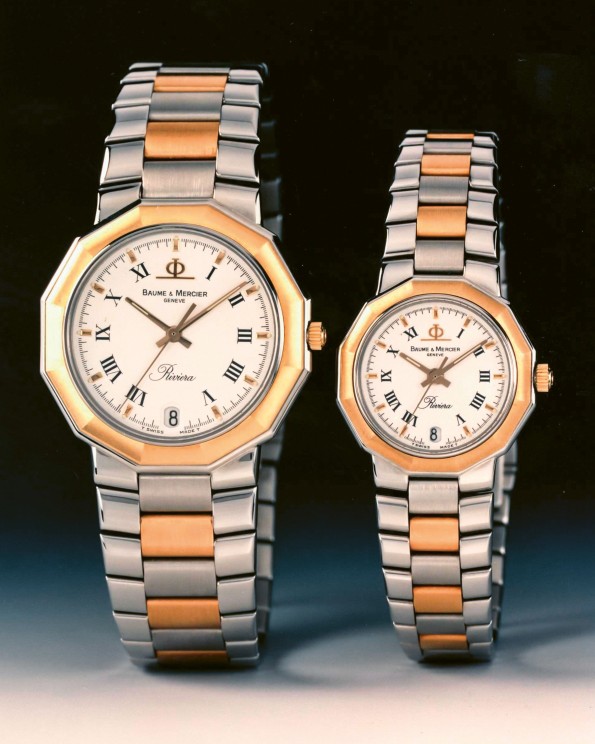
Men's models sought precision. The Tronosonic (1971) adopted the tuning fork, pre-automatic movement, even before quartz exploded. In 1973, the Riviera, designed by Jean-Claude Gueit, surprised and proved the house's innovative spirit: chic sport-steel, dodecagonal bezel, it preceded the Royal Oak and the Nautilus.
Diversity of forms: Linea, Catwalk, Capeland
Acquired by Cartier in 1988, just like Piaget, Baume & Mercier maintained its creative identity: the Hampton, a rectangular jewel inspired by the 1930s-60s, became a classic. The Linea seduced with its clean round case and interchangeable straps. The Catwalk catalyzed a feminine cuff watch-bracelet. And the Capeland embodied the traveling spirit, chronograph and GMT, linking elegance and adventure. In 1998, the three brands joined the Vendôme group of the Richemont group.
Modern renaissances: Classima, Clifton, and Baumatic
In the 2000s, Baume & Mercier's creativity was embodied by the Design Studio, led by Alexandre Peraldi. He applied the the golden ratio conveyed by the concept of balance symbolized by the Phi, to conceive the design of emblematic pieces.
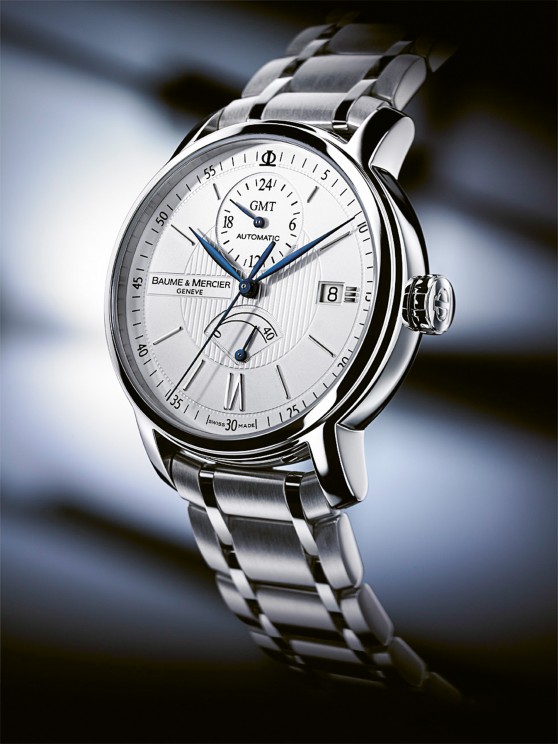
The house returned to its classics: Classima (1996) became Executive in 2004, refined, 42 mm, automatic, or quartz. In 2013, Clifton embodied urban elegance, inspired by the gentlemen of the 1950s. In 2018, Baumatic revolutionized the house mechanics: an anti-magnetic movement (1,500 Gauss), 120-hour power reserve, and 8-year warranty. A technical and reliable daily feat.
Between vintage gems and contemporary collections, Baume & Mercier writes its history, under the seal of the founding motto, "Only make watches of the highest quality", as well as the happy historical alliance of creativity and technical expertise.
Cover illustration: Perpetual Calendar Chronograph by Baume & Mercier with "Cornes de vaches".