


Some years ago, Nicolas and Laurent Wiederrecht took over the reins of Agenhor, founded by their parents Jean-Marc and Catherine Wiederrecht in 1996.
Today the headcount is 23 staff, and with Nicolas as the general manager, the company is being run in a different way. “My role is not telling our team what to do, I want to release everybody’s potential by helping them to find the right solutions. I tell them that ‘you are the expert, you are able to do this, don’t be shy to use your expert skills’,” Nicolas said.
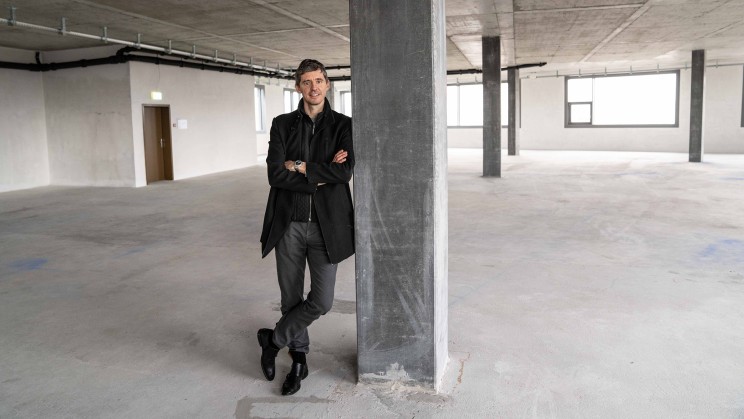
These revolutionary tactics that mean more teamwork have worked – for some. “Some people are opening their wings, flying on their own. Others were not satisfied. They did not want to behave like this, their skill is to do what must be done in a very good way, and to make it even better than we ask for. It was a clear path; now the team need to imagine where the path should go,” Nicolas continued, adding that when hiring new people, he tries to find free-minded entrepreneurs ready to co-create. “It is a bit of a risk – one day they will probably leave to start their own company. But within the time they are here, they can go further than employees normally do. I would like to quote Jean-Claude Biver: ‘you will never achieve anything unless you surround yourself with people who are smarter than you’,” he said, adding that this way of thinking is not AI, it is HI: human intelligence.
The big question for watch brands is of course if the new strategy, and the mid-August move from the purpose-built villa on Rue Emma-Kammacher to the fourth floor of the Atrium building above the Zimeysa station, will affect Agenhor’s offering?
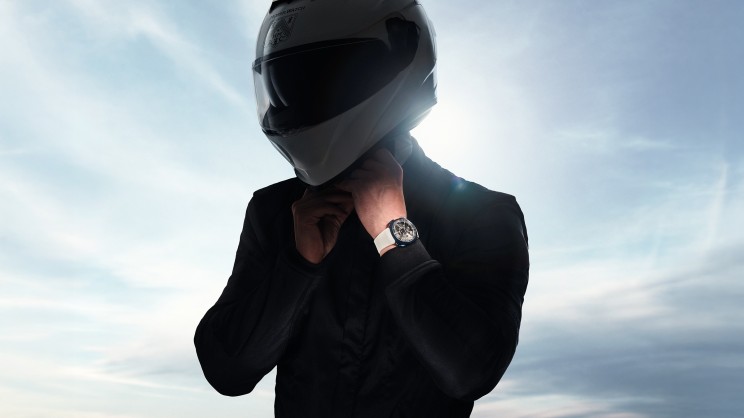
“It is very exciting with the move! The whole building curves, which brings a dynamic freshness, and we will have wide overall views from the Jura to the Alps. But basically, we are offering a bit of the ‘same same but different’,” Nicolas said, then laughed. The next project to be released is planned for H. Moser & Cie., which is also a minority stakeholder in Agenhor. It is a chronograph equipped with the Agengraphe movement developed by Agenhor. “It is also skeletonised a bit with an open dial,” Nicolas explained of the
H. Moser & Cie.Streamliner Alpine Drivers Edition, released on May 30, 2025.
Historical recap
But what made Agenhor what it is today? Famous for the Agengraphe movement, an integrated chronograph with central hands, most of their creations are modular. “Modules are coming back in fashion – it is a large part of our activity,” Nicolas said, adding that the first module Jean-Marc made was a moon phase for Chopard. “Modules allow people to have watches a bit more affordable, since you don’t have to reinvent the whole movement. The downside is of course that it requires a bit more space and makes a watch a little bit thicker. One of our strengths is that we are good at finding the balance between thickness and cost.”
According to Nicolas, one of the most popular module requests at the moment is perpetual calendars. “Jumping hours are also trending now; the retrograde is making a comeback; and the tourbillon is returning as well.”
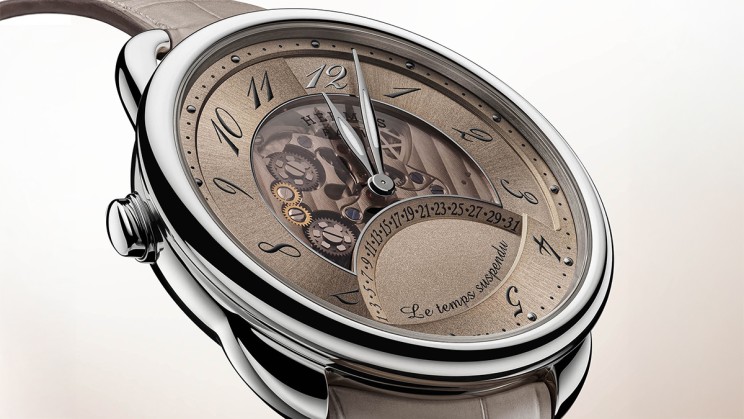
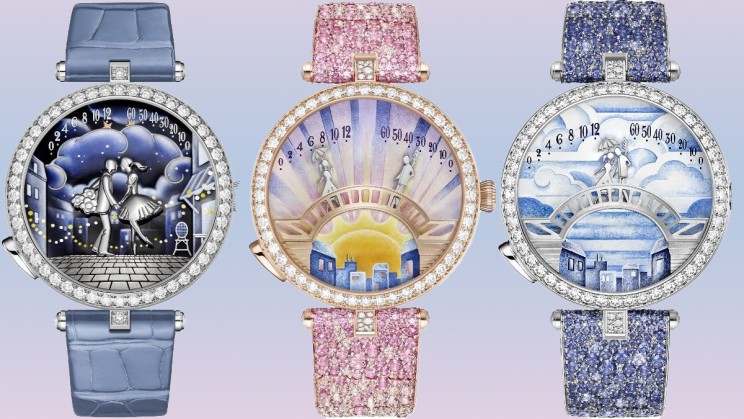
Among Agenhor evergreens you find two movements that are still very much in vogue thanks to new releases from the brands: Hermès Temps Suspendu (introduced in 2011) and Van Cleef & Arpels Pont des Amoureux (first released in 2010).
Among more recent creations you find Parmigiani’s offering of cultural perpetual calendars.
“We design the movements or the modules, but all our components are made by Swiss suppliers. We assemble, test and all the rest. We also make more and more decorations, and one exciting thing with the new space is that we will have seven CNC machines on the same floor. They are not ours, they belong to company Studi-Ho SA founded by Thomas Guinand. So, we are not a manufacture, but it will be under the same roof, which could come in handy if we need something to be made quickly.”
For Nicolas, Swiss made is important when it comes to suppliers. “I like to be able to hop in the car and go and meet people. If the human relationship is good, then the component will be good. We have a dense network working together here in Switzerland, and we keep it at the top of the world’s watchmaking quality. You mustn’t deceive a client into believing something that isn’t true. The important thing is to remain transparent about what you do and where your components come from.”


