Press release
A tireless defender of the planet, Jean-Louis Etienne is the explorer who is the most familiar with its northern and southern extremities. The French physician was the very first man to reach the North Pole on foot, alone. His latest exploit, flying solo over the North Pole in a hot-air balloon, is a feat that has never before been accomplished.

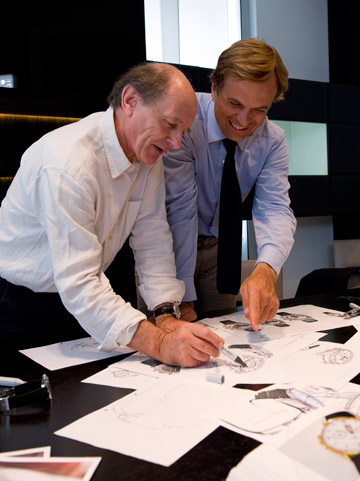
Conception of the El Primero Striking «Jean-Louis Etienne»
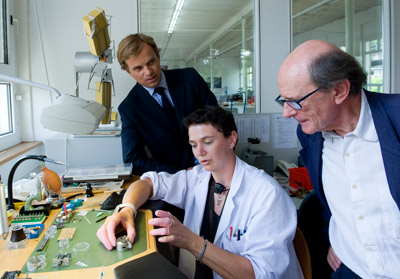
For each of his expeditions, Jean-Louis Etienne helped to fine-tune the equipment he would need if he were to return from his extreme exploits alive. He is thus familiar with instrument design. However, this time, working in the workshops of the Zenith Manufacture, the explorer was fascinated by the infinitely tiny and precise aspect of the world of watchmaking.

“We're going to imbue this instrument with as much beauty and tension as I encountered when I flew over the glacial Arctic Ocean”, he told the watchmakers who assisted him. In Le Locle, Switzerland, Jean-Louis Etienne and Zenith's engineers developed the specifications and made a rough outline of the watch that would meet the demands of extreme situations. The timepiece will be available soon. Earlier in the day, speaking at a conference for all Zenith employees, Jean-Louis Etienne narrated his hot-air balloon crossing: “As I approached the Pole, I was shaken like never before by a snowstorm. For 14 hours, I flew at low altitude trying to remain 150 meters from the ground. It was tiring – even exhausting by the end – because in such violent winds, there were powerful updrafts and downdrafts, so the balloon would swoop very high into the air, only to drop just as roughly. As it descended, the solar panels would break. In these conditions, you can't let down your guard for even a second”. The French adventurer has entered the history books as the first man ever to have flown solo over the Arctic Ocean in a hot-air balloon.
The most merciless of testing grounds
The conditions encountered at the North and South Poles are the most hostile on earth. Temperatures drop below -60°C in the South and -40°C in the North, while wailing winds buffet continuously. Zenith sees this inhospitable terrain as the best possible testing ground for its materials, since the resistance and reliability of its measuring instruments are put through their paces under the worst possible conditions. If the instruments come back from their expedition to the Poles intact, you can be sure they can survive any environment.
During his expedition, Jean-Louis Etienne wore a Zenith Striking 10th on his wrist and nothing during the crossing hampered its regular functioning.