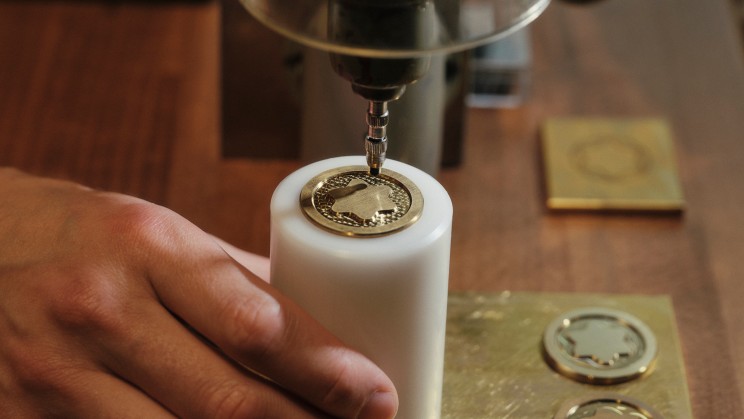
The stand of a brand is an integral part of its watchmaking culture. It was already present in 1917 in what later became Baselworld. Today, it can be found in Geneva as in Dubai, Las Vegas as in Mexico. The watch stand must deploy, in miniature and in a few minutes, a know-how that actually extends over thousands of square meters, and acquired over decades, even centuries. It's a concentrate. A shortcut of space and time. A summary, in a few square meters, of everything a brand projects.
Designing a watch stand is therefore an exercise of extreme difficulty. That's why most watchmakers, like Montblanc, call on specialized agencies. The brand sets the goal. The agency, the means.
They are numerous. There is interior architecture, scenography, product design, but also much more specialized skills, such as light architecture. For Montblanc, it is the Studio Jean-Marc Gady that assists the manufacture in deploying its alpine universe. The two partners know each other well: they have been collaborating for ten years, since Montblanc already exhibited at SIHH, now Watches and Wonders. The Studio Jean-Marc Gady is also familiar with the watchmaking environment. It has also worked for A. Lange & Söhne, Audemars Piguet, Chaumet, and Zenith.
A scenographic birth
For the Montblanc stand, "it takes a minimum of 9 months of work," explains Émilie André, CEO of the agency. "We work with visual merchandising, communication, customer experience, marketing, and naturally, the product. Each year, we receive a brief that can stretch over 2 pages or over 100 pages. It contains the key messages the brand wants to emphasize, the flagship collections, the segments of history to highlight, as well as practical information about the stand's structure."
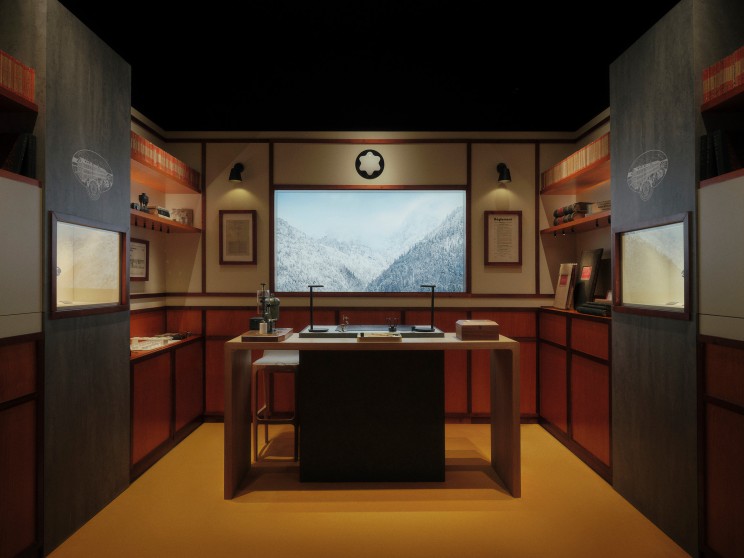
For a stand like that of Montblanc, depicting a mountain chalet, it's hard to imagine the number of variables involved in creating the desired effect: finishes, materials, touch, sound, smell, acoustics, traffic conditions, risk of congestion, time spent in front of each showcase, lighting intensities and angles, reflections on each surface, and, as much as possible, the typical path every visitor will take. "For Montblanc, we needed to infuse the stand with the spirit of the Meisterstück campaign by Wes Anderson. Except a camera only offers a single angle of view, its own. We therefore had to invent the rest, everything around Wes Anderson's camera that it didn't see."
Light sculptor
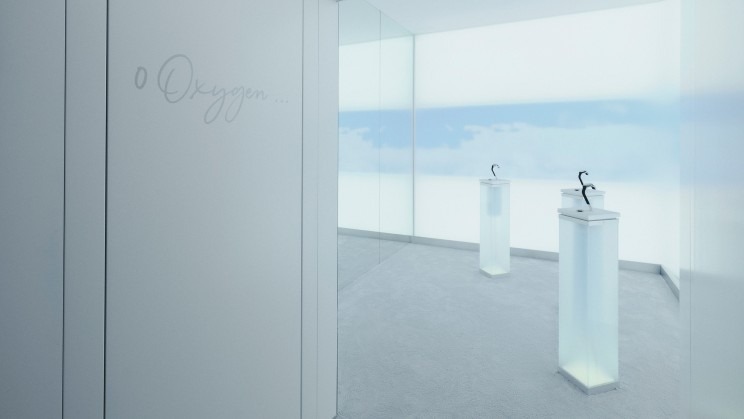
To sculpt this Montblanc universe, the Studio Jean-Marc Gady enlisted one of the greatest light architects in the industry, Jean-François Touchard - among his countless achievements in 30 years of profession, includes the reopening of Notre-Dame de Paris. "Among the most important things, one must know how to cast the most precise light beam possible, because the watch is an object where every detail is drawn to the millimeter. The temperature of the lights is also essential: it's what should reveal the gold nuances of each model," explains the expert. "You can make the most beautiful stand in the world, if the watches aren't well seen, it serves no purpose."
An immersive experience
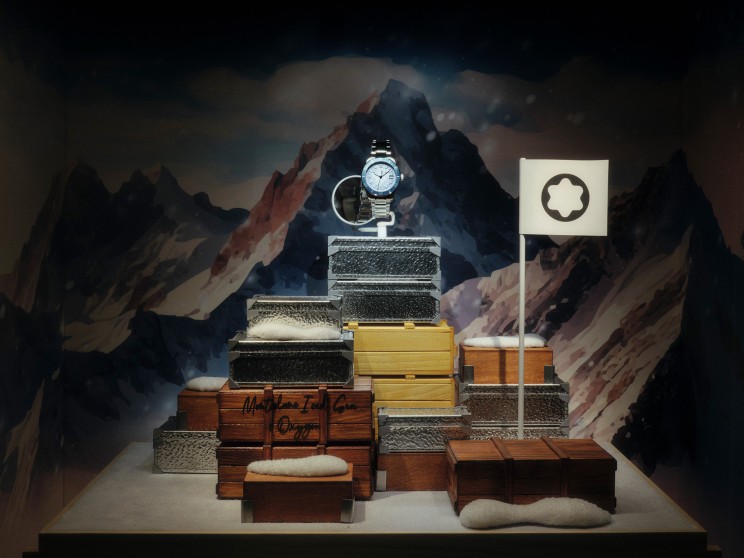
Particularly elaborate, the Montblanc stand offered visitors an immersive and picturesque journey into its world of craftsmanship and watchmaking. The chalet, the nostalgic color palette, and the vintage aesthetic are inspired by the film 100 Years of Meisterstück, written and directed by American filmmaker Wes Anderson. Upon entering the stand, visitors were greeted by the chalet façade decorated with elements from the film, like period suitcases and the Montblanc flag. The visitor dives into a mountain landscape, setting the stage for the upcoming adventure and reinforcing Montblanc's connection with mountain exploration. At the center is the Montblanc office, designed by artistic director Marco Tomasetta. The experience extends to The Library, with the wall of books seen in the film, and its green-patterned sofa. The journey ends in the Minerva room, where Montblanc's legendary watchmaking heritage comes to life.