There, it’s over. We’re packing our bags and as Dutronc sang:
“The transvestites are going to shave
The striptease artists have gotten dressed
The pillows are flattened
The lovers are tired”.
Baselworld version 2013 has ended.
And homo post coitum is even more tristis because, this year in particular, everyone really had to step up to the plate. Stop and think for a moment: a brand new building which cost around 430 million francs, 1,000 new booths, each more opulent than the last, with schools of fish swimming around on the ceiling and bullet-proof walls worthy of Fort Knox. Champagne flowing as if it had rained down, high-heeled damsels vying for the Miss Galaxie title, 3,500 accredited journalists and advertising junkies, all the CEOs duly body-built for the occasion. And floating above everything, the delicate aura of international good taste: carefuly, you’re walking around in Herzog & de Meuron! That’s not negligible. Grilled sausages were history. The price of coffee had to rise (CHF 5,50 a cup – at the very least – and one wonders how guys coming from Sechuan cope when the price of a cup of coffee in Basel represents a full day’s wage and one night in a hotel costs a monthly salary there).
But we are not here for that sort of ranting. It was lovely, it was grandiose and we were asked to admit as much gracefully.
Except that all this apparently flourishing good health somehow leaves one with a strange taste in one’s mouth. Isn’t watchmaking perhaps in the process of developing a tad above ground, like Dutch tomatoes? Why is all this ostentation, this packaging, truly necessary? Is the industry not enough in itself? Is it necessary to brag about it no matter what the cost by erecting these huge mastabas, these temples all worshipping a single god?
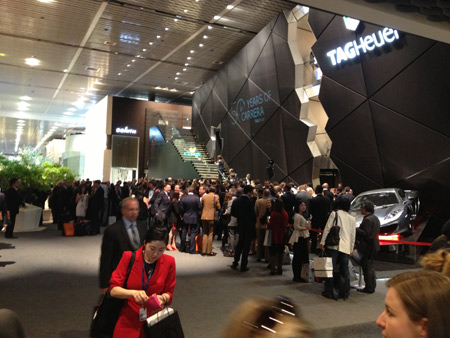
Transformed into a pilgrim hesitating with regard to the firm grounding of his own Faith, journalists went from “chapel to chapel”, from pavilion to pavilion (because “booth” has become a dirty word), consistently seeking to decipher the dogma of the unique religion being presented to him, summed up on a single USB flash drive (with press giveaways virtually extinct, which is ethical progress in itself but not necessarily a good sign in that it may well be interpreted as: “we don’t really need you any more”).
One emerged from this ephemeral carnival not just all washed out, in the real and figurative sense of the term, but also somewhat sceptical. When one is acutely aware of the fact, backed by supporting evidence, that behind many of these glorious facades made of glass and steel, the daily reality is a lot tougher, one sometimes feels a bit heart-sore.
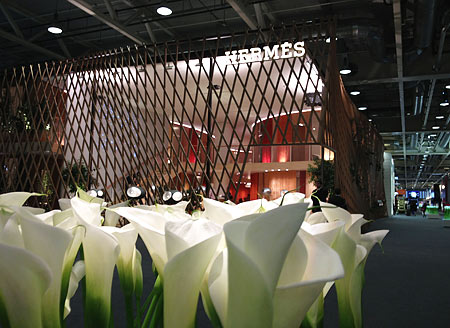
Like Potemkin driving Catherine the Great, Empress of all the Russias, across his country, it is clear that the opulence on display sometimes conceals cardboard villages. But each and every one is expected to play the posturing game, journalists included. And, short of streaking through Hall 1.0, “the holy of holies” (come to think of it, nobody has yet tried streaking at Basel), it is not clear how one might open consumers’ eyes. Because, let’s be straight about things: above and beyond the still incredible numbers, one could sense a sort of restrained anxiety at Basel – admittedly diffuse, but still very much there.
What if all of this were too good to be “really” true? What if all this might well, one fine or cursed day, suddenly coming crashing down like a stupid house of cards? What if the metal, gold and diamonds were found to have been built on mere sand? One pavilion this year actually physically expressed this transitory and ephemeral aspect: the one designed by Toyo Ito for Hermès. Doubtless a sign of Buddhist leanings and of an acute awareness of the temporary nature of the materials. A pavilion in the form of a wooden hut (doubtless luxurious – one is after all at Baselworld), Hermès’ light, fragile construction played the role of a philosophical postulate that might be summed up in plain language as: “we are but mortal, transient and insignificant in the wider scheme of things”. In other words, post coitum, homo tristis.