
Many remember that November 10, 2022. The time now feels devilishly distant. Switzerland had been out of the COVID lockdown for only a few months. Joy was in the air the joy of being together again even if everyone still flinched at the slightest sneeze, instinctively casting the customary inquisitive and worried glance around.
But at the Théâtre du Léman, it was time to celebrate. The stage belonged to the indefatigable Édouard Baer. For more than twenty years now, the GPHG (founded in 2001) has been honoring the art of fine mechanics. The long-awaited return to an in-person event added a few extra bubbles to the champagne fueling the watchmaking world’s festivities.
An unexpected double win
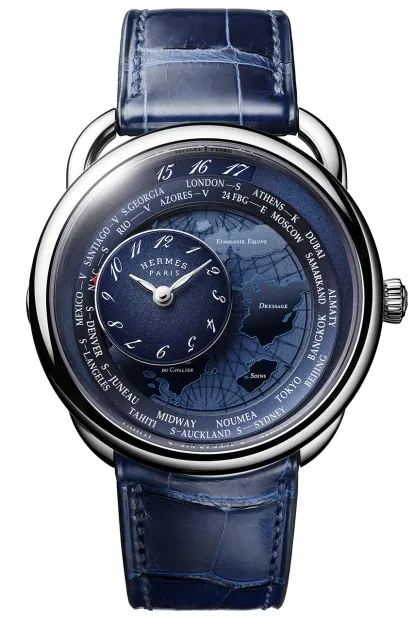
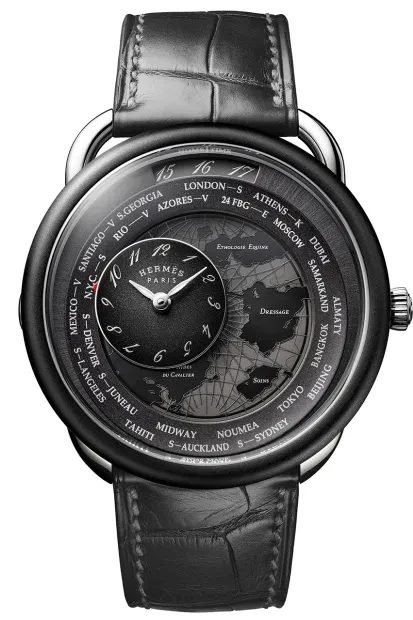
Upward Trajectory
The brand’s recognition at the GPHG sums up its positioning. There have been no sudden flashes of brilliance, but rather a steady and solid rise. Hermès Horloger has gradually refined its collections. Who remembers that in 2003, the brand presented a Paprika model? Or a Kilim in 2007? It wasn’t until 2008 that Hermès refocused on its saddler heritage with the preselection of a Dressage model, which has since disappeared.
Man of the hour
It was only from 2015 onward that the Hermès DNA began to take clearer shape and gain strength. And that’s no coincidence: 2015 was the year Laurent Dordet took over as head of the watchmaking division. The duo he formed with Philippe Delhotal, Director of Creation, proved to be a spark. Not an immediate one, but a gradual, steady glow as is often the case at Hermès, where time is both taken and played with.
The first task was to establish a distinct aesthetic signature. This came in the form of the now-famous Hermès typeface designed by Philippe Apeloig. A small detail, perhaps but one that changed everything. A Hermès watch, already recognizable by its ultra-thin 2.6 mm movement, could now be identified by its indexes alone. The result was immediate: the Slim d’Hermès, proudly bearing this new typography, won the Calendar Watch Prize in 2015. It marked Act I of the new Hermès Horloger more creative, yes, but above all more structured.

Artistic Recognition
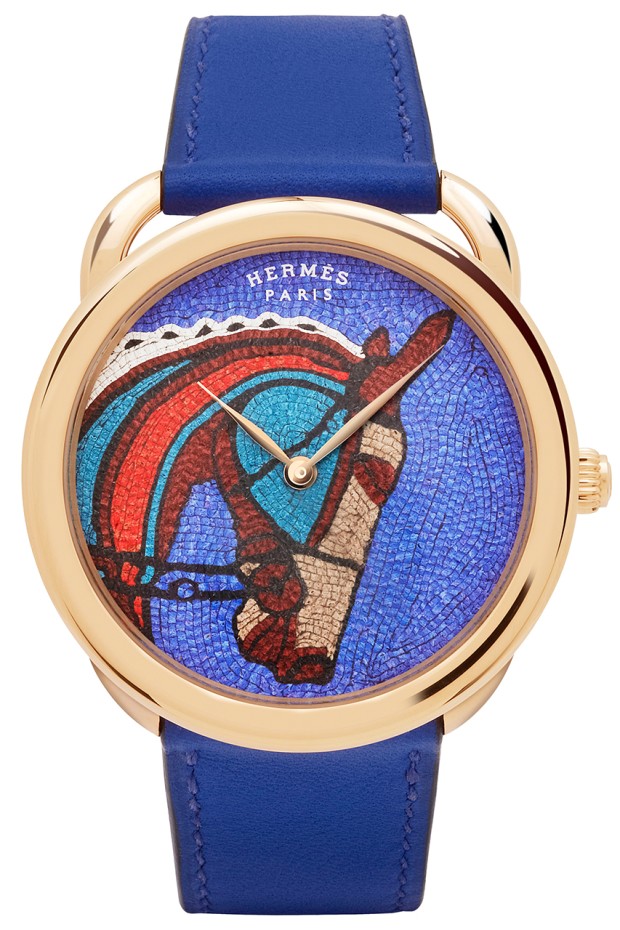
A 2025 preselection with artistic flair
Playful animation, engraving, miniature painting, and horsehair marquetry: the dial of the Arceau watch reinterprets the mischievous horse imagined by Dimitri Rybaltchenko for the Rocabar de rire carré. This whimsical image comes to life on a hand-engraved and hand-painted mobile: through a mechanism activated by a pusher at 9 o’clock, the cheeky horse sticks out its tongue and strikes its best pose against a background of colorful horsehair marquetry stripes.
Heading Toward Complications
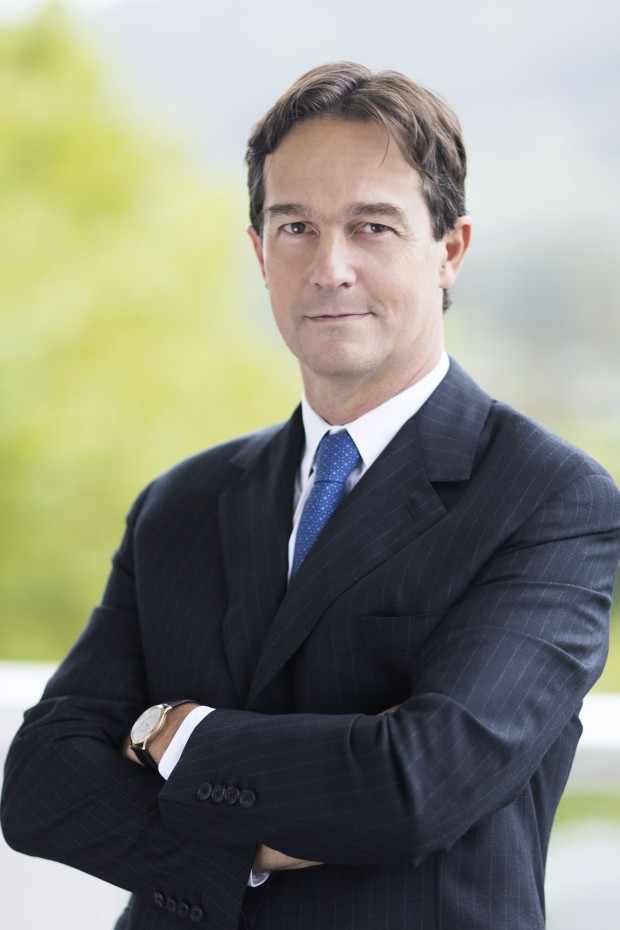
Laurent Dordet, the man behind the watch
Laurent Dordet is a true Hermès insider thirty years with the maison. A business school graduate, he began his career at Arthur Andersen before joining Hermès in 1995, in the international finance department in Paris. But Dordet soon gravitated toward the maison’s core métiers: Textiles in 2002, Precious Leathers in 2007, Leather Goods and Saddlery in 2011, and finally Watchmaking in 2015 his longest tenure yet for this discreet and affable 57-year-old.

Epilogue
The piece would go on to achieve unexpected success one that revealed a reality previously unseen: from 2019–2020 onward, a true community of Hermès clients had emerged. Discreet, outside the usual circles, diverse yet unwaveringly loyal. It is with this community that the next chapter of Hermès Horloger would be built, culminating in the celebrated double win of 2022, and with whom the coming chapters of this unparalleled watchmaking saga will be written.
Hermès Horloger’s story, however, is a century in the making. The year 1912 marks the beginning of this long history. A photograph from the maison’s archives shows Émile Hermès’s four daughters including Jacqueline one of whom wears a pocket watch fitted with a leather strap crafted by the house’s saddler-leatherworkers. In 1928, the historic boutique at 24 Rue du Faubourg Saint-Honoré in Paris opened its doors to watchmaking, presenting the first timepieces signed Hermès. Fifty years later, in 1978, the maison established its watchmaking subsidiary, La Montre Hermès, in Biel (Brügg), at the very heart of Swiss watchmaking. Since then, Hermès has continued to develop its collections, gradually integrating all the expertise of fine horology.