Press release
At the dawn of the 19th century, when Edouard Bovet manufactured his first timepieces, he straight away took great pains over their decoration. Cases and movements were adorned with gems, pearls, miniature paintings in Grand Feu enamel, and engravings.
The House of BOVET quickly became a reference in terms of the decorative arts. Indeed the Emperor of China was one of the earliest collectors and today many BOVET timepieces remain part of the priceless heritage of the Forbidden City. While the business activities of BOVET had their beginnings in China and Edouard Bovet at the time had the clear-sightedness to manufacture timepieces specifically for the Middle Empire, the fame of the “Bovets of China”, as they were then called, spread rapidly to other continents.
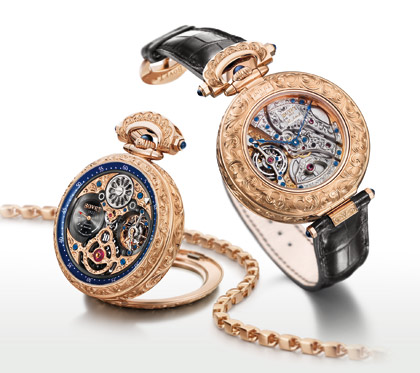
In our day, a great many BOVET pocket watches dating from the 19th century can be found in major collections, be they private or institutional.
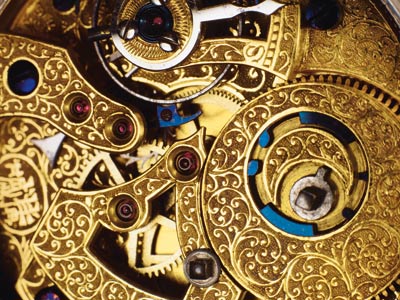
The popularity enjoyed by Edouard Bovet and the legitimate place which his creations now occupy in museums the world over are no chance phenomena. He took the watchmaking arts to the pinnacle of refinement. In addition to precious stone setting and enamel work, engraving is omnipresent throughout Bovet's history and every different technique is mastered and employed. In the engraving of his movements Edouard Bovet introduced a hitherto unknown level of detail. Under his impulse, the decoration of movements became much more subtle and, in a bold new step, every possible surface was engraved to compose veritable three-dimensional masterpieces.
The results, both convincing and original, led Edouard Bovet to reveal his engraved movements to the naked eye by incorporating the first transparent case-backs in his designs.
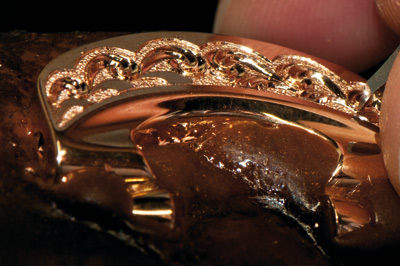
190 years later, BOVET is preserving the future of watchmaking's decorative arts, a field in which many skills were otherwise destined to disappear forever. This heritage and the exceptional expertise built up over two centuries of watchmaking activity are illustrated in the contemporary designs of the House of BOVET, which continues tirelessly to innovate in keeping with tradition.
Hand engravings are therefore present on all movements contained in BOVET timepieces. Heirs to the expertise of their predecessors and loyal to the history of the House, the artisans employed today by BOVET are able to decorate every part of a timepiece where such work is technically possible, regardless of the chosen motif and engraving technique. Dials, flanges, case-bands, bezels and bows are therefore frequently decorated. BOVET gives every collector the chance to personalize their timepiece with a specific decoration. In terms of engraving, the possibilities of individualizing a timepiece are virtually endless: simple text (name, initials or date), decorative motifs or figurative engravings are just some of the choices and themes available. “Fleurisanne” engraving is the decorative pattern featured most often on BOVET timepieces of the 19th century.
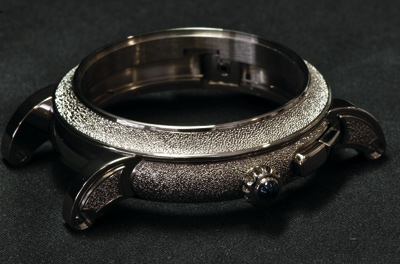
Today, it remains the most sought-after by collectors, whether for decorating a dial, a case, or the bridges of a movement. However, following the example of Edouard Bovet, whose creativity has lost none of its power to impress, Pascal Raffy, the owner of BOVET 1822 and Les Manufactures DIMIER 1738, regularly proposes new ideas.
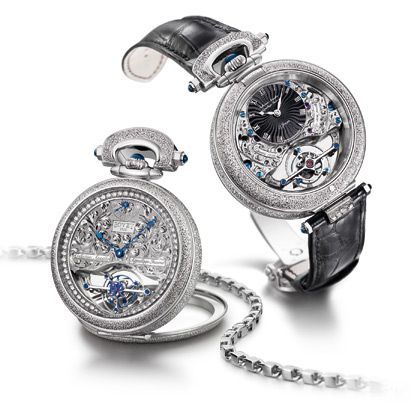
In 2011 for example, BOVET unveiled timepieces whose cases were engraved in their entirety with the “Fleurisanne” motif. This year, a chased “bris de verre” motive embellishes the movements and cases of several unique pieces in the “Grand Complications” collections. It is a motive that appeared on certain movements between the end of the 19th century and the beginning of the 20th century, before falling into disuse. This year Pascal Raffy has decided to resurrect this motive, which accords beautifully with the architecture of contemporary movements, but has chosen to extend its coverage to the entire case. The result is an original design requiring around one hundred hours of work for engraving of the case alone.
190 years after its foundation Bovet underlines its supremacy in the decorative arts of watchmaking, successfully innovating in perfect harmony with its tradition.