Although we haven't yet seen small ads of this type, a look at the latest watch releases hints that it surely won't be long before we do. And the choice of straw marquetry is just one of many possible examples. The choice is yours. You can direct your kids who are harbouring doubts regarding their lifework towards damascene art or Etruscan granulation, not to mention hard stone mosaics, mother-of-pearl sculpture or the entire range of grand feu enamel techniques: plique-à-jour, cloisonné, champlevé and the like… All it would take is for cameo dials to make a big comeback – as they doubtless will – and you will be able to suggest that your daughter becomes a glyptician. She will doubtless be thrilled to learn that this technique featuring small, carved stones was born during the Sumerian civilisation.
If he is a maths fan, suggest to your adolescent who spends his time gawking at Facebook that he become a gnomonist. Although not very common these days, in our pre-apocalyptic period, this speciality will doubtless be very highly rated when watches will have disappeared and people will once again use gnomons as a temporal reference. If (s)he still hesitates, how about gemsetting, using baguette, invisible or snow techniques? Diamonds are a gilt-edged security – and a girl's best friend. However, teenagers still cannot make up their mind despite this impressive range of options, that may be because they just don't feel like taking any decisions whatsoever.
If you are tempted to think this is mere gentle mockery, think again! Artistic Crafts have become the spearheads of Fine Watchmaking. Not a week goes by without such or such a brand announcing a hand-crafted creation drawing upon rare or almost extinct techniques. If it is to continue adopting a radically contrasting position within a world fascinated and obsessed by sophisticated technologies, horology – of which the mechanical technique is in itself completely outdated, since a stupid quartz watch better fulfils its duty of precision than four in-line tourbillons – must take the exact opposite path to that dictated by progress alone.
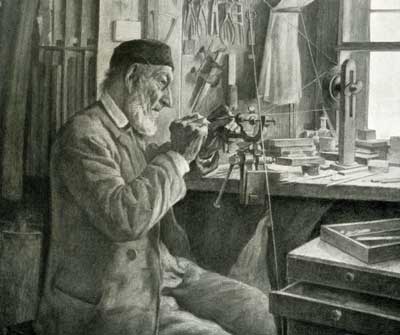
This approach is not only its own luxury – and that which sets it apart and keeps it swimming firmly against the tide – but also one of the very conditions on which its survival depends. Watchmaking in fact flatters our nostalgic penchant and thereby reassures us. Knowing that, somewhere in the world, a straw marquetry artisan is continuing to exercise his time-honoured craft in a silent room surrounded by snow-topped pine trees, warms the heart like a fire crackling in the hearth. Amid the ocean of uncertainty in which we are barely keeping our heads above water, and within our civilisation that seeks to abolish time and replace it with an ever-present sense of immediacy and urgency (news, financial transactions, social networks), this tiny window of silence and of time that appears to stand still gives us the illusion that nothing has fundamentally changed.
It is no coincidence that Franco Cologni – former Richemont guru and founder of both the Fondation de la Haute Horlogerie and the Fondazione dei Mestieri d'Arte in Milan – who is seeking to promote crafts among young people, recently shared with us his admiration of Slow Food. The latter is a movement born in Italy and which, through advocating local food sourcing, is seeking to turn things around and help people recover a sense of taste, of slowness and of being together.
This inevitably made me think of other young people who have not had the choice of becoming traders or enamellers. The economy has decided for them. I think of the young people of Greece, who have already returned in their thousands to their respective islands and begun living like their grandparents did, surrounded by goats, cheese, thyme and artisans.
So indeed, why not straw marquetry?
Pierre Maillard is Editor in Chief of Europa Star