
It's a Pavlovian reflex: to pit quartz against mechanical. It's a memory left over from the 1970s, when quartz overtook mechanical watches. A cultural gap opened up. But today's younger generations have blithely straddled it. In their collective memory, the quartz crisis is a thing of the past. And any collector today has watches of every technology in his or her drawer.
However, the sporting world is the exception that proves the rule. The supremacy of quartz, now atomic, has definitively supplanted the mechanical chronograph. If we omit the human factor, we might be surprised: most performance measurements are made to 1/10th of a second, a precision that some mechanical chronographs can achieve without any problem, along with the 1/100th.
The oldest example is Zenith. With its 1969 El Primero, the Le Locle manufacturer produced the first mechanical chronograph clocked at 36,000 vibrations per hour, and therefore capable of measuring a tenth of a second. A magnificent integrated movement that failed to make its mark on Olympic soil, already conquered by Omega.
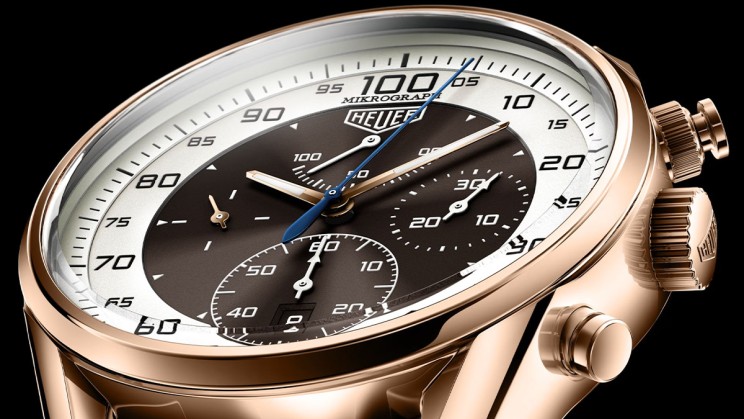
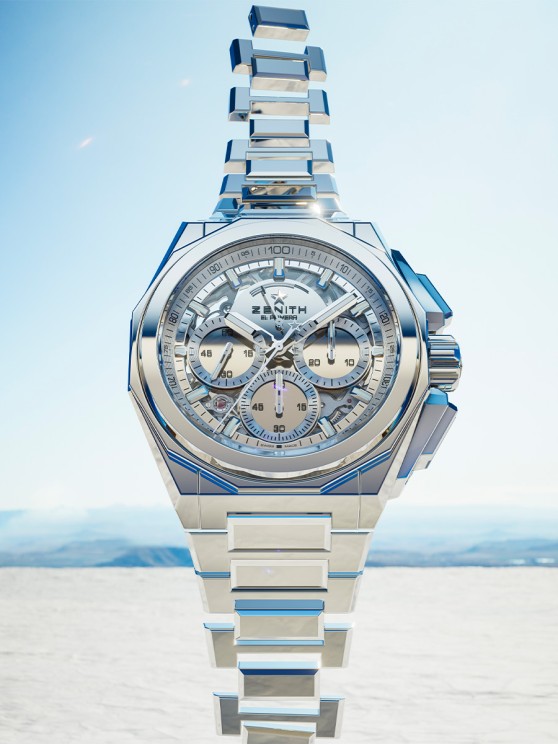
Forty years later, in 2009, TAG Heuer took over. It was the advent of the Mikrograph: one watch, two independent movements. The chronograph movement clocked 10 times faster than Zenith's: 360,000 vibrations per hour. Its central hand travelling around the dial in one second. It can therefore be read directly to 1/100th of a second. Since the two brands belong to the same group, this dual technology will return to Zenith, where it is still used (Defy collection).
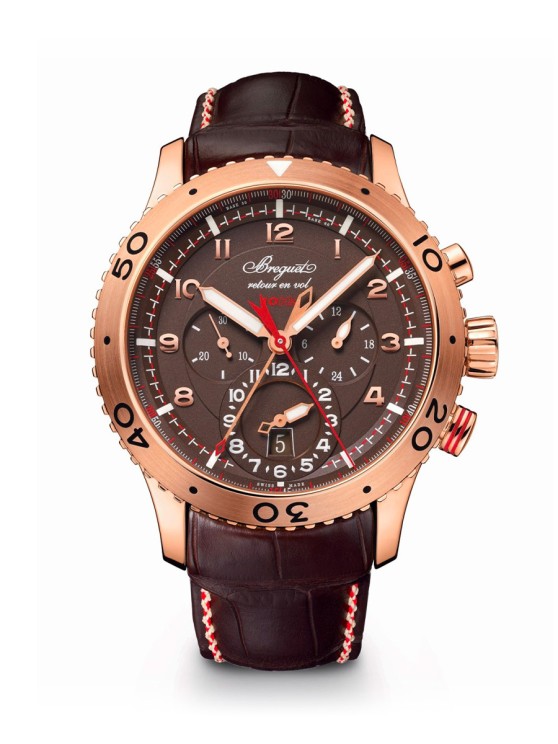
Since then, the trend towards high, or even very high, frequencies has fallen out of favour. Few brands have worked on them. Instead, we are witnessing a downward trend, with increasingly lower cadences. After TAG Heuer's 100 Hz, Breguet returned to 10 Hz with a remarkable Type XXII 3880, capable of measuring 1/20th of a second.
Then came a return to the 5 Hz of yesteryear, notably at Patek Philippe, with the Ref. 5470 released in 2022. Today, the overwhelming majority of brands run at 4 Hz, or even 3 Hz. Minerva, despite being the emperor of the sports chronograph (now owned by Montblanc), even makes a point of staying at its former frequency of 2.5 Hz.


The race for high frequency seems to have come to a halt. The vintage trend has had something to do with it. People are no longer looking for ultra-high performance, but for the soul of the ‘60s and ‘70s - a historical oversight, since it was precisely during this period that the fastest and most disruptive chronographs were invented. In 2024, in Paris, event timekeeping will therefore remain the prerogative of Swiss Timing (Swatch Group), draped in the red of Omega. But that won't stop the collectors in the stands from bringing their fine timepieces to life, with their stopwatches on their wrists.