
A brand is its logo—a graphic transposition of its identity to the general public. Collectors know this well. No need to name names when one mentions the crown, the LV monogram, the Greek letter omega, the fleur-de-lis, or the star. Everyone will recognize Rolex, Vuitton, Omega, Louis Moinet, or Zenith.
For Vacheron Constantin, it’s the Maltese Cross. But unlike the examples above, this logo is deeply horological—it represents an actual component. It's a special case, much like the "topping tool," a gear-cutting machine that serves as the symbol for Speake Marin. Interestingly, neither Speake Marin nor Vacheron Constantin uses these tools or components in their current production. Why is that?

The Origins of the Maltese Cross
Because the Maltese Cross is a very old mechanism, mostly seen in pocket watches of the 19th and 20th centuries. It’s part of what’s known as a stopwork mechanism. Simply put, it’s a device designed to stop a function once it reaches a predetermined threshold. The idea is to prevent unnecessary or even harmful continuation of that function, which could damage the movement—especially since the dynamic forces (torque) within it must be carefully managed.
Naturally, this mechanism is found at the mainspring barrel. The concept is easy to grasp: the Maltese Cross is there to stop the barrel from being overwound, which could lead to breakage due to excessive tension applied to the mainspring through the crown. The Maltese Cross sets a limit—once reached, the winding is deliberately blocked.
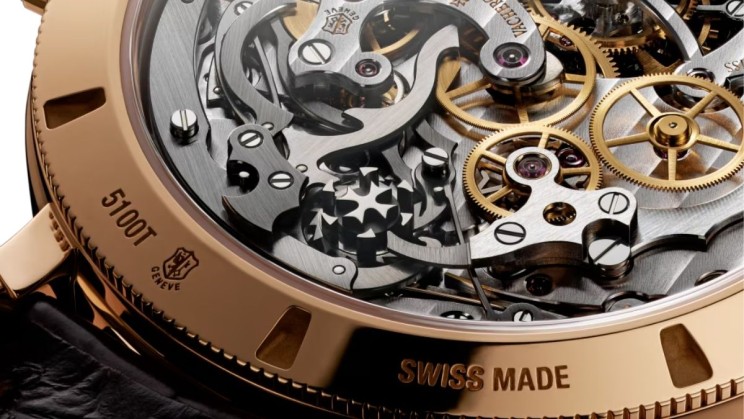
A Matter of Teeth
Technically, this limit is based on the number of winding turns: one barrel turn, then two, three, maybe four, to fully wind the watch. After those four turns, the Maltese Cross stops the process. It’s a simple, sensible solution: each turn corresponds to one arm—or “tooth”—of the cross. If you want to allow four winding turns, you use a Maltese Cross with four teeth. One of them, usually the fourth, is larger and cannot mesh with the winding system—thus halting it automatically.
Four Teeth, or Nothing
It’s easy to see why the Maltese Cross usually has four teeth—but not always. One must distinguish between heraldry and horology: just because the emblem of the namesake knights has four branches doesn’t mean watchmakers can't design crosses with five, six, or even seven teeth—each allowing an extra turn of the barrel.
However, there are technical limits. Generally, more than seven teeth are rare—otherwise, the Maltese Cross becomes just another gear. Plus, there’s the risk of jamming: two teeth might hit each other instead of meshing smoothly, causing the system to seize up. On the flip side, using three or fewer teeth becomes overly complex and unnecessary, as other solutions now exist for managing such small winding counts.
A Thing of the Past?
The Maltese Cross has largely fallen out of use today. Vacheron Constantin once used it in pocket watches, as did many watchmakers of the era. But in the 21st century, the concept feels somewhat outdated, despite its effectiveness and reliability. That’s why some independents still use it—though not always at the barrel level.
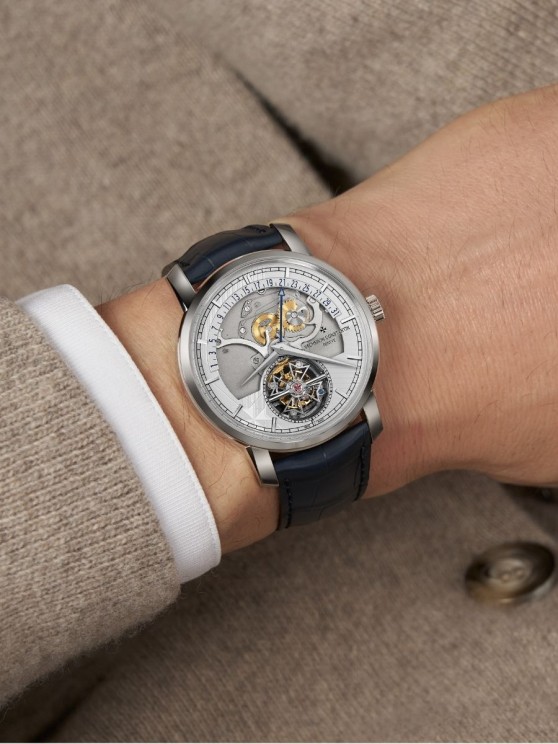
Urwerk, for example, uses it to manage satellite rotation. You’ll also find it in wandering hour complications, such as those from Audemars Piguet or H. Moser & Cie. Independent watchmaker Ludovic Ballouard is its most prolific user: his Upside Down model uses 12 of them—one per hour. He cleverly employs the Maltese Cross for its sharp, precise jumping action, allowing each hour index to flip instantly at the passing of the hour. The Maltese Cross may not have said its last word…