
Sci-fi enthusiasts, listen up: silicon nitride is the stuff of your futuristic dreams. Although no one can predict the future, some scientists are still trying their best. The aim of the Human Document Project is to create a digital library that will survive the extinction of the human race, or its departure from Earth for some other planet. In 2013, a rather special storage medium was created to house this precious repository. The ultra-hard disc, our lifeline to the future, is made from a combination of tungsten and silicon nitride ceramic. It has a theoretical lifespan of between several million and a billion years.
Silicon nitride is a technical ceramic developed in the 1960s in the context of research into internal combustion engines. It is used in the motor industry, the biomedical and electronics sectors, but much of its potential is still unexplored and underexploited. In 1995 this ceramic was also discovered in its natural form, as white “nierite” inclusions in certain meteorites. Omega, a watch brand strongly associated with space, decided to investigate the potential of this remarkable ceramic.
High-performance material
Silicon nitride [Si3N4] offers a unique combination of mechanical, thermal and electrical properties, which is why it is often considered the “best technical ceramic”. It’s light, tough, durable, low-density, very hard and highly resistant to extreme changes in temperatures. It can also bear considerable weight, is highly resistant to wear and, like all ceramics, is an electrical insulator, making it the ideal material for highly innovative applications.
Omega and silicon nitride
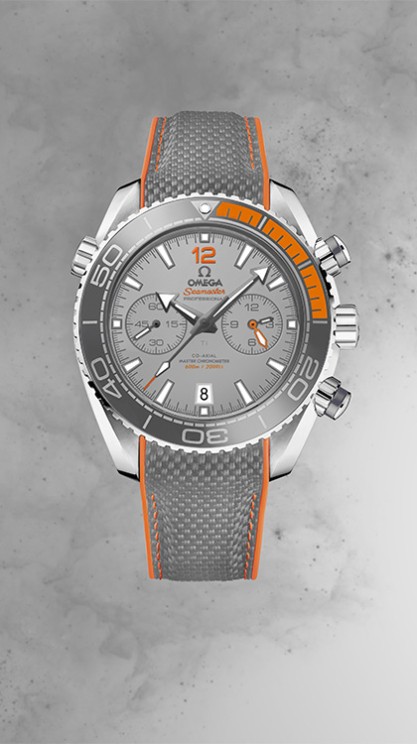
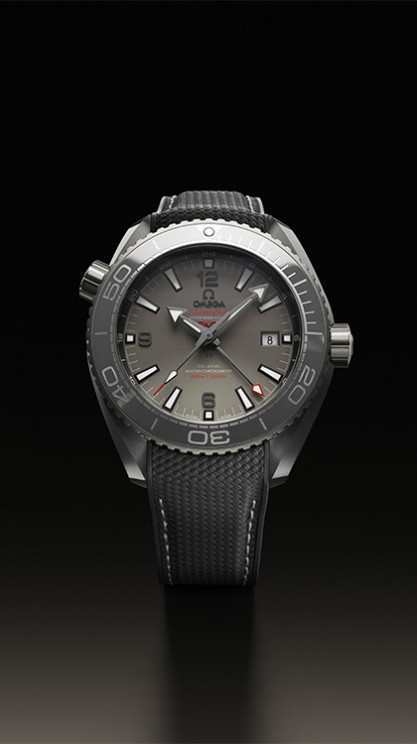
2016 saw the launch of the Grey Side of the Moon “Meteorite” whose bezel made from 18 karat Sedna rose gold – Omega’s proprietary alloy – included a grey silicon nitride ring, combined with a meteorite dial. That same year, this high-tech ceramic was found on the bezel of the Planet Ocean 600M Master Chronometer, with its 45.5 mm grade 5 titanium case and Liquidmetal diving scale. Then, in 2023, Omega crafted the entire case of the Planet Ocean Dark Grey out of silicon nitride, in the same shade of grey. “Manufacturing the components from silicon nitride ceramic, in particular the entire case, represents a major challenge because of the extreme hardness of the material. It is even harder than the zirconium oxide ceramic we use in our other ceramic models. Machining, satin-polishing and burnishing are more difficult and take longer,” the brand points out.

Strong but light
Thanks to the properties of silicon nitride, this diving watch, despite its imposing diameter of 45.5 mm (51.5 mm between the lugs) and 17.4 mm thickness, is relatively light (107 grams). As Omega explains, silicon nitride is “twice as light as the zirconium oxide used in the rest of the catalogue”. But the lightness is also due to the use of grade 5 titanium, a stalwart of the aerospace industry, for the dial, bezel body, helium escape valve and even the Master Chronometer 8906 GMT METAS-certified movement. And while the Seamaster Aqua Terra 150M Ultra Light has already undergone a similar weight loss regime, this is the time it’s been done with a dive watch, in combination with a silicon nitride case.
And thanks to the exceptional hardness of this high-tech ceramic (1500 on the Vickers scale), which could survive the end of the world, the case of the Planet Ocean Dark Grey is also supremely scratch-resistant. This watch is truly the sine qua non of watch performance. With its 600 m depth rating and GMT function, it’s ready to take on the most extreme conditions, from the bottom of the ocean to the farthest corners of the world.