
Ask anyone to name their top 10 among the great watch trends of the start of this year and you will get a different answer from everyone, as well as a totally random classification.
But there should be no need for guesswork. Taking the specific example of the SIHH, which is reputed to give the first trends of the year, it has a pre-determined number of exhibitors: 24. All of them presented a fixed number of collection, each of which consists of a precise number of models.
So there is nothing random here : to draw up the photo-fit of the “SIHH watch” we just need to list every different case size, every type of complication, every type of material, in order to determine the trends simply by calculating the median of each occurrence. WorldTempus has done just that.
Out of competition
The intransigence of maths does, however, create some obstacles. Taking the case diameter to measure the size of a watch, for example, makes it difficult to take into account models such as the Bugatti by Parmigiani Fleurier, which has such an atypical case, as well as the Crash by Cartier, the “T-Rex” by Urwerk. Unfortunately, we were unable to take these pieces into account to ensure that the calculations were representative.
The same is true for pocket watches, of which there were a few this year. But considering that they are more the exception than the rule, we also excluded models such as the Montblanc 4810 Orbis Terrarum 110 Years Edition from our calculations.
In the same vein, we also excluded unique pieces which, by definition, are not sufficiently representative on the market to indicate a trend.
The surprises in the 2016 crop
Size and price are the two most important factors that come into play when we talk of “more reasonable” watchmaking getting “back to basics”. It’s difficult to calculate an average price, because exchange rates and taxes vary from country to country. But the average size is clear: 41.5mm for SIHH 2016, all brands and genders included. A size that is not as “reasonable” as we might have assumed...
Another surprise: case materials. We might have expected a bigger focus on steel to reduce costs, yet there were nearly twice as many new gold watches this year as steel at the SIHH 2016. Crisis? What crisis?
Sure-fire winners and those notable by their absence
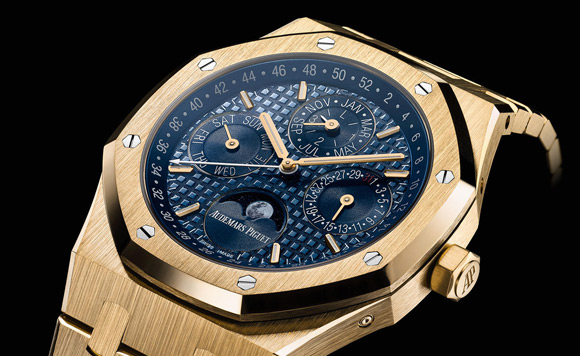
As far as straps are concerned, there is an absolute hegemony rather than a trend, that of leather. Despite the weight of the new Audemars Piguet Royal Oak models and the Vacheron Constatin Overseas, leather straps were by fair the overwhelming majority among all brands at the SIHH 2016.
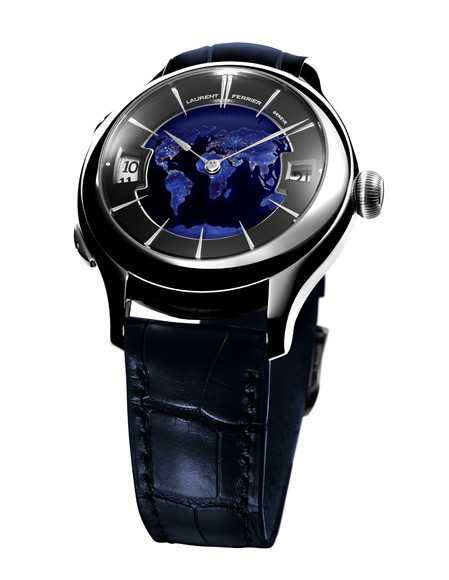
There was also little surprise when it comes to complications: the date is the most popular, followed by the chronograph. On the other hand, second time zone or GMT complications are in free-fall. Apart from examples from Montblanc, Panerai and Laurent Ferrier, there was little interest in this travel complication...
The same is true, unfortunately, for power reserve displays, which were almost entirely absent at the start of 2016. It’s worth noting, too, that there were more new tourbillon models that full calendar models, largely thanks to Jaeger-LeCoultre and Cartier...
A wavering heart
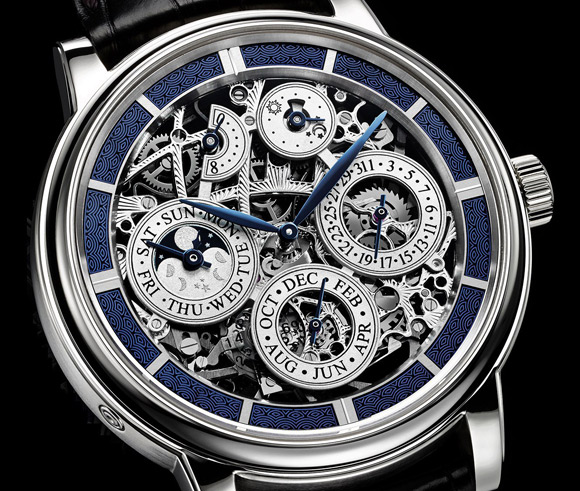
In terms of finishing, our statistics reveal some other surprises. For example, blue overtakes black as the most popular dial colour, as is shown by the new Vacheron Constantin Overseas models and additions to the Cartier Diver collection. Are we seeing an end to the “full black” trend?
The number of skeleton models seems to hang in a delicate balance. After a glut from 2010-2015, the trend seems to have stopped as abruptly as it started, with less than five new models at the SIHH 2016. Will Baselworld confirm the trend?