Anyone who has never heard of programmed (also referred to as planned or built-in) obsolescence must be living in an Amish community where cart wheels are passed on from father to son and washboards from mother to daughter. Totally dispossessed of the ability to perform manual repairs on objects that are worn out, post-modern individuals are reduced to discarding items that could still serve a useful purpose. One can longer just lift up the bonnet of a car and get out a hammer and spanner. The latter are obsolete tools that are no match for today’s data chips. Indeed, some of the latter tiny yet omnipresent electronic ‘beasts’ are in fact programmed to self-destruct in silence, beyond the reach of screwdrivers, down in the depths of the software. This practice is not only misleading and fraudulent, but downright criminal when exercised on a massive scale - because the wider issue in the making is the planned obsolescence of our entire planet. As the German social psychologist Harald Welzer explains, we must “invent a society that must maintain high standards of civilisation while using five or even ten times less resources. How can this be done? Our cultural model must evolve, which is something completely different from degrowth.” In other words, we must deprogram obsolescence.
The Secular Perpetual Calendar, attempt to ward off its own obsolescence to the remotest possible date in the future
Within such a sweeping approach, might mechanical watchmaking not have a few things to teach other industries? Yes indeed, but not the entire watch industry. The latest of the mechanical Swatch models, the Sistem 51 - however ingenious with its 51 parts, its single screw and its laser-adjusted regulator – is doubtless not “programmed” to stop at a given moment, but it is nonetheless not reparable given that its parts are welded to its body. This is a form of obsolescence built into the object itself.
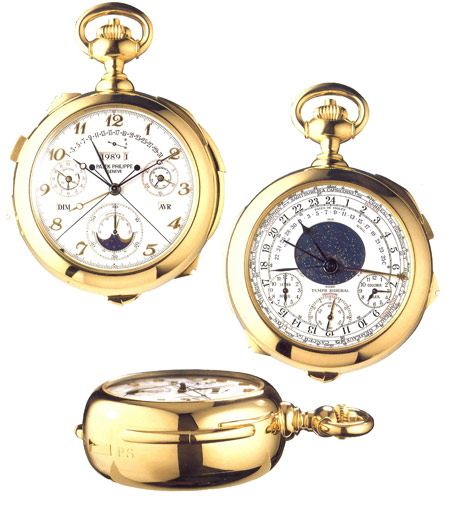
However, there is one field, that of the Perpetual Calendar, or more specifically the Secular Perpetual Calendar, which deserves credit for attempting to ward off its own obsolescence to the remotest possible date in the future.
We all know that an “ordinary” perpetual calendar has a memory of 1,461 days, meaning four hours, which enables it to glide serenely past leap years. Everything will run smoothly until March 1st 2100, the fateful date when the vagaries of the Gregorian calendar will require a one-day manual adjustment of the mechanism. This is because, every 400 years, a leap year is skipped so as to ensure that the time shown on our clocks and watches coincides as closely as possible with astronomical time.
A few bold watchmakers have attempted to overcome this obstacle by adding a gear train programmed to move one notch forward every 400 years. This rare breed of timepieces notably includes the Calibre 89 by Patek Philippe, the Perpetual Secular Calendar by Sven Andersen and the Aeternitas Mega 3 and 4 models by Franck Muller. All seek to push the boundaries of obsolescence. As far as Calibre 89 is concerned, the official claim is that “its secular perpetual calendar will operate without adjustment until the 28th century”. This in fact means that on March 1st 2700, owner will need to look for the instruction manual, find the right correct and adjust the date, because “to display the years, Calibre 89 has 3 concentric wheels. The hundreds and thousands are on a single wheel that only goes up to ‘26’”, as a watch forum regular named Tokei tells us.
And some are in fact prepared to quibble: “This watch therefore does not deserve to be referred to as a true secular perpetual calendar. It does not have the real ‘division by 400’ mechanism of the Gregorian calendar. It has just put in place a mechanical trick that memorises the fact that the years 2100, 2200, 2300, 2500, 2600 and 2700 are not leap years. This is a logical function that means that 0 on the units and 0 on the tens prevents the year from being a leap year, except if there is a 4 in the hundreds (a notch in the cam where the figure 4 appears”, he points out, while immediately adding that “this is only a purist’s viewpoint. In practice, no body will go and check whether this is pure pork or not.” One might well have found a better comparison…
Whatever the case, Michel Golay appears to have gone a step further for the Franck Muller Aeternitas by delaying obsolescence to the year 4000 which, as everyone knows, although divisible by 400, will nonetheless not be a leap year – as was/will be the case for the more remote year 8000 and the year 12,000 – in accordance with the decision taken by Pope Gregory XIII in 1582.
At this point one cannot help but succumb to the temptation of sharing the explanation contained in the patent filed for the mechanism driving the “perpetuity” of the Aeternitas: “The secular perpetual calendar comprises an additional mechanism incorporated with an conventional perpetual calendar mechanism and comprising a last wheel performing one full rotation in 400 years and bearing a cam of which the various echelons cooperate with a lever on which a wheel pivots. The latter bears a satellite to which the month-of-February cam is fitted. The cam which performs a one-quarter turn every century features three lower levels enabling the lever to retreat so that the cam on which the multiple level comes to rest finds itself in the same position as for a classic 28-day month of February three times in a row for the years 2100, 2200 and 2300, and then an upper echelon so as to restore February 29th in the year 2400.” Phew!
“Changing our cultural model” in order to combat programmed obsolescence is a tough order. But watchmaking can contribute its expertise to this cause, provided human beings still know how to use their hands in 2400. But will they still have hands?
Pierre Maillard is Editor in Chief of Europa Star