
Invented in 1816, the chronograph is just over two centuries old – and after these 207 years to date it still boasts just as many collectors, flagship models and legendary calibers. The secret lies in its ability to adapt to changing eras. At the time of its birth, it was almost exclusively put to professional use: in. broad terms, Breitling measured bicycle races, Longines measured distances by telemeter and Tissot measured heart rates. In the mid-20th century, the public’s expectations changed and the chronograph did too. While it’s actually hard to say which movement drove the other, several iconic brands and models ushered the chronograph into a new dimension. The Breitling Premier (1943) lived up to its name, laying the foundations of a chronograph remaining technical and accurate, yet more dressy, more urban. It was joined by other models such as those by Universal (Tri-Compax, 1943), Angelus (Chrono-Datolux, 1948) and Eberhard & Co. (Contodat, 1957). These timepieces and the thousands of others that were to follow gave rise to a whole new category dubbed ‘sporty-chic.’ Eight years on, this somewhat catch-all classification is starting to be seriously dated, so what are the chronograph’s new faces today?
Horological chronographs : the purists' clan
Well-informed collectors seek the quintessence of the chronograph, as much for its technical aspects as for its original aesthetics, in accordance with its evolution reflecting well-mastered principles. There is no room for extravagance in this territory, but instead reverence for a watchmaking heritage with a carefully preserved spirit. The chronograph is a sign of belonging to an erudite community that is passionate about fine mechanics. The timepieces of choice include Minerva editions occasionally reissued by Montblanc; the latest Angelus and Patek Philippe chronographs; the modernity of a Chronor by Parmigiani; as well as the technicality of an Odysseus by A. Lange & Söhne.
Lifestyle chronographs : the chronograph spirit prevails
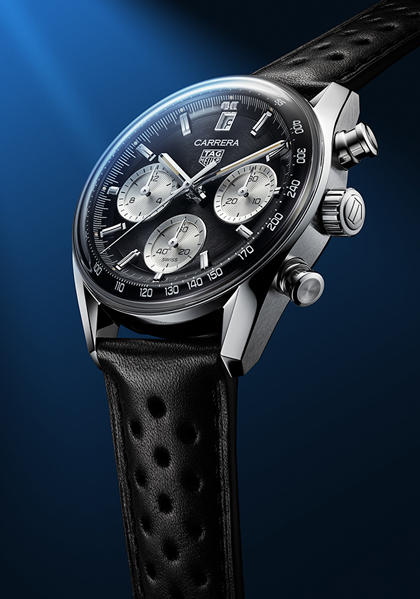
Its primary chronometric function has given way to the spirit it embodies. Its owner projects himself into an era, a lifestyle, a way of being. One naturally thinks here of gentleman drivers infatuated with the new TAG Heuer Carrera or the Vintage Rally by Frédérique Constant, or even the elm burr from Ralph Lauren’s Automotive collection. The fiercely retro Sixties model from Glashütte Original is another example of a key era in watch design.
Ultramodern chronographs : 100% disruptive !
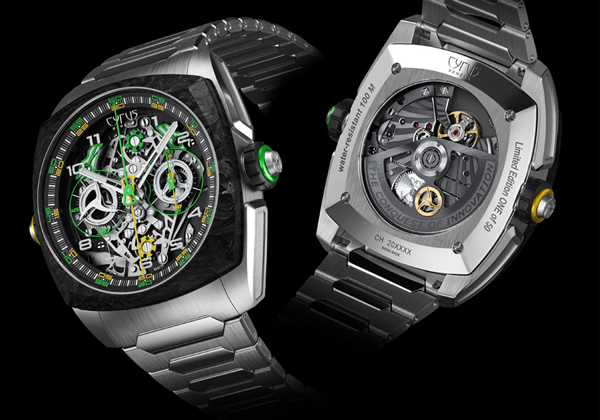
This is a breakthrough chronograph. It owns its difference with the watchmaking heritage: the past is the past, let’s move forward! It brings something new to 21st century men. It is an avant-garde timepiece. Favorites include the highly complex Sequential by MB&F; the DICE double chronograph by Cyrus; the Track1 by Singer Reimagined; the Streamliner by H. Moser & Cie. with central display; as well as a Hyper Horology version by Roger Dubuis inspired by Lamborghini racing cars.
All-conquering chronographs : status rules
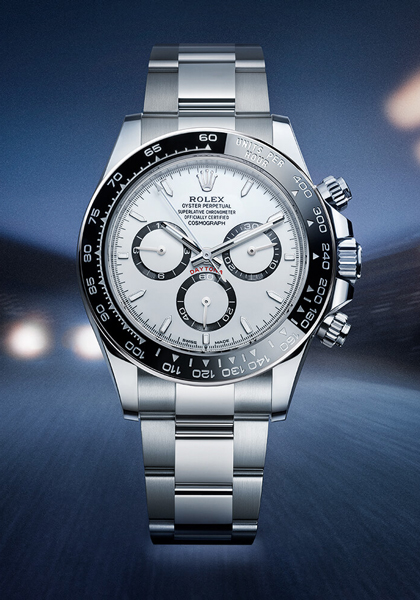
It expresses conquest, ambition and associated success. It is the status chronograph par excellence, worn both for the complication itself and for the values of the brand whose signature it bears. It boldly asserts itself, like the Cosmograph Daytona by Rolex or the Royal Oak by Audemars Piguet. A pure talking piece.
Passion-driven chronographs : instruments of excellence
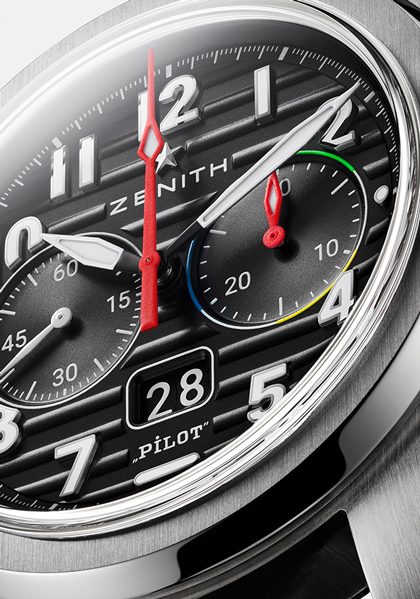
Some chronographs see their history associated with a discipline to which the owner is passionately devoted. What this collector wears silently conveys what makes his heart beat faster, prime examples being the Breitling Navitimer, the BR 03-94 from Bell & Ross and the Zenith Pilot for aviation; the RM 70-01 Prost for cycling; the Omega Moonwatch for the conquest of space; and a Hublot Big Bang e “UEFA” for soccer, among others.
City chronographs : watch first, chronograph second
In these models, the chronograph is an additional complication and should remain so. Viewed from this perspective, the design of the watch is paramount and the chronograph must comply with it, blending in with the dial and the case, adding a sporty note that nonetheless takes second place to elegance. Classic specimens include the latest H08 Chronograph by Hermès or the Reverso Chronograph by Jaeger-LeCoultre, whose complication can even be hidden; or the Octo Finissimo Chronograph by Bulgari, where the only things that count are the ultra-thin architecture and the Roman-style design, into which the chronograph merges seamlessly.
As a WorldTempus reader, we are delighted to offer you the latest digital version of this GMT magazine that you can download here.