Guessing the winners of the GPHG is like reading tea leaves. Every year, the competition gets tougher. The contenders, more numerous. Major heritage brands face off against independent workshops — favorites among many collectors.
The 2025 GPHG lineup promises heated debates. It’s rich, wide open. It crosses geographic boundaries and bridges generations. A young watchmaker barely 30 challenges a house founded in the 18th century. An independent artisan crafting 50 watches a year by hand competes with a manufacture equipped with cutting-edge CNC machines. And that’s a good thing, because in the end, the true winner isn’t the name, the legacy, or the reputation — it’s the centerpiece of this Geneva game of Mikado: the watch. Only the watch. In that, the GPHG’s first bet is already a success.
Strong Presence of Independents
This pre-selection reveals some clear trends. The first is obvious: the dominance of independent brands. Technically speaking, brands like Chopard or Audemars Piguet are independent — but what we’re talking about here are niche names: Amida, Simon Brette, Otsuka Lotec, Beda’a, Tasaki, Trilobe, and others.
It’s safe to say the general public has never heard of most of them. And in that sense, the GPHG has achieved its second goal: opening up the watchmaking world for all to see. It’s particularly striking — and encouraging — to see a watch from Fam Al Hut, a Chinese brand from a country once criticized for counterfeits, now competing with Bulgari — the king of ultra-thin — in a category as traditionally Swiss as the iconic Tourbillon.

At the Edges of Watchmaking
This brings us to the second major trend of the 2025 edition: international expansion. It’s not entirely new — brands like Grand Seiko crossed the Rhône long ago to challenge the watchmaking powerhouses of Bienne and La Chaux-de-Fonds. But this year, across several categories, the geographic scope seems to stretch endlessly.
It’s especially noticeable in the Challenge category. Out of six competitors, the lineup includes Franco-Chinese Atelier Wen, Beda’a (Qatar), Behrens (China), Koruno (Japan), and Christopher Ward (UK). A similar pattern appears in the Mechanical Clock and Time Only categories. By contrast, this global openness highlights another reality: in the flagship categories — Ladies, Men’s, Chronograph, and Iconic — Switzerland is mostly competing... with itself. A kind of still tightly guarded Swiss Made stronghold.
The Big Four
There’s also a simpler, numbers-based takeaway from the 2025 pre-selection. Four brands clearly dominate in terms of entries across multiple categories. Leading the pack are Audemars Piguet and Chopard, each with 6 nominated pieces. Close behind are Louis Vuitton and Piaget, with 5 watches each. The math is clear: nearly 25% of all entries — 22 out of 90 watches — come from this quartet. With Audemars Piguet celebrating its 150th anniversary this year, that extra spotlight might just work in its favor…
The Trend of Quiet Luxury
Lastly, a closer look at the pre-selected watches reveals a clear preference for technical yet understated pieces. This isn’t a revolution — it’s an evolution, a deep current. Driven by the trend of neo-vintage watches, marked by their simplicity and smaller diameters, collectors are steadily moving away from flashy displays and oversized cases.
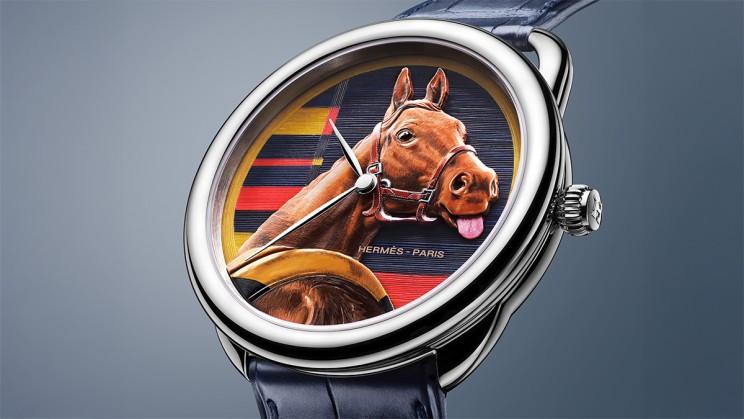
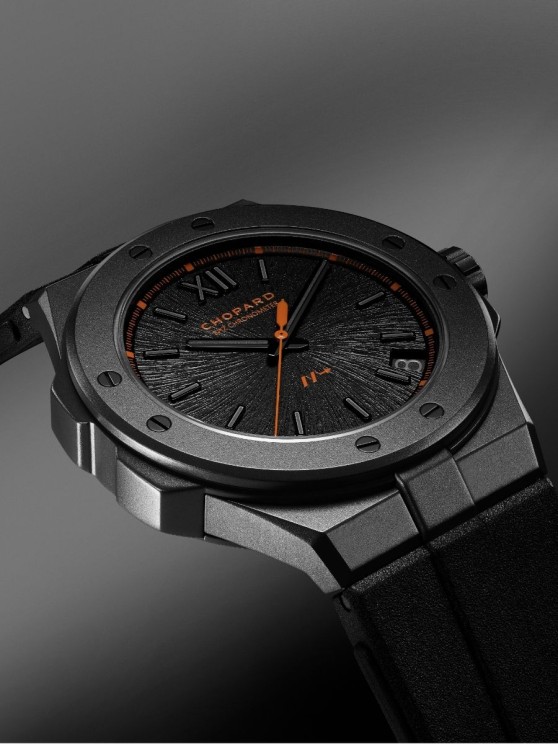
The GPHG reflects this embrace of quiet luxury. The jury has frequently selected watches whose appeal isn’t immediately obvious. This explains the strong focus on escapement innovations (Resonance by Armin Strom, Constant Force by Arnold & Son), the world’s most discreet second time zone (Parmigiani Fleurier’s Tonda GMT Rattrapante), high-frequency movements (Chopard’s Alpine Eagle 41 SL Cadence 8HF), on-demand animation (Hermès’ whimsical Arceau Rocabar de rire), or the radical minimalism of two-hand designs (Piaget’s Sixtie, Audemars Piguet’s Royal Oak Mini Frosted Gold Quartz).